ਕਾਰਜਕਾਰੀ ਸੰਖੇਪ ਵਿਚ
ਇਹ ਰਿਪੋਰਟ ਪੁੱਛਗਿੱਛ ਦੇ ਵਿਚਾਰਾਂ ਨੂੰ ਦਰਸਾਉਂਦੀ ਨਹੀਂ ਹੈ। ਇਹ ਜਾਣਕਾਰੀ 2025 ਵਿੱਚ ਸਾਡੇ ਗੋਲਮੇਜ਼ ਸਮਾਗਮਾਂ ਵਿੱਚ ਹਾਜ਼ਰੀਨ ਦੁਆਰਾ ਸਾਡੇ ਨਾਲ ਸਾਂਝੇ ਕੀਤੇ ਗਏ ਤਜ਼ਰਬਿਆਂ ਦੇ ਸੰਖੇਪ ਨੂੰ ਦਰਸਾਉਂਦੀ ਹੈ। ਸਾਡੇ ਨਾਲ ਸਾਂਝੇ ਕੀਤੇ ਗਏ ਤਜ਼ਰਬਿਆਂ ਦੀ ਸ਼੍ਰੇਣੀ ਨੇ ਸਾਨੂੰ ਹੇਠਾਂ ਦਿੱਤੇ ਵਿਸ਼ਿਆਂ ਨੂੰ ਵਿਕਸਤ ਕਰਨ ਵਿੱਚ ਮਦਦ ਕੀਤੀ ਹੈ। ਤੁਸੀਂ ਇਸ ਰਿਪੋਰਟ ਦੇ ਅਨੁਸੂਚੀ ਵਿੱਚ ਗੋਲਮੇਜ਼ ਸਮਾਗਮ ਵਿੱਚ ਸ਼ਾਮਲ ਹੋਣ ਵਾਲੇ ਸੰਗਠਨਾਂ ਦੀ ਸੂਚੀ ਲੱਭ ਸਕਦੇ ਹੋ।
ਮਈ 2025 ਵਿੱਚ, ਯੂਕੇ ਕੋਵਿਡ-19 ਇਨਕੁਆਰੀ ਨੇ ਇੱਕ ਗੋਲਮੇਜ਼ ਮੀਟਿੰਗ ਕੀਤੀ ਜਿਸ ਵਿੱਚ ਕਮਿਊਨਿਟੀ-ਪੱਧਰੀ ਖੇਡਾਂ ਅਤੇ ਮਨੋਰੰਜਨ 'ਤੇ ਮਹਾਂਮਾਰੀ ਦੇ ਪ੍ਰਭਾਵ 'ਤੇ ਕੇਂਦ੍ਰਿਤ ਕੀਤਾ ਗਿਆ ਸੀ। ਇਹ ਗੋਲਮੇਜ਼ ਮੀਟਿੰਗ ਖੇਡਾਂ, ਮਨੋਰੰਜਨ ਅਤੇ ਮਾਨਸਿਕ ਸਿਹਤ ਸੰਗਠਨਾਂ ਨਾਲ ਇੱਕ ਸਮੂਹ ਚਰਚਾ ਰਾਹੀਂ ਆਯੋਜਿਤ ਕੀਤੀ ਗਈ ਸੀ। ਗੋਲਮੇਜ਼ ਮੀਟਿੰਗ ਵਿੱਚ ਮਹਾਮਾਰੀ ਦੇ ਕੁਲੀਨ ਅਤੇ ਪੇਸ਼ੇਵਰ ਖੇਡਾਂ 'ਤੇ ਪ੍ਰਭਾਵ ਨੂੰ ਸ਼ਾਮਲ ਨਹੀਂ ਕੀਤਾ ਗਿਆ ਸੀ।
ਸਰਕਾਰ ਅਤੇ ਸੈਕਟਰ ਵਿਚਕਾਰ ਪ੍ਰਭਾਵਸ਼ਾਲੀ ਸਹਿਯੋਗ ਦੀਆਂ ਕੁਝ ਉਦਾਹਰਣਾਂ ਸਨ, ਖਾਸ ਕਰਕੇ ਐਮਰਜੈਂਸੀ ਫੰਡਿੰਗ ਦੀ ਵਿਵਸਥਾ ਅਤੇ ਸੈਕਟਰ ਨੂੰ ਸਮਰਥਨ ਦੇਣ ਲਈ ਮੌਜੂਦਾ ਸਬੰਧਾਂ ਦਾ ਲਾਭ ਉਠਾਉਣ ਦੇ ਸੰਬੰਧ ਵਿੱਚ। ਹਾਲਾਂਕਿ, ਪ੍ਰਤੀਨਿਧੀ ਮਾਰਗਦਰਸ਼ਨ ਅਤੇ ਪਾਬੰਦੀਆਂ ਬਾਰੇ ਸੰਚਾਰ ਤੋਂ ਨਿਰਾਸ਼ ਸਨ, ਖਾਸ ਕਰਕੇ, ਮਾਰਗਦਰਸ਼ਨ ਲਈ ਸਪੱਸ਼ਟ ਤਰਕ ਦੇ ਸੰਚਾਰ ਦੀ ਘਾਟ ਅਤੇ ਕੁਝ ਪਾਬੰਦੀਆਂ ਦੀ ਦੇਰ ਨਾਲ ਘੋਸ਼ਣਾ। ਇਸਨੇ ਉਲਝਣ ਪੈਦਾ ਕੀਤੀ ਅਤੇ ਸੰਗਠਨਾਂ ਅਤੇ ਉਨ੍ਹਾਂ ਦੇ ਸਟਾਫ ਨਾਲ ਪ੍ਰਭਾਵਸ਼ਾਲੀ ਸੰਚਾਰ ਵਿੱਚ ਰੁਕਾਵਟ ਪਾਈ।
ਇਸ ਗੱਲ 'ਤੇ ਸਹਿਮਤੀ ਸੀ ਕਿ ਜਦੋਂ ਕਮਿਊਨਿਟੀ-ਪੱਧਰੀ ਖੇਡਾਂ ਅਤੇ ਮਨੋਰੰਜਨ ਗਤੀਵਿਧੀਆਂ ਨੂੰ ਰੋਕ ਦਿੱਤਾ ਗਿਆ ਸੀ ਤਾਂ ਇਹ ਖੇਤਰ ਲੋਕਾਂ ਦਾ ਸਮਰਥਨ ਕਰਨ ਲਈ ਤੇਜ਼ੀ ਨਾਲ ਅਨੁਕੂਲ ਹੋਣ ਦੇ ਯੋਗ ਸੀ। ਉਦਾਹਰਣ ਵਜੋਂ, ਸਥਾਨਕ ਖੇਡ ਸੰਗਠਨਾਂ ਨੇ ਤੇਜ਼ੀ ਨਾਲ ਔਨਲਾਈਨ ਡਿਲੀਵਰੀ ਮਾਡਲਾਂ ਵੱਲ ਧਿਆਨ ਕੇਂਦਰਿਤ ਕੀਤਾ ਜਿਵੇਂ ਕਿ ਔਨਲਾਈਨ ਕਸਰਤ ਕਲਾਸਾਂ, ਬਾਹਰੀ ਕਸਰਤ ਪ੍ਰੋਗਰਾਮ ਵਿਕਸਤ ਕੀਤੇ, ਅਤੇ ਵਿਅਕਤੀਆਂ ਨੂੰ ਸਰੀਰਕ ਗਤੀਵਿਧੀ ਦੇ ਕੁਝ ਪੱਧਰ ਨੂੰ ਬਣਾਈ ਰੱਖਣ ਵਿੱਚ ਸਹਾਇਤਾ ਕਰਨ ਲਈ ਜਿੰਮ ਉਪਕਰਣ ਉਧਾਰ ਦਿੱਤੇ। ਇਸ ਤੋਂ ਇਲਾਵਾ, ਕੁਝ ਕਮਿਊਨਿਟੀ ਅਤੇ ਮਨੋਰੰਜਨ ਸਥਾਨ ਜਿਨ੍ਹਾਂ ਨੂੰ ਬੰਦ ਕਰਨਾ ਪਿਆ ਸੀ, ਨੂੰ ਵਿਆਪਕ ਭਾਈਚਾਰਕ ਜ਼ਰੂਰਤਾਂ ਦਾ ਸਮਰਥਨ ਕਰਨ ਲਈ ਟੀਕਾਕਰਨ ਕੇਂਦਰਾਂ ਵਜੋਂ ਦੁਬਾਰਾ ਵਰਤਿਆ ਗਿਆ। ਆਮ ਤੌਰ 'ਤੇ, ਪ੍ਰਤੀਨਿਧੀਆਂ ਨੇ ਪਾਇਆ ਕਿ ਮਹਾਂਮਾਰੀ ਨੇ ਨਵੀਨਤਾ ਲਈ ਇੱਕ ਮੌਕਾ ਪ੍ਰਦਾਨ ਕੀਤਾ, ਸੰਗਠਨਾਂ ਕੋਲ ਡਿਜੀਟਲ ਮਾਨਸਿਕ ਸਿਹਤ ਸਹਾਇਤਾ ਅਤੇ ਦੋਸਤਾਨਾ ਸੇਵਾਵਾਂ ਰਾਹੀਂ ਨਵੇਂ ਪ੍ਰੋਗਰਾਮ ਵਿਕਸਤ ਕਰਨ, ਆਪਣੇ ਸਫਾਈ ਮਿਆਰਾਂ ਨੂੰ ਵਧਾਉਣ, ਪੇਸ਼ੇਵਰਤਾ ਵਿੱਚ ਸੁਧਾਰ ਕਰਨ ਅਤੇ ਆਪਣੇ ਮੈਂਬਰਾਂ ਨਾਲ ਜੁੜਨ ਦੇ ਵਿਕਲਪਕ ਤਰੀਕਿਆਂ ਦੀ ਪੜਚੋਲ ਕਰਨ ਦਾ ਸਮਾਂ ਸੀ।
ਮਹਾਂਮਾਰੀ ਅਤੇ ਪਾਬੰਦੀਆਂ ਕਾਰਨ ਪੈਦਾ ਹੋਏ ਤਣਾਅ ਅਤੇ ਵਿੱਤੀ ਦਬਾਅ 'ਤੇ ਵਾਰ-ਵਾਰ ਜ਼ੋਰ ਦਿੱਤਾ ਗਿਆ। ਖਾਸ ਤੌਰ 'ਤੇ, ਚਰਚਾ ਸਥਾਨਾਂ ਅਤੇ ਸੇਵਾਵਾਂ ਦੇ ਤੁਰੰਤ ਬੰਦ ਹੋਣ ਕਾਰਨ ਮਾਲੀਏ ਦੇ ਨੁਕਸਾਨ ਅਤੇ ਮੈਂਬਰਸ਼ਿਪ ਵਿੱਚ ਕਮੀ 'ਤੇ ਕੇਂਦ੍ਰਿਤ ਸੀ। ਫਿਰ ਵੀ, ਕਾਰੋਬਾਰ ਅਜੇ ਵੀ ਓਵਰਹੈੱਡ ਲਾਗਤਾਂ ਦਾ ਭੁਗਤਾਨ ਕਰ ਰਹੇ ਸਨ। ਪ੍ਰਤੀਨਿਧੀਆਂ ਨੇ ਉਜਾਗਰ ਕੀਤਾ ਕਿ ਕਿਵੇਂ ਛੋਟੇ ਆਪਰੇਟਰ ਅਤੇ ਜ਼ਮੀਨੀ ਪੱਧਰ ਦੇ ਕਲੱਬਾਂ ਨੂੰ ਮਹੱਤਵਪੂਰਨ ਵਿੱਤੀ ਦਬਾਅ ਦਾ ਸਾਹਮਣਾ ਕਰਨਾ ਪਿਆ ਅਤੇ ਉਹ ਘੱਟ ਲਚਕੀਲੇ ਸਨ, ਜਿਨ੍ਹਾਂ ਕੋਲ ਵੱਡੀਆਂ ਸੰਸਥਾਵਾਂ ਨਾਲੋਂ ਘੱਟ ਵਿੱਤੀ ਭੰਡਾਰ ਸਨ। ਵਿੱਤੀ ਸਹਾਇਤਾ ਨੂੰ ਮਹੱਤਵਪੂਰਨ ਮੰਨਿਆ ਗਿਆ ਸੀ। ਹਾਲਾਂਕਿ, ਕੁਝ ਲੋਕਾਂ ਨੇ ਮਹਿਸੂਸ ਕੀਤਾ ਕਿ ਭਾਈਚਾਰਕ ਅਤੇ ਨਿੱਜੀ ਖੇਤਰ ਦੇ ਸੰਗਠਨਾਂ ਲਈ ਪਹੁੰਚ ਕਰਨਾ ਵਧੇਰੇ ਮੁਸ਼ਕਲ ਸੀ ਅਤੇ ਇਸਨੇ ਉਨ੍ਹਾਂ ਦੀ ਤੈਰਦੇ ਰਹਿਣ ਦੀ ਯੋਗਤਾ ਨੂੰ ਪ੍ਰਭਾਵਿਤ ਕੀਤਾ।
ਕੋਵਿਡ-19 ਦਿਸ਼ਾ-ਨਿਰਦੇਸ਼ਾਂ ਅਤੇ ਵਾਧੂ ਪ੍ਰਸ਼ਾਸਕੀ ਕੰਮਾਂ ਦੀ ਪਾਲਣਾ ਨੂੰ ਯਕੀਨੀ ਬਣਾਉਣ ਲਈ ਸਟਾਫ ਨੂੰ ਵਾਧੂ ਜ਼ਿੰਮੇਵਾਰੀਆਂ ਦਾ ਸਾਹਮਣਾ ਕਰਨਾ ਪਿਆ। ਵਲੰਟੀਅਰਾਂ ਵਿੱਚ ਗਿਰਾਵਟ ਨਾਲ ਇਹ ਹੋਰ ਵੀ ਵਧ ਗਿਆ। ਇਹ ਗਿਰਾਵਟ ਮਹਾਂਮਾਰੀ ਤੋਂ ਪਹਿਲਾਂ ਸ਼ੁਰੂ ਹੋਈ ਸੀ ਪਰ ਕੁਝ ਹੱਦ ਤੱਕ, ਮਹਾਂਮਾਰੀ ਦੌਰਾਨ ਲੋਕਾਂ ਦੀਆਂ ਨੌਕਰੀਆਂ ਗੁਆਉਣ ਅਤੇ ਸਵੈ-ਸੇਵਾ ਦੀ ਬਜਾਏ ਤਨਖਾਹ ਵਾਲੇ ਕੰਮ 'ਤੇ ਆਪਣੇ ਯਤਨਾਂ ਨੂੰ ਕੇਂਦਰਿਤ ਕਰਨ ਕਾਰਨ ਇਸ ਵਿੱਚ ਤੇਜ਼ੀ ਆਈ। ਵਲੰਟੀਅਰਾਂ ਦੀ ਗਿਣਤੀ ਵਿੱਚ ਗਿਰਾਵਟ ਨੇ ਗਤੀਵਿਧੀਆਂ ਅਤੇ ਸਮਾਗਮਾਂ ਨੂੰ ਚਲਾਉਣਾ ਔਖਾ ਬਣਾ ਦਿੱਤਾ।
ਮਹਾਂਮਾਰੀ ਦੀ ਸ਼ੁਰੂਆਤ ਵਿੱਚ ਸਥਾਨਾਂ ਦੇ ਤੁਰੰਤ ਬੰਦ ਹੋਣ ਅਤੇ ਆਹਮੋ-ਸਾਹਮਣੇ ਦੀਆਂ ਗਤੀਵਿਧੀਆਂ ਵਿੱਚ ਵਿਰਾਮ ਨੇ ਬਹੁਤ ਸਾਰੇ ਲੋਕਾਂ ਦੀ ਭਾਈਚਾਰਕ-ਪੱਧਰੀ ਖੇਡਾਂ ਅਤੇ ਮਨੋਰੰਜਨ ਗਤੀਵਿਧੀਆਂ ਵਿੱਚ ਹਿੱਸਾ ਲੈਣ ਦੀ ਯੋਗਤਾ ਨੂੰ ਬੁਰੀ ਤਰ੍ਹਾਂ ਸੀਮਤ ਕਰ ਦਿੱਤਾ। ਇਸ ਨਾਲ ਸਰੀਰਕ ਗਤੀਵਿਧੀ ਦੇ ਪੱਧਰ ਵਿੱਚ ਕਮੀ ਆਈ, ਮਨੋਰੰਜਨ ਦੇ ਰੁਟੀਨ ਪ੍ਰਭਾਵਿਤ ਹੋਏ ਅਤੇ ਸੰਗਠਿਤ ਖੇਡਾਂ ਵਿੱਚ ਸ਼ਮੂਲੀਅਤ ਘਟ ਗਈ। ਨਤੀਜੇ ਵਜੋਂ ਲੋਕਾਂ ਦੀ ਸਮਾਜਿਕ ਗੱਲਬਾਤ ਅਤੇ ਉਨ੍ਹਾਂ ਦੇ ਭਾਈਚਾਰੇ ਨਾਲ ਸ਼ਮੂਲੀਅਤ ਵੀ ਘਟ ਗਈ। ਪ੍ਰਤੀਨਿਧੀਆਂ ਨੇ ਕਿਹਾ ਕਿ ਇਸ ਦੇ ਨਤੀਜੇ ਵਜੋਂ ਇੰਗਲੈਂਡ ਵਿੱਚ ਸਰੀਰਕ ਗਤੀਵਿਧੀ ਦੇ ਪੱਧਰਾਂ ਵਿੱਚ ਸਭ ਤੋਂ ਮਹੱਤਵਪੂਰਨ ਗਿਰਾਵਟ ਆਈ ਹੈ ਜਿਸ ਵਿੱਚ ਲਗਭਗ 1,223,000 ਘੱਟ ਬਾਲਗ ਸਿਫ਼ਾਰਸ਼ ਕੀਤੇ ਗਤੀਵਿਧੀ ਪੱਧਰਾਂ ਨੂੰ ਪੂਰਾ ਕਰਦੇ ਹਨ। ਉਨ੍ਹਾਂ ਨੇ ਰਿਪੋਰਟ ਕੀਤੀ ਕਿ ਸਰੀਰਕ ਗਤੀਵਿਧੀ ਦੇ ਪੱਧਰਾਂ ਵਿੱਚ ਗਿਰਾਵਟ ਜਨਤਕ ਦਿਲਚਸਪੀ ਦੀ ਘਾਟ ਕਾਰਨ ਨਹੀਂ ਸੀ, ਸਗੋਂ ਤਾਲਾਬੰਦੀ ਅਤੇ ਸਮਾਜਿਕ ਦੂਰੀ ਦੇ ਉਪਾਵਾਂ ਦੁਆਰਾ ਲਗਾਈਆਂ ਗਈਆਂ ਸੀਮਾਵਾਂ ਕਾਰਨ ਸੀ।
ਸਰੀਰਕ ਗਤੀਵਿਧੀ ਦੇ ਪੱਧਰਾਂ 'ਤੇ ਪ੍ਰਭਾਵ ਜਨਸੰਖਿਆ ਸਮੂਹਾਂ ਵਿੱਚ ਇੱਕਸਾਰ ਨਹੀਂ ਸੀ। ਕੁਝ ਮਹਾਂਮਾਰੀ ਦੌਰਾਨ ਘੱਟ ਸਰਗਰਮ ਸਨ, ਜਿਨ੍ਹਾਂ ਵਿੱਚ ਨਸਲੀ ਘੱਟ ਗਿਣਤੀਆਂ ਵਾਲੇ, ਘੱਟ ਸਮਾਜਿਕ ਆਰਥਿਕ ਪਿਛੋਕੜ ਵਾਲੇ ਵਿਅਕਤੀ, ਅਪਾਹਜਤਾ ਵਾਲੇ ਅਤੇ ਪਹਿਲਾਂ ਤੋਂ ਮੌਜੂਦ ਮਾਨਸਿਕ ਸਿਹਤ ਸਥਿਤੀਆਂ ਵਾਲੇ ਲੋਕ ਸ਼ਾਮਲ ਸਨ। ਪ੍ਰਤੀਨਿਧੀਆਂ ਨੇ ਦੱਸਿਆ ਕਿ ਕਿਵੇਂ ਇਹਨਾਂ ਸਮੂਹਾਂ ਨੂੰ ਸਰੀਰਕ ਗਤੀਵਿਧੀ ਦੇ ਵਿਕਲਪਿਕ ਰੂਪਾਂ ਤੱਕ ਪਹੁੰਚ ਕਰਨ ਵਿੱਚ ਵੱਡੀਆਂ ਰੁਕਾਵਟਾਂ ਦਾ ਸਾਹਮਣਾ ਕਰਨਾ ਪਿਆ, ਜਿਵੇਂ ਕਿ ਬਾਹਰੀ ਥਾਵਾਂ ਤੱਕ ਪਹੁੰਚ ਨਾ ਹੋਣਾ ਜਾਂ ਢਾਲ ਬਣਾਉਣਾ, ਜਿਸ ਨਾਲ ਉਨ੍ਹਾਂ ਨੂੰ ਬਾਹਰ ਕਸਰਤ ਕਰਨ ਦੇ ਮੌਕੇ ਵਿੱਚ ਰੁਕਾਵਟ ਆਈ। ਕੁਝ ਸੰਗਠਨਾਂ ਨੇ ਰਿਪੋਰਟ ਦਿੱਤੀ ਕਿ ਪੁਰਸ਼ਾਂ ਨੇ ਸ਼ੁਰੂ ਵਿੱਚ ਟੀਮ ਖੇਡਾਂ ਅਤੇ ਜਿੰਮ 'ਤੇ ਨਿਰਭਰਤਾ ਦੇ ਕਾਰਨ ਸਾਪੇਖਿਕ ਗਤੀਵਿਧੀ ਦੇ ਪੱਧਰਾਂ ਵਿੱਚ ਭਾਰੀ ਗਿਰਾਵਟ ਦਾ ਅਨੁਭਵ ਕੀਤਾ। ਔਰਤਾਂ ਨੂੰ ਘਰ-ਅਧਾਰਤ ਕਸਰਤ ਅਤੇ ਵਿਅਕਤੀਗਤ ਬਾਹਰੀ ਗਤੀਵਿਧੀਆਂ, ਜਿਵੇਂ ਕਿ ਤੁਰਨਾ ਅਤੇ ਦੌੜਨਾ, ਦੇ ਅਨੁਕੂਲ ਹੋਣ ਦੇ ਯੋਗ ਕਿਹਾ ਜਾਂਦਾ ਸੀ। ਸਪੋਰਟ ਇਨ ਮਾਈਂਡ ਨੇ ਸਵੀਕਾਰ ਕੀਤਾ ਕਿ ਵਿਅਕਤੀਗਤ ਤੌਰ 'ਤੇ ਡਿਜੀਟਲ ਪੇਸ਼ਕਸ਼ਾਂ ਵਿੱਚ ਅਚਾਨਕ ਤਬਦੀਲੀ ਨੇ ਮਾਨਸਿਕ ਸਿਹਤ ਸਥਿਤੀਆਂ ਵਾਲੇ ਕੁਝ ਲੋਕਾਂ ਲਈ ਵਾਧੂ ਚੁਣੌਤੀਆਂ ਪੇਸ਼ ਕੀਤੀਆਂ ਹੋ ਸਕਦੀਆਂ ਹਨ ਜਦੋਂ ਬਹੁਤ ਸਾਰੇ ਲੋਕ ਪਹਿਲਾਂ ਹੀ ਇੱਕ ਵਿਸ਼ਵਵਿਆਪੀ ਮਹਾਂਮਾਰੀ ਦੌਰਾਨ ਆਪਣੀ ਤੰਦਰੁਸਤੀ ਦੇ ਰੋਜ਼ਾਨਾ ਪ੍ਰਬੰਧਨ ਵਿੱਚ ਕਈ ਚੁਣੌਤੀਆਂ ਦਾ ਸਾਹਮਣਾ ਕਰ ਰਹੇ ਸਨ।
ਕਿਹਾ ਜਾਂਦਾ ਹੈ ਕਿ ਮਹਾਂਮਾਰੀ ਨੇ ਸਰੀਰਕ ਗਤੀਵਿਧੀ ਅਤੇ ਮਾਨਸਿਕ ਸਿਹਤ ਅਤੇ ਤੰਦਰੁਸਤੀ ਵਿਚਕਾਰ ਸਬੰਧ ਵੱਲ ਵਧੇਰੇ ਜਨਤਕ ਧਿਆਨ ਖਿੱਚਿਆ ਹੈ। ਪ੍ਰਤੀਨਿਧੀਆਂ ਨੇ ਲਾਕਡਾਊਨ ਦੌਰਾਨ ਬਾਹਰ ਰਹਿਣ ਦੇ ਇੱਕ ਜਾਇਜ਼ ਕਾਰਨ ਵਜੋਂ ਮਹਾਂਮਾਰੀ ਮਾਰਗਦਰਸ਼ਨ ਵਿੱਚ ਸਰੀਰਕ ਗਤੀਵਿਧੀ ਅਤੇ ਕਸਰਤ ਨੂੰ ਸਪੱਸ਼ਟ ਤੌਰ 'ਤੇ ਸ਼ਾਮਲ ਕਰਨ ਦਾ ਸਵਾਗਤ ਕੀਤਾ। ਉਨ੍ਹਾਂ ਨੇ ਮਾਨਸਿਕ ਸਿਹਤ 'ਤੇ ਬੰਦ ਅਤੇ ਪਾਬੰਦੀਆਂ ਦੇ ਨਕਾਰਾਤਮਕ ਪ੍ਰਭਾਵ 'ਤੇ ਵੀ ਲਗਾਤਾਰ ਜ਼ੋਰ ਦਿੱਤਾ, ਖਾਸ ਕਰਕੇ ਪਹਿਲਾਂ ਤੋਂ ਮੌਜੂਦ ਮਾਨਸਿਕ ਸਿਹਤ ਸਥਿਤੀਆਂ ਵਾਲੇ ਲੋਕਾਂ ਲਈ। ਢਾਂਚਾਗਤ ਗਤੀਵਿਧੀ ਦੇ ਨੁਕਸਾਨ ਅਤੇ ਸਮਾਜਿਕ ਸੰਪਰਕ ਦੇ ਮੌਕੇ ਦਾ ਮਾਨਸਿਕ ਤੰਦਰੁਸਤੀ 'ਤੇ ਨੁਕਸਾਨਦੇਹ ਪ੍ਰਭਾਵ ਪਿਆ। ਇਸ ਨਾਲ ਲੋਕਾਂ ਦੀ ਮਾਨਸਿਕ ਸਿਹਤ ਦਾ ਸਮਰਥਨ ਕਰਨ ਵਿੱਚ ਭਾਈਚਾਰਕ ਪੱਧਰ ਦੀ ਖੇਡ ਅਤੇ ਮਨੋਰੰਜਨ ਦੀ ਮਹੱਤਤਾ ਨੂੰ ਉਜਾਗਰ ਕੀਤਾ ਗਿਆ ਮਹਿਸੂਸ ਕੀਤਾ ਗਿਆ।
ਭਵਿੱਖ ਦੀ ਮਹਾਂਮਾਰੀ ਦੀ ਤਿਆਰੀ ਲਈ ਕਈ ਮੁੱਖ ਸਬਕਾਂ ਦੀ ਪਛਾਣ ਕੀਤੀ ਗਈ। ਇਹਨਾਂ ਵਿੱਚ ਸੈਕਟਰ ਦੇ ਕਾਰਜਾਂ ਅਤੇ ਮਾਨਸਿਕ ਸਿਹਤ ਅਤੇ ਤੰਦਰੁਸਤੀ ਦੇ ਸਮਰਥਨ ਵਿੱਚ ਇਸਦੀ ਮਹੱਤਵਪੂਰਨ ਭੂਮਿਕਾ ਬਾਰੇ ਸਰਕਾਰ ਦੀ ਸਮਝ ਨੂੰ ਬਿਹਤਰ ਬਣਾਉਣ ਦੀ ਜ਼ਰੂਰਤ, ਸਰਕਾਰ ਅਤੇ ਸੈਕਟਰ ਵਿਚਕਾਰ ਸੰਚਾਰ ਅਤੇ ਸਲਾਹ-ਮਸ਼ਵਰੇ ਨੂੰ ਬਿਹਤਰ ਬਣਾਉਣਾ ਅਤੇ ਵਧੇਰੇ ਲਚਕਦਾਰ ਅਤੇ ਪਹੁੰਚਯੋਗ ਫੰਡਿੰਗ ਵਿਧੀਆਂ ਸ਼ਾਮਲ ਹਨ।
ਮੁੱਖ ਵਿਸ਼ੇ
ਭਾਈਚਾਰਕ ਪੱਧਰ 'ਤੇ ਖੇਡਾਂ ਅਤੇ ਮਨੋਰੰਜਨ ਖੇਤਰ 'ਤੇ ਪਾਬੰਦੀਆਂ ਦਾ ਪ੍ਰਭਾਵ
ਸਰਕਾਰੀ ਮਾਰਗਦਰਸ਼ਨ ਅਤੇ ਸੰਚਾਰ ਦਾ ਪ੍ਰਭਾਵ
ਮਹਾਂਮਾਰੀ ਦੀ ਸ਼ੁਰੂਆਤ ਵਿੱਚ, ਸਰਕਾਰ ਦੁਆਰਾ ਲਗਾਈਆਂ ਗਈਆਂ ਪਾਬੰਦੀਆਂ ਦੇ ਹਿੱਸੇ ਵਜੋਂ, ਭਾਈਚਾਰਕ ਪੱਧਰ ਦੇ ਖੇਡਾਂ ਅਤੇ ਮਨੋਰੰਜਨ ਸਥਾਨਾਂ ਨੂੰ ਤੁਰੰਤ ਬੰਦ ਕਰਨ ਦੀ ਲੋੜ ਸੀ।1 ਪ੍ਰਤੀਨਿਧੀਆਂ ਨੇ ਮਹਾਂਮਾਰੀ ਪਾਬੰਦੀਆਂ ਅਤੇ ਸਰਕਾਰ ਦੁਆਰਾ ਜਾਰੀ ਕੀਤੇ ਗਏ ਮਾਰਗਦਰਸ਼ਨ ਦੇ ਸੈਕਟਰ 'ਤੇ ਪੈਣ ਵਾਲੇ ਪ੍ਰਭਾਵ 'ਤੇ ਚਰਚਾ ਕੀਤੀ। ਤਬਦੀਲੀਆਂ ਦਾ ਐਲਾਨ ਅਕਸਰ ਬਹੁਤ ਦੇਰ ਨਾਲ ਅਤੇ ਬਿਨਾਂ ਕਿਸੇ ਸਲਾਹ-ਮਸ਼ਵਰੇ ਦੇ ਕੀਤਾ ਜਾਂਦਾ ਸੀ। ਜਦੋਂ ਮਾਰਗਦਰਸ਼ਨ ਵਿੱਚ ਬਦਲਾਅ ਲਾਗੂ ਹੋਣ ਤੋਂ ਇੱਕ ਰਾਤ ਪਹਿਲਾਂ ਹੋਏ, ਤਾਂ ਇਸ ਨੇ ਬਦਲਾਅ ਲਾਗੂ ਕਰਨ ਲਈ ਲੋੜੀਂਦੇ ਲੋਕਾਂ ਨੂੰ ਦਰਪੇਸ਼ ਚੁਣੌਤੀਆਂ ਨੂੰ ਹੋਰ ਵਧਾ ਦਿੱਤਾ। ਇਸ ਤੋਂ ਇਲਾਵਾ, ਮਾਰਗਦਰਸ਼ਨ ਵਿੱਚ ਕਈ ਵਾਰ ਵੇਰਵੇ ਅਤੇ ਸਪੱਸ਼ਟਤਾ ਦੀ ਘਾਟ ਹੁੰਦੀ ਸੀ ਕਿ ਫੈਸਲੇ ਕਿਉਂ ਲਏ ਜਾ ਰਹੇ ਸਨ। ਇਹ ਖਾਸ ਤੌਰ 'ਤੇ ਮਹੱਤਵਪੂਰਨ ਸੀ ਜਿੱਥੇ ਖਾਸ ਕਿਸਮ ਦੇ ਸਥਾਨਾਂ ਜਾਂ ਗਤੀਵਿਧੀਆਂ ਨਾਲ ਸਬੰਧਤ ਫੈਸਲੇ ਜਿਨ੍ਹਾਂ ਨੂੰ ਬੰਦ ਜਾਂ ਦੁਬਾਰਾ ਖੋਲ੍ਹਿਆ ਜਾਣਾ ਸੀ। ਕੁੱਲ ਮਿਲਾ ਕੇ, ਇਸ ਨਾਲ ਸੰਗਠਨਾਂ ਲਈ ਪਾਲਣਾ ਨੂੰ ਯਕੀਨੀ ਬਣਾਉਣ ਲਈ ਆਪਣੇ ਮੈਂਬਰਾਂ ਅਤੇ ਸਟਾਫ ਨੂੰ ਤਬਦੀਲੀਆਂ ਨੂੰ ਪ੍ਰਭਾਵਸ਼ਾਲੀ ਢੰਗ ਨਾਲ ਅਨੁਕੂਲ ਬਣਾਉਣਾ ਅਤੇ ਸੰਚਾਰ ਕਰਨਾ ਮੁਸ਼ਕਲ ਹੋ ਗਿਆ।
| " | ਲਾਗੂ ਕੀਤੇ ਜਾਣ ਤੋਂ ਇੱਕ ਰਾਤ ਪਹਿਲਾਂ ਐਲਾਨੀਆਂ ਗਈਆਂ ਚੀਜ਼ਾਂ ਦੀਆਂ ਕਈ ਉਦਾਹਰਣਾਂ ਸਨ, ਬਿਨਾਂ ਸੈਕਟਰ ਨਾਲ ਬਹੁਤਾ ਸਬੰਧ। ਮੈਂ ਸਮਝਦਾ ਹਾਂ ਕਿ ਇਹ ਇੱਕ ਬੇਮਿਸਾਲ ਸਥਿਤੀ ਸੀ ਪਰ ਇਸਨੇ ਇਕਸਾਰ ਅਤੇ ਸਮੇਂ ਸਿਰ ਸੰਚਾਰ ਨੂੰ ਹੋਰ ਮੁਸ਼ਕਲ ਬਣਾ ਦਿੱਤਾ ਜਿਸ ਨਾਲ ਹੋਰ ਸਮੱਸਿਆਵਾਂ ਪੈਦਾ ਹੋਈਆਂ।
- ਖੇਡ ਅਤੇ ਮਨੋਰੰਜਨ ਗੱਠਜੋੜ |
ਸੈਕਟਰ 'ਤੇ ਵਿੱਤੀ ਪ੍ਰਭਾਵ
ਪ੍ਰਤੀਨਿਧੀਆਂ ਦੇ ਅਨੁਸਾਰ, ਮਹਾਂਮਾਰੀ ਦਾ ਕਮਿਊਨਿਟੀ-ਪੱਧਰ ਦੇ ਖੇਡ ਅਤੇ ਮਨੋਰੰਜਨ ਖੇਤਰ ਵਿੱਚ ਵਿਆਪਕ, ਤੁਰੰਤ ਅਤੇ ਨਕਾਰਾਤਮਕ ਵਿੱਤੀ ਪ੍ਰਭਾਵ ਪਿਆ। ਸਹੂਲਤਾਂ ਨੇ ਹਫਤਾਵਾਰੀ ਲੱਖਾਂ ਪੌਂਡ ਗੁਆ ਦਿੱਤੇ ਅਤੇ ਜ਼ਮੀਨੀ ਪੱਧਰ ਦੇ ਕਲੱਬਾਂ ਨੂੰ ਸਥਾਈ ਤੌਰ 'ਤੇ ਬੰਦ ਹੋਣ ਦੇ ਜੋਖਮ ਦਾ ਸਾਹਮਣਾ ਕਰਨਾ ਪਿਆ। ਯੂਕੇਐਕਟਿਵ ਨੇ ਕਿਹਾ ਕਿ ਬੰਦ ਮੁੱਖ ਤੌਰ 'ਤੇ ਛੋਟੇ ਆਪਰੇਟਰਾਂ ਵਿੱਚ ਦੇਖੇ ਗਏ ਸਨ ਅਤੇ ਲਾਕਡਾਊਨ ਦੀ ਮਿਆਦ ਦੌਰਾਨ 50-100 ਦੇ ਵਿਚਕਾਰ ਬੰਦ ਹੋ ਗਏ ਸਨ। ਇਸ ਦੇ ਉਲਟ, ਵੱਡੀਆਂ ਸੰਸਥਾਵਾਂ ਕੋਲ ਆਪਣੇ ਨਕਦ ਭੰਡਾਰਾਂ ਨੂੰ ਆਪਣੇ ਆਪ ਖਿੱਚਣ ਦੀ ਵਧੇਰੇ ਸਮਰੱਥਾ ਸੀ ਤਾਂ ਜੋ ਉਨ੍ਹਾਂ ਨੂੰ ਤੈਰਦੇ ਰਹਿਣ ਵਿੱਚ ਸਹਾਇਤਾ ਕੀਤੀ ਜਾ ਸਕੇ। ਫਿਰ ਵੀ, ਇਹ ਨੋਟ ਕੀਤਾ ਗਿਆ ਕਿ ਆਕਾਰ ਦੀ ਪਰਵਾਹ ਕੀਤੇ ਬਿਨਾਂ, ਸੰਗਠਨਾਂ ਨੂੰ ਮਹਾਂਮਾਰੀ ਦੌਰਾਨ ਕਾਫ਼ੀ ਵਿੱਤੀ ਦਬਾਅ ਦਾ ਸਾਹਮਣਾ ਕਰਨਾ ਪਿਆ।
| " | [ਜਿੰਮ, ਪੂਲ ਅਤੇ ਮਨੋਰੰਜਨ ਕੇਂਦਰਾਂ ਲਈ], ਤੁਰੰਤ ਬੰਦ ਹੋਣ ਨਾਲ [ਉਨ੍ਹਾਂ] ਮਾਲੀਏ ਦਾ ਤੁਰੰਤ ਨੁਕਸਾਨ ਹੋਇਆ ਜਿਸ ਨਾਲ ਉਨ੍ਹਾਂ ਨੂੰ ਚੱਲਦਾ ਰੱਖਿਆ ਗਿਆ। ਇੱਕ ਵੱਡਾ ਜਿੰਮ ਸੰਚਾਲਕ [ਪ੍ਰਤੀ] ਹਫ਼ਤੇ 8 ਮਿਲੀਅਨ ਪੌਂਡ ਦਾ ਨੁਕਸਾਨ ਕਰ ਰਿਹਾ ਸੀ।"
– ਯੂਕੇਐਕਟਿਵ |
ਜ਼ਮੀਨੀ ਪੱਧਰ ਦੇ ਸਪੋਰਟਸ ਕਲੱਬਾਂ ਦੇ ਅਸਥਾਈ ਤੌਰ 'ਤੇ ਬੰਦ ਹੋਣ ਨਾਲ ਉਨ੍ਹਾਂ ਦੀ ਆਮਦਨ ਪੈਦਾ ਕਰਨ ਅਤੇ ਆਪਣੀਆਂ ਸੇਵਾਵਾਂ ਵਿੱਚ ਮੁੜ ਨਿਵੇਸ਼ ਕਰਨ ਦੀ ਯੋਗਤਾ 'ਤੇ ਭਾਰੀ ਅਸਰ ਪਿਆ। ਪ੍ਰਤੀਨਿਧੀਆਂ ਨੇ ਦੱਸਿਆ ਕਿ ਮੈਂਬਰਸ਼ਿਪ ਵਿੱਚ ਗਿਰਾਵਟ ਦੇ ਨਤੀਜੇ ਵਜੋਂ ਇਨ੍ਹਾਂ ਕਲੱਬਾਂ ਨੂੰ ਆਮਦਨ ਵਿੱਚ ਕਮੀ ਦਾ ਸਾਹਮਣਾ ਕਰਨਾ ਪਿਆ, ਪਰ ਨਾਲ ਹੀ ਚੱਲ ਰਹੇ ਓਵਰਹੈੱਡ ਖਰਚਿਆਂ ਨਾਲ ਵੀ ਜੂਝ ਰਹੇ ਸਨ। ਸਪੋਰਟ ਐਂਡ ਰੀਕ੍ਰੀਏਸ਼ਨ ਅਲਾਇੰਸ ਨੇ ਕਿਹਾ ਕਿ ਲਾਈਵ ਕੁਲੀਨ ਅਤੇ ਪੇਸ਼ੇਵਰ ਖੇਡਾਂ ਨੂੰ ਮੰਚਨ ਕਰਨ ਦੀ ਯੋਗਤਾ 'ਤੇ ਪਾਬੰਦੀਆਂ ਨੇ ਪ੍ਰਮੁੱਖ ਖੇਡ ਸੰਸਥਾਵਾਂ ਲਈ ਜ਼ਮੀਨੀ ਪੱਧਰ 'ਤੇ ਪੈਸੇ ਦਾ ਮੁੜ ਨਿਵੇਸ਼ ਕਰਨਾ ਮੁਸ਼ਕਲ ਬਣਾ ਦਿੱਤਾ ਹੈ।
| " | ਜ਼ਮੀਨੀ ਪੱਧਰ 'ਤੇ ਬਹੁਤ ਜ਼ਿਆਦਾ ਦਬਾਅ ਸੀ... ਕੁਲੀਨ ਪੱਧਰ 'ਤੇ ਆਮਦਨ ਪੈਦਾ ਕਰਨ ਦੀ ਯੋਗਤਾ ਅਤੇ ਫਿਰ ਜ਼ਮੀਨੀ ਪੱਧਰ 'ਤੇ ਇਸ ਨੂੰ ਦੁਬਾਰਾ ਕਿਵੇਂ ਨਿਵੇਸ਼ ਕੀਤਾ ਜਾਂਦਾ ਹੈ, ਵਿਚਕਾਰ ਇੱਕ ਸਬੰਧ ਹੈ।
- ਖੇਡ ਅਤੇ ਮਨੋਰੰਜਨ ਗੱਠਜੋੜ |
ਇਸ ਗੱਲ 'ਤੇ ਵਿਆਪਕ ਸਹਿਮਤੀ ਸੀ ਕਿ ਸਰਕਾਰ ਅਤੇ ਨੈਸ਼ਨਲ ਲਾਟਰੀ ਵੱਲੋਂ ਵਾਧੂ ਫੰਡਿੰਗ, ਸੈਕਟਰ 'ਤੇ ਮਹਾਂਮਾਰੀ ਦੇ ਪ੍ਰਭਾਵ ਨੂੰ ਹੱਲ ਕਰਨ ਲਈ, ਸੰਗਠਨਾਂ ਨੂੰ ਵਿੱਤੀ ਤੌਰ 'ਤੇ ਸਹਾਇਤਾ ਕਰਨ ਵਿੱਚ ਇੱਕ ਮਹੱਤਵਪੂਰਨ ਭੂਮਿਕਾ ਨਿਭਾਉਂਦੀ ਹੈ। ਉਦਾਹਰਣ ਵਜੋਂ, ਸਪੋਰਟ ਇੰਗਲੈਂਡ ਨੇ ਦੱਸਿਆ ਕਿ ਸਰਕਾਰ ਨੇ ਮਾਰਚ ਤੋਂ ਦਸੰਬਰ 2021 ਤੱਕ ਜਨਤਕ ਮਨੋਰੰਜਨ ਸਹੂਲਤਾਂ ਦਾ ਸਮਰਥਨ ਕਰਨ ਲਈ £110 ਮਿਲੀਅਨ ਦਾ ਫੰਡ ਪੇਸ਼ ਕੀਤਾ। ਇਸ ਫੰਡਿੰਗ ਨੇ ਕੇਂਦਰਾਂ ਨੂੰ ਦੁਬਾਰਾ ਖੋਲ੍ਹਣ ਦੀ ਤਿਆਰੀ ਕਰਦੇ ਸਮੇਂ ਉਹਨਾਂ ਨੂੰ ਬਣਾਈ ਰੱਖਣ ਅਤੇ ਸਮਰਥਨ ਦੇਣ ਦੀ ਆਗਿਆ ਦਿੱਤੀ। ਸਪੋਰਟ ਇੰਗਲੈਂਡ ਨੇ ਇਸ ਫੰਡਿੰਗ ਦੀ ਲਚਕਤਾ ਬਾਰੇ ਸਕਾਰਾਤਮਕ ਗੱਲ ਕੀਤੀ, ਕਿਉਂਕਿ ਸੰਗਠਨ ਇਹ ਫੈਸਲਾ ਕਰਨ ਦੇ ਯੋਗ ਸਨ ਕਿ ਪੈਸੇ ਨੂੰ ਇਸ ਤਰੀਕੇ ਨਾਲ ਕਿਵੇਂ ਖਰਚ ਕਰਨਾ ਹੈ ਜੋ ਉਹਨਾਂ ਦੇ ਬਚਾਅ ਦਾ ਸਮਰਥਨ ਕਰੇ। ਹਾਲਾਂਕਿ, ਪ੍ਰਤੀਨਿਧੀਆਂ ਨੇ ਪ੍ਰਤੀਬਿੰਬਤ ਕੀਤਾ ਕਿ ਨਿੱਜੀ ਜਿੰਮ ਅਤੇ ਮਨੋਰੰਜਨ ਕੇਂਦਰਾਂ ਲਈ ਵਧੇਰੇ ਸੀਮਤ ਫੰਡਿੰਗ ਸੀ, ਫਰਲੋ ਸਹਾਇਤਾ ਅਤੇ ਗ੍ਰਾਂਟਾਂ ਦੀ ਘਾਟ ਵੱਲ ਇਸ਼ਾਰਾ ਕਰਦੇ ਹੋਏ। ਯੂਕੇਐਕਟਿਵ ਨੇ ਅੱਗੇ ਕਿਹਾ ਕਿ ਨਿੱਜੀ ਜਿੰਮ ਅਤੇ ਮਨੋਰੰਜਨ ਕੇਂਦਰਾਂ ਨੂੰ ਅਜੇ ਵੀ ਉਸ ਸਮੇਂ ਕਿਰਾਇਆ ਦੇਣਾ ਪੈਂਦਾ ਸੀ ਜਦੋਂ ਉਨ੍ਹਾਂ ਕੋਲ ਕੋਈ ਆਮਦਨ ਨਹੀਂ ਸੀ ਅਤੇ ਉਨ੍ਹਾਂ ਨੂੰ ਸਹਾਇਤਾ ਲਈ ਸਰਕਾਰ ਕੋਲ ਲਾਬਿੰਗ ਕਰਨੀ ਪੈਂਦੀ ਸੀ। ਜ਼ਮੀਨੀ ਪੱਧਰ ਦੇ ਕਮਿਊਨਿਟੀ ਕਲੱਬਾਂ ਨੂੰ ਵੀ ਸਰਕਾਰੀ ਸਹਾਇਤਾ ਤੱਕ ਪਹੁੰਚ ਕਰਨ ਵਿੱਚ ਚੁਣੌਤੀਆਂ ਦਾ ਸਾਹਮਣਾ ਕਰਨਾ ਪਿਆ, ਉਦਾਹਰਣ ਵਜੋਂ, ਸਥਾਨਕ ਅਧਿਕਾਰੀਆਂ ਦੁਆਰਾ ਗ੍ਰਾਂਟਾਂ ਦੇ ਪ੍ਰਬੰਧਨ ਦੇ ਤਰੀਕੇ ਵਿੱਚ ਅੰਤਰ ਦੇ ਕਾਰਨ।
ਸਰਕਾਰ ਨਾਲ ਸਫਲ ਸਹਿਯੋਗ ਦੀਆਂ ਉਦਾਹਰਣਾਂ ਸਨ। ਸਪੋਰਟ ਇੰਗਲੈਂਡ ਨੇ ਸਰਕਾਰ ਨਾਲ ਸਹਿਯੋਗ ਕੀਤਾ ਅਤੇ ਇੱਕ ਕਮਿਊਨਿਟੀ ਐਮਰਜੈਂਸੀ ਫੰਡ ਵਿਕਸਤ ਕਰਨ ਲਈ ਨੈਸ਼ਨਲ ਲਾਟਰੀ ਫੰਡਿੰਗ ਦੀ ਵਰਤੋਂ ਕੀਤੀ ਜਿਸ ਨਾਲ ਕਮਿਊਨਿਟੀ ਸਪੋਰਟਸ ਕਲੱਬਾਂ ਅਤੇ ਸੰਗਠਨਾਂ ਨੂੰ ਬੰਦ ਹੋਣ 'ਤੇ ਤੁਰੰਤ ਐਮਰਜੈਂਸੀ ਸਹਾਇਤਾ ਮਿਲਦੀ ਸੀ। ਛੇ ਹਫ਼ਤਿਆਂ ਲਈ ਖੁੱਲ੍ਹੇ, £35 ਮਿਲੀਅਨ ਫੰਡ ਨੇ 7,489 ਪੁਰਸਕਾਰ ਬਣਾਏ। ਸਪੋਰਟ ਵੇਲਜ਼ ਨੇ ਇਹ ਵੀ ਕਿਹਾ ਕਿ ਉਨ੍ਹਾਂ ਨੇ ਵੈਲਸ਼ ਸਰਕਾਰ ਨਾਲ ਆਪਣੇ ਮੌਜੂਦਾ ਸਬੰਧਾਂ ਦਾ ਲਾਭ ਉਠਾਉਂਦੇ ਹੋਏ ਨਿੱਜੀ ਖੇਤਰ ਅਤੇ ਪੇਸ਼ੇਵਰ ਖੇਡ ਸੰਗਠਨਾਂ ਨੂੰ ਇੱਕ ਨਿੱਜੀ ਖੇਤਰ ਸਹਾਇਤਾ ਯੋਜਨਾ ਵਿੱਚ ਸ਼ਾਮਲ ਕੀਤਾ। ਇਹ ਜਿੰਮ ਮਾਲਕਾਂ ਲਈ ਪੇਸ਼ ਕੀਤਾ ਗਿਆ ਸੀ ਤਾਂ ਜੋ ਉਨ੍ਹਾਂ ਨੂੰ ਸੰਚਾਲਿਤ ਰਹਿਣ ਵਿੱਚ ਸਹਾਇਤਾ ਕੀਤੀ ਜਾ ਸਕੇ।
| " | ਅਸੀਂ ਕਮਿਊਨਿਟੀ ਐਮਰਜੈਂਸੀ ਫੰਡ ਲਈ ਪ੍ਰਬੰਧ ਕੀਤਾ। ਇਹ ਸਿਰਫ਼ 6 ਹਫ਼ਤਿਆਂ ਲਈ ਖੁੱਲ੍ਹਾ ਸੀ, ਇਹ ਦੇਸ਼ ਭਰ ਦੇ ਸੰਗਠਨਾਂ ਲਈ ਉਪਲਬਧ ਲਾਟਰੀ ਦੇ ਪੈਸੇ ਨੂੰ, ਇਮਾਨਦਾਰੀ ਨਾਲ, ਲੋੜ ਦੇ ਆਲੇ-ਦੁਆਲੇ ਘੱਟੋ-ਘੱਟ ਪੱਧਰ ਦੀ ਮਿਹਨਤ ਨਾਲ ਲਗਾਉਣ ਦਾ ਇੱਕ ਤੁਰੰਤ ਮੌਕਾ ਸੀ। ਉਸ ਤੁਰੰਤ ਸਹਾਇਤਾ ਪ੍ਰਦਾਨ ਕਰਕੇ, ਅਸੀਂ ਸੈਕਟਰ ਨੂੰ ਕੁਝ ਹੱਦ ਤੱਕ ਕਾਇਮ ਰੱਖਿਆ ਅਤੇ ਸਮੂਹਾਂ ਨੂੰ ਬਚਣ ਦੇ ਯੋਗ ਬਣਾਇਆ।
- ਸਪੋਰਟ ਇੰਗਲੈਂਡ |
ਕਰਮਚਾਰੀਆਂ 'ਤੇ ਪ੍ਰਭਾਵ
ਸਪੋਰਟ ਐਂਡ ਰੀਕ੍ਰੀਏਸ਼ਨ ਅਲਾਇੰਸ ਨੇ ਇਸ ਸੈਕਟਰ ਵਿੱਚ ਕਰਮਚਾਰੀਆਂ ਦੇ ਵੱਡੇ ਆਕਾਰ ਨੂੰ ਨੋਟ ਕੀਤਾ, ਜਿਸ ਵਿੱਚ ਤਨਖਾਹ ਵਾਲੇ ਅਤੇ ਸਵੈ-ਸੇਵਕ ਸਟਾਫ ਦੇ ਨਾਲ-ਨਾਲ ਇੰਸਟ੍ਰਕਟਰ ਅਤੇ ਕੋਚ ਵਰਗੇ ਇਕੱਲੇ ਵਪਾਰੀ ਸ਼ਾਮਲ ਹਨ। ਖੇਡਾਂ ਅਤੇ ਮਨੋਰੰਜਨ ਗਤੀਵਿਧੀਆਂ 'ਤੇ ਪਾਬੰਦੀਆਂ ਅਤੇ ਸਥਾਨਾਂ ਦੇ ਬੰਦ ਹੋਣ ਦਾ ਮਤਲਬ ਸੀ ਕਿ ਬਹੁਤ ਸਾਰੇ ਸਟਾਫ ਦੀ ਆਮਦਨ ਖਤਮ ਹੋ ਗਈ।
ਮਾਈਂਡ ਨੇ ਦੱਸਿਆ ਕਿ ਕਿਵੇਂ ਮਹਾਂਮਾਰੀ ਦੌਰਾਨ ਸੈਕਟਰ ਵਿੱਚ ਸੰਗਠਨਾਂ ਦੁਆਰਾ ਨਿਯੁਕਤ ਕੀਤੇ ਗਏ ਸਟਾਫ ਦੇ ਇੱਕ ਮਹੱਤਵਪੂਰਨ ਅਨੁਪਾਤ ਨੂੰ ਛੁੱਟੀ 'ਤੇ ਭੇਜ ਦਿੱਤਾ ਗਿਆ ਸੀ। ਹਾਲਾਂਕਿ, ਕੁਝ, ਜੋ ਸਵੈ-ਰੁਜ਼ਗਾਰ ਵਾਲੇ ਸਨ, ਛੁੱਟੀ ਲਈ ਯੋਗ ਨਹੀਂ ਸਨ। ਇਸ ਦਾ ਨਾ ਸਿਰਫ਼ ਉਨ੍ਹਾਂ ਦੇ ਵਿੱਤ 'ਤੇ, ਸਗੋਂ ਉਨ੍ਹਾਂ ਦੀ ਮਾਨਸਿਕ ਸਿਹਤ 'ਤੇ ਵੀ ਨਕਾਰਾਤਮਕ ਪ੍ਰਭਾਵ ਪਿਆ।
ਪ੍ਰਤੀਨਿਧੀਆਂ ਨੇ ਇਹ ਵੀ ਨੋਟ ਕੀਤਾ ਕਿ ਮਹਾਂਮਾਰੀ ਦੇ ਉਪਾਵਾਂ ਦੀ ਯੋਜਨਾਬੰਦੀ ਅਤੇ ਲਾਗੂ ਕਰਨ ਨਾਲ ਤਨਖਾਹ ਵਾਲੇ ਸਟਾਫ ਅਤੇ ਵਲੰਟੀਅਰਾਂ ਦੇ ਕੰਮ ਦੇ ਬੋਝ ਵਿੱਚ ਕਾਫ਼ੀ ਵਾਧਾ ਹੋਇਆ ਹੈ ਜੋ ਕੰਮ ਕਰਨਾ ਜਾਰੀ ਰੱਖਦੇ ਸਨ। ਖੇਡ ਅਤੇ ਮਨੋਰੰਜਨ ਗੱਠਜੋੜ ਨੇ ਦੱਸਿਆ ਕਿ ਸਟਾਫ ਅਤੇ ਵਲੰਟੀਅਰਾਂ ਨੂੰ ਕੋਵਿਡ-19 ਮਾਰਗਦਰਸ਼ਨ ਦੇ ਅਨੁਸਾਰ ਸੁਰੱਖਿਅਤ ਕਾਰਜਾਂ ਨੂੰ ਯਕੀਨੀ ਬਣਾਉਣ ਲਈ ਪ੍ਰਸ਼ਾਸਕੀ ਕੰਮਾਂ ਵਿੱਚ ਵਾਧੇ ਦਾ ਸਾਹਮਣਾ ਕਰਨਾ ਪਿਆ।
ਵਲੰਟੀਅਰਾਂ ਦੀ ਗਿਣਤੀ ਵਿੱਚ ਗਿਰਾਵਟ ਕਾਰਨ ਵਧੇ ਹੋਏ ਕੰਮ ਦਾ ਬੋਝ ਹੋਰ ਵੀ ਵਧ ਗਿਆ। ਕਿਹਾ ਜਾਂਦਾ ਹੈ ਕਿ ਇਸ ਖੇਤਰ ਵਿੱਚ ਵਲੰਟੀਅਰਾਂ ਦੀ ਗਿਣਤੀ ਵਿੱਚ ਕਮੀ ਨੇ ਬਾਕੀ ਰਹਿੰਦੇ ਵਲੰਟੀਅਰਾਂ ਅਤੇ ਤਨਖਾਹ ਵਾਲੇ ਕਾਮਿਆਂ 'ਤੇ ਦਬਾਅ ਵਧਾ ਦਿੱਤਾ ਹੈ। ਇਹ ਕਮਿਊਨਿਟੀ-ਪੱਧਰ ਦੇ ਖੇਡ ਅਤੇ ਮਨੋਰੰਜਨ ਖੇਤਰ ਵਿੱਚ ਇੱਕ ਖਾਸ ਮੁੱਦਾ ਸੀ ਕਿਉਂਕਿ ਇਹ ਆਪਣੀਆਂ ਬਹੁਤ ਸਾਰੀਆਂ ਗਤੀਵਿਧੀਆਂ ਲਈ ਵਲੰਟੀਅਰਾਂ 'ਤੇ ਨਿਰਭਰ ਹੈ। ਸਪੋਰਟ ਵੇਲਜ਼ ਨੇ ਕਿਹਾ ਕਿ ਮਹਾਂਮਾਰੀ ਤੋਂ ਪਹਿਲਾਂ ਵਲੰਟੀਅਰ ਕਰਨ ਵਾਲੇ ਲੋਕਾਂ ਦੀ ਗਿਣਤੀ ਵਿੱਚ ਪਹਿਲਾਂ ਹੀ ਇੱਕ ਦੇਖਿਆ ਗਿਆ ਗਿਰਾਵਟ ਆਈ ਸੀ, ਪਰ ਮਹਾਂਮਾਰੀ ਨੇ ਇਸ ਗਿਰਾਵਟ ਨੂੰ ਤੇਜ਼ ਕਰ ਦਿੱਤਾ ਸੀ। ਸਪੋਰਟ ਇੰਗਲੈਂਡ ਦੇ ਐਕਟਿਵ ਲਾਈਵਜ਼ ਸਰਵੇਖਣ ਨੇ ਮਹਾਂਮਾਰੀ ਤੋਂ ਬਾਅਦ ਵਲੰਟੀਅਰ ਗਤੀਵਿਧੀਆਂ ਵਿੱਚ ਨਿਰੰਤਰ ਕਮੀ ਦਾ ਖੁਲਾਸਾ ਕੀਤਾ ਹੈ ਅਤੇ ਇਸ ਨਾਲ ਖੇਡ ਗਤੀਵਿਧੀਆਂ ਪ੍ਰਦਾਨ ਕਰਨ ਦੀ ਸੈਕਟਰ ਦੀ ਚੱਲ ਰਹੀ ਯੋਗਤਾ ਪ੍ਰਭਾਵਿਤ ਹੋਈ ਹੈ। ਸਪੋਰਟ ਐਂਡ ਰੀਕ੍ਰੀਏਸ਼ਨ ਅਲਾਇੰਸ ਦਾ ਮੰਨਣਾ ਸੀ ਕਿ ਮਹਾਂਮਾਰੀ ਦੌਰਾਨ ਵਲੰਟੀਅਰਾਂ ਦੀ ਗਿਣਤੀ ਵਿੱਚ ਗਿਰਾਵਟ ਦਾ ਇੱਕ ਕਾਰਨ ਇਹ ਹੋ ਸਕਦਾ ਹੈ ਕਿ ਕੁਝ ਵਲੰਟੀਅਰਾਂ ਨੇ ਆਪਣੀਆਂ ਨੌਕਰੀਆਂ ਗੁਆ ਦਿੱਤੀਆਂ ਸਨ ਅਤੇ ਉਨ੍ਹਾਂ ਨੂੰ ਵਲੰਟੀਅਰ ਕਰਨ ਦੀ ਬਜਾਏ ਤਨਖਾਹ ਵਾਲੇ ਰੁਜ਼ਗਾਰ ਨੂੰ ਤਰਜੀਹ ਦੇਣੀ ਪਈ।
| " | ਮੈਨੂੰ ਲੱਗਦਾ ਹੈ ਕਿ ਸਮਾਜਿਕ ਤਬਦੀਲੀ ਦੇ ਕਾਰਨ ਕੁਝ ਸਵੈ-ਸੇਵੀ ਗਤੀਵਿਧੀਆਂ ਵਿੱਚ ਪਹਿਲਾਂ ਹੀ ਇੱਕ [ਘਟਦੀ] ਢਲਾਣ ਸੀ। ਮੈਨੂੰ ਲੱਗਦਾ ਹੈ ਕਿ ਇਸਨੇ ਢਲਾਣ ਨੂੰ ਹੋਰ ਵੀ ਉੱਚਾ ਬਣਾਇਆ ਅਤੇ ਇਸਨੂੰ ਤੇਜ਼ ਕੀਤਾ।"
- ਸਪੋਰਟ ਵੇਲਜ਼ |
ਮਹਾਂਮਾਰੀ ਅਤੇ ਇਸਦੇ ਪ੍ਰਭਾਵ ਦੇ ਅਨੁਸਾਰ ਢਲਣਾ
ਪ੍ਰਤੀਨਿਧੀਆਂ ਨੇ ਸਮਾਜਿਕ ਪੱਧਰ 'ਤੇ ਖੇਡ ਅਤੇ ਮਨੋਰੰਜਨ ਖੇਤਰ ਦੁਆਰਾ ਸਰੀਰਕ ਗਤੀਵਿਧੀਆਂ 'ਤੇ ਮਹਾਂਮਾਰੀ ਦੇ ਨਕਾਰਾਤਮਕ ਪ੍ਰਭਾਵ ਨੂੰ ਘਟਾਉਣ ਵਿੱਚ ਮਦਦ ਕਰਨ ਲਈ ਚੁੱਕੇ ਗਏ ਕਦਮਾਂ ਦਾ ਵਰਣਨ ਕੀਤਾ। ਉਨ੍ਹਾਂ ਨੇ ਸੰਗਠਨਾਂ ਦੀਆਂ ਉਦਾਹਰਣਾਂ ਦਿੱਤੀਆਂ ਜੋ ਲੋਕਾਂ ਨੂੰ ਸਰੀਰਕ ਤੌਰ 'ਤੇ ਕਿਰਿਆਸ਼ੀਲ ਰਹਿਣ ਵਿੱਚ ਸਹਾਇਤਾ ਕਰਨ ਲਈ ਔਨਲਾਈਨ ਕਸਰਤ ਕਲਾਸਾਂ, ਬਾਹਰੀ ਪ੍ਰੋਗਰਾਮਾਂ, ਜਿੰਮ ਉਪਕਰਣਾਂ ਅਤੇ ਘਰੇਲੂ ਕਸਰਤ ਪੈਕੇਜਾਂ ਨੂੰ ਉਧਾਰ ਦੇਣ ਵੱਲ ਤੇਜ਼ੀ ਨਾਲ ਧਿਆਨ ਕੇਂਦਰਿਤ ਕਰ ਰਹੀਆਂ ਹਨ।
ਬੰਦ ਹੋ ਗਈਆਂ ਸਹੂਲਤਾਂ ਮਹਾਂਮਾਰੀ ਦੌਰਾਨ ਭਾਈਚਾਰਕ ਜ਼ਰੂਰਤਾਂ ਲਈ ਆਪਣੇ ਸਥਾਨਾਂ ਨੂੰ ਦੁਬਾਰਾ ਬਣਾਉਣ ਦੇ ਯੋਗ ਸਨ; ਉਦਾਹਰਣ ਵਜੋਂ, ਟੀਕਾਕਰਨ ਕੇਂਦਰਾਂ ਜਾਂ ਫੂਡ ਬੈਂਕਾਂ ਵਜੋਂ ਦੁਬਾਰਾ ਖੋਲ੍ਹ ਕੇ। ਸਪੋਰਟ ਐਂਡ ਰੀਕ੍ਰੀਏਸ਼ਨ ਅਲਾਇੰਸ ਨੇ ਮਹਿਸੂਸ ਕੀਤਾ ਕਿ ਇਸ ਨਾਲ ਇਹ ਯਕੀਨੀ ਬਣਾਉਣ ਵਿੱਚ ਮਦਦ ਮਿਲੀ ਕਿ ਇਹ ਸੰਸਥਾਵਾਂ ਅਤੇ ਸਥਾਨ ਖੇਡ ਗਤੀਵਿਧੀਆਂ ਦੀ ਪੇਸ਼ਕਸ਼ ਕਰਨ ਦੇ ਯੋਗ ਨਾ ਹੋਣ ਦੇ ਬਾਵਜੂਦ ਆਪਣੇ ਸਥਾਨਕ ਭਾਈਚਾਰਿਆਂ ਦੀ ਸੇਵਾ ਕਰਨਾ ਜਾਰੀ ਰੱਖ ਸਕਦੇ ਹਨ।
| " | ਹੋਰ ਵੀ ਸੀ... ਸਹੂਲਤਾਂ ਕਿਸੇ ਹੋਰ ਚੀਜ਼ ਲਈ ਵਰਤੀਆਂ ਜਾ ਰਹੀਆਂ ਸਨ। ਬਹੁਤ ਸਾਰੇ ਪੇਸ਼ੇਵਰ ਕਲੱਬਾਂ ਦੇ ਕਮਿਊਨਿਟੀ ਟਰੱਸਟ ਹੁੰਦੇ ਹਨ ਜੋ ਫੂਡਬੈਂਕ ਅਤੇ ਕਮਿਊਨਿਟੀ ਸਹਾਇਤਾ ਚਲਾਉਂਦੇ ਸਨ।
- ਖੇਡ ਅਤੇ ਮਨੋਰੰਜਨ ਗੱਠਜੋੜ |
ਕਮਿਊਨਿਟੀ-ਪੱਧਰ ਦੇ ਖੇਡ ਅਤੇ ਮਨੋਰੰਜਨ ਖੇਤਰ ਨੂੰ ਅਨੁਕੂਲ ਬਣਾਉਣ ਦਾ ਇੱਕ ਹੋਰ ਤਰੀਕਾ ਸੀ ਪਹਿਲਾਂ ਤੋਂ ਮੌਜੂਦ ਬਾਹਰੀ ਥਾਵਾਂ ਦੀ ਵਰਤੋਂ ਕਰਕੇ ਸਰੀਰਕ ਗਤੀਵਿਧੀ ਨੂੰ ਸੁਰੱਖਿਅਤ ਤਰੀਕੇ ਨਾਲ ਸਮਰਥਨ ਦੇਣਾ। ਉਦਾਹਰਣ ਵਜੋਂ, ਕੁਝ ਸਥਾਨਾਂ ਨੇ ਆਪਣੇ ਕਾਰ ਪਾਰਕਾਂ ਨੂੰ ਸਮਾਜਿਕ ਤੌਰ 'ਤੇ ਦੂਰੀ ਵਾਲੀ ਕਸਰਤ ਲਈ ਪਹੁੰਚਯੋਗ ਬਣਾਇਆ।
ਪ੍ਰਤੀਨਿਧੀਆਂ ਨੇ ਇਸ ਗੱਲ 'ਤੇ ਵੀ ਚਰਚਾ ਕੀਤੀ ਕਿ ਕਿਵੇਂ ਮਹਾਂਮਾਰੀ ਦੀਆਂ ਪਾਬੰਦੀਆਂ ਨੇ ਸੰਗਠਨਾਂ ਨੂੰ ਨਵੀਨਤਾ ਲਿਆਉਣ, ਭਾਈਚਾਰਿਆਂ ਦੀ ਸਹਾਇਤਾ ਲਈ ਨਵੀਆਂ ਸੇਵਾਵਾਂ ਵਿਕਸਤ ਕਰਨ ਲਈ ਇੱਕ ਮਜ਼ਬੂਤ ਪ੍ਰੇਰਣਾ ਦਿੱਤੀ। ਕੁਝ ਕਲੱਬਾਂ ਅਤੇ ਸਥਾਨਾਂ ਨੇ ਦੂਰ ਤੋਂ ਮਾਨਸਿਕ ਸਿਹਤ ਸਹਾਇਤਾ ਪ੍ਰਦਾਨ ਕਰਨੀ ਸ਼ੁਰੂ ਕਰ ਦਿੱਤੀ। ਸਪੋਰਟ ਐਂਡ ਰੀਕ੍ਰੀਏਸ਼ਨ ਅਲਾਇੰਸ ਨੇ ਸੋਚਿਆ ਕਿ ਇਸ ਨਾਲ ਕਲੱਬ ਦੇ ਮੈਂਬਰਾਂ ਦੀ ਮਾਨਸਿਕ ਸਿਹਤ ਨੂੰ ਲਾਭ ਹੋਇਆ ਅਤੇ ਉਨ੍ਹਾਂ ਨੂੰ ਮਹਾਂਮਾਰੀ ਦੌਰਾਨ ਸਟਾਫ ਦੇ ਸਮੇਂ ਦੀ ਚੰਗੀ ਵਰਤੋਂ ਕਰਨ ਦੇ ਯੋਗ ਬਣਾਇਆ ਗਿਆ। ਸਪੋਰਟ ਇਨ ਮਾਈਂਡ ਨੇ ਕਿਹਾ ਕਿ ਮਹਾਂਮਾਰੀ ਦਾ ਮਤਲਬ ਹੈ ਕਿ ਉਨ੍ਹਾਂ ਕੋਲ ਨੌਜਵਾਨਾਂ ਦੀ ਮਦਦ ਕਰਨ ਦੇ ਨਵੇਂ ਤਰੀਕੇ ਲੱਭਣ ਲਈ ਆਪਣੇ ਯੰਗ ਪੀਪਲਜ਼ ਪ੍ਰੋਗਰਾਮ ਨੂੰ ਵਿਕਸਤ ਕਰਨ ਦਾ ਸਮਾਂ ਸੀ।
ਯੂਕੇਐਕਟਿਵ ਦੇ ਅਨੁਸਾਰ, ਮਹਾਂਮਾਰੀ ਨੇ ਕਮਿਊਨਿਟੀ ਖੇਡ ਅਤੇ ਮਨੋਰੰਜਨ ਖੇਤਰ ਦੀ ਪੇਸ਼ੇਵਰਤਾ ਵਿੱਚ ਸੁਧਾਰਾਂ ਨੂੰ ਉਤਸ਼ਾਹਿਤ ਕੀਤਾ। ਉਨ੍ਹਾਂ ਨੇ "ਐਕਟਿਵ ਸਟੈਂਡਰਡ" ਦੇ ਵਿਕਾਸ ਦਾ ਜ਼ਿਕਰ ਕੀਤਾ, ਜੋ ਕਿ ਜੋਖਮ ਪ੍ਰਬੰਧਨ ਅਤੇ ਸੰਚਾਲਨ ਮਿਆਰਾਂ ਨੂੰ ਬਿਹਤਰ ਬਣਾਉਣ ਲਈ ਸਰੀਰਕ ਗਤੀਵਿਧੀ ਖੇਤਰ ਲਈ ਇੱਕ ਗੁਣਵੱਤਾ ਚਿੰਨ੍ਹ ਹੈ। ਇਸ ਗੁਣਵੱਤਾ ਚਿੰਨ੍ਹ ਦੀ ਸ਼ੁਰੂਆਤ ਮੁੱਖ ਤੌਰ 'ਤੇ ਖੇਡਾਂ ਅਤੇ ਮਨੋਰੰਜਨ ਸਥਾਨਾਂ ਵਿੱਚ ਕੋਵਿਡ-19 ਸੁਰੱਖਿਆ ਨੂੰ ਬਣਾਈ ਰੱਖਣ ਲਈ ਸਫਾਈ ਅਤੇ ਸਫਾਈ ਦੇ ਮਿਆਰਾਂ 'ਤੇ ਜ਼ੋਰ ਦੇਣ ਦੁਆਰਾ ਪ੍ਰੇਰਿਤ ਸੀ।
ਭਾਈਚਾਰਿਆਂ 'ਤੇ ਪਾਬੰਦੀਆਂ ਦਾ ਪ੍ਰਭਾਵ
ਸਰੀਰਕ ਗਤੀਵਿਧੀ ਦੇ ਪੱਧਰ 'ਤੇ ਪਾਬੰਦੀਆਂ ਦਾ ਸਮੁੱਚਾ ਪ੍ਰਭਾਵ
ਕਿਹਾ ਜਾਂਦਾ ਹੈ ਕਿ ਕਮਿਊਨਿਟੀ-ਪੱਧਰ ਦੀਆਂ ਖੇਡਾਂ ਅਤੇ ਮਨੋਰੰਜਨ ਗਤੀਵਿਧੀਆਂ 'ਤੇ ਪਾਬੰਦੀਆਂ ਕਾਰਨ ਇੰਗਲੈਂਡ ਵਿੱਚ ਸਰੀਰਕ ਗਤੀਵਿਧੀ ਦੇ ਪੱਧਰਾਂ ਵਿੱਚ ਹੁਣ ਤੱਕ ਦੀ ਸਭ ਤੋਂ ਵੱਡੀ ਗਿਰਾਵਟ ਦਰਜ ਕੀਤੀ ਗਈ ਹੈ। ਸਪੋਰਟ ਇੰਗਲੈਂਡ ਨੇ ਕਿਹਾ ਕਿ ਮਹਾਂਮਾਰੀ ਦੌਰਾਨ ਇੱਕ ਨਾ-ਸਰਗਰਮ ਜੀਵਨ ਸ਼ੈਲੀ ਜੀਉਣ ਵਾਲੇ ਲੋਕਾਂ ਦੀ ਗਿਣਤੀ ਵਿੱਚ ਵਾਧਾ ਹੋਇਆ ਹੈ।2 2018/19 ਵਿੱਚ ਆਫਿਸ ਫਾਰ ਨੈਸ਼ਨਲ ਸਟੈਟਿਸਟਿਕਸ ਦੇ ਅੰਕੜਿਆਂ ਤੋਂ ਪਤਾ ਲੱਗਾ ਕਿ ਯੂਕੇ ਵਿੱਚ 24.6 ਮਿਲੀਅਨ ਲੋਕ ਇੱਕ ਨਿਸ਼ਕਿਰਿਆ ਜੀਵਨ ਸ਼ੈਲੀ ਜੀ ਰਹੇ ਸਨ। ਇਹ 27.1% ਵਧਿਆ, ਜੋ ਕਿ 1.2 ਮਿਲੀਅਨ ਹੋਰ ਲੋਕਾਂ ਦੇ ਬਰਾਬਰ ਹੈ ਜੋ ਕਿ ਨਿਸ਼ਕਿਰਿਆ ਜੀਵਨ ਸ਼ੈਲੀ ਜੀ ਰਹੇ ਹਨ, ਜਿਸਦੇ ਮਾਨਸਿਕ ਅਤੇ ਸਰੀਰਕ ਸਿਹਤ ਲਈ ਨਕਾਰਾਤਮਕ ਨਤੀਜੇ ਨਿਕਲ ਰਹੇ ਹਨ।
ਮਹਾਂਮਾਰੀ ਦੀ ਸ਼ੁਰੂਆਤ ਵਿੱਚ ਖੇਡਾਂ ਅਤੇ ਮਨੋਰੰਜਨ ਸਹੂਲਤਾਂ ਦੇ ਤੁਰੰਤ ਬੰਦ ਹੋਣ ਨਾਲ ਸਰੀਰਕ ਗਤੀਵਿਧੀਆਂ ਦੇ ਮੌਕੇ ਘੱਟ ਗਏ। ਇਸ ਵਿੱਚ ਟੀਮ ਅਤੇ ਜ਼ਮੀਨੀ ਪੱਧਰ ਦੀਆਂ ਖੇਡਾਂ ਅਤੇ ਡਾਂਸ ਵਰਗੀਆਂ ਸੰਗਠਿਤ ਗਤੀਵਿਧੀਆਂ ਸ਼ਾਮਲ ਸਨ। ਸਪੋਰਟ ਐਂਡ ਰੀਕ੍ਰੀਏਸ਼ਨ ਅਲਾਇੰਸ ਨੇ ਕਿਹਾ ਕਿ ਮਹਾਂਮਾਰੀ ਦੌਰਾਨ ਟੀਮ ਖੇਡਾਂ ਵਿੱਚ ਹਿੱਸਾ ਲੈਣ ਵਾਲੇ ਲੋਕਾਂ ਦੀ ਗਿਣਤੀ 3.5 ਮਿਲੀਅਨ ਤੋਂ ਘੱਟ ਕੇ 2 ਮਿਲੀਅਨ ਹੋ ਗਈ।
ਮਹਾਂਮਾਰੀ ਦੌਰਾਨ ਜਿੰਮ, ਪੂਲ ਅਤੇ ਮਨੋਰੰਜਨ ਕੇਂਦਰਾਂ ਦੇ ਬੰਦ ਹੋਣ ਕਾਰਨ ਕੋਵਿਡ ਤੋਂ ਪਹਿਲਾਂ ਦੇ ਪੱਧਰਾਂ ਦੇ ਮੁਕਾਬਲੇ 700 ਮਿਲੀਅਨ ਘੱਟ ਮੁਲਾਕਾਤਾਂ ਹੋਈਆਂ। ਲੋਕਾਂ ਦੀ ਸਰਗਰਮ ਰਹਿਣ ਦੀ ਇੱਛਾ ਘੱਟ ਨਹੀਂ ਹੋਈ ਸੀ, ਪਰ ਮਹਾਂਮਾਰੀ ਦੀਆਂ ਪਾਬੰਦੀਆਂ ਨੇ ਲੋਕਾਂ ਨੂੰ ਸਰੀਰਕ ਤੌਰ 'ਤੇ ਸਰਗਰਮ ਹੋਣ ਤੋਂ ਰੋਕਿਆ। ਇਸ ਦੇ ਨਤੀਜੇ ਵਜੋਂ, ਉਨ੍ਹਾਂ ਦੀ ਮਾਨਸਿਕ ਸਿਹਤ ਅਤੇ ਤੰਦਰੁਸਤੀ ਪ੍ਰਭਾਵਿਤ ਹੋਈ।
ਸਪੋਰਟ ਇੰਗਲੈਂਡ ਨੇ ਦੇਖਿਆ ਕਿ ਰਿਮੋਟ ਵਰਕਿੰਗ ਵੱਲ ਜਾਣ ਦਾ ਮਤਲਬ ਹੈ ਕਿ 4.2 ਮਿਲੀਅਨ ਲੋਕ ਹੁਣ ਆਪਣੇ ਸਫ਼ਰ ਦੇ ਹਿੱਸੇ ਵਜੋਂ ਪੈਦਲ ਨਹੀਂ ਜਾ ਰਹੇ ਸਨ। ਹਾਲਾਂਕਿ, ਉਨ੍ਹਾਂ ਦੀ ਖੋਜ ਦੇ ਅਨੁਸਾਰ, ਵਿਹਲੇ ਸਮੇਂ ਲਈ ਪੈਦਲ ਚੱਲਣ ਵਾਲੇ ਲੋਕਾਂ ਦੀ ਗਿਣਤੀ ਵਧੀ ਹੈ।
| " | ਅਸੀਂ ਸਤੰਬਰ 2021 ਵਿੱਚ ਰਾਸ਼ਟਰੀ ਤੰਦਰੁਸਤੀ ਦਿਵਸ 'ਤੇ ਖਪਤਕਾਰ ਪੋਲਿੰਗ ਕੀਤੀ ਸੀ ਜਿਸ ਵਿੱਚ ਦਿਖਾਇਆ ਗਿਆ ਸੀ ਕਿ ਯੂਕੇ ਦੇ ਇੱਕ ਤਿਹਾਈ ਤੋਂ ਵੀ ਘੱਟ ਬਾਲਗ ਸਰੀਰਕ ਤੌਰ 'ਤੇ ਓਨੇ ਤੰਦਰੁਸਤ ਸਨ ਜਿੰਨੇ ਉਹ ਮਹਾਂਮਾਰੀ ਦੌਰਾਨ ਹੋਣਾ ਚਾਹੁੰਦੇ ਸਨ।
– ਯੂਕੇਐਕਟਿਵ |
ਖੇਡਾਂ ਅਤੇ ਮਨੋਰੰਜਨ ਗਤੀਵਿਧੀਆਂ ਨੂੰ ਜਾਰੀ ਰੱਖਣ ਦੀ ਆਗਿਆ ਦੇਣ ਦੇ ਨਵੀਨਤਾਕਾਰੀ ਯਤਨਾਂ ਦੇ ਬਾਵਜੂਦ, ਪ੍ਰਤੀਨਿਧੀਆਂ ਨੇ ਨੋਟ ਕੀਤਾ ਕਿ, ਕੁਝ ਗਤੀਵਿਧੀਆਂ ਲਈ, ਭਾਗੀਦਾਰੀ ਦਰਾਂ ਮਹਾਂਮਾਰੀ ਤੋਂ ਪਹਿਲਾਂ ਦੇ ਪੱਧਰਾਂ 'ਤੇ ਪੂਰੀ ਤਰ੍ਹਾਂ ਵਾਪਸ ਨਹੀਂ ਆਈਆਂ ਹਨ। ਉਦਾਹਰਣ ਵਜੋਂ, ਖੇਡ ਅਤੇ ਮਨੋਰੰਜਨ ਗੱਠਜੋੜ ਨੇ ਤੈਰਾਕੀ ਸਹੂਲਤਾਂ ਬੰਦ ਹੋਣ ਦੇ ਸਥਾਈ ਪ੍ਰਭਾਵ 'ਤੇ ਜ਼ੋਰ ਦਿੱਤਾ। ਖਾਸ ਤੌਰ 'ਤੇ, ਬੱਚੇ ਅਤੇ ਨੌਜਵਾਨ ਜੋ ਮਹਾਂਮਾਰੀ ਦੌਰਾਨ ਤੈਰਾਕੀ ਦੇ ਪਾਠਾਂ ਤੱਕ ਪਹੁੰਚ ਕਰਨ ਵਿੱਚ ਅਸਮਰੱਥ ਸਨ, ਉਨ੍ਹਾਂ ਨੂੰ ਘੱਟ ਤੈਰਾਕੀ ਪ੍ਰਾਪਤੀ ਅਤੇ ਮਹੱਤਵਪੂਰਨ ਪਾਣੀ ਸੁਰੱਖਿਆ ਹੁਨਰਾਂ ਦੀ ਘਾਟ ਦੇ ਮਾਮਲੇ ਵਿੱਚ ਲੰਬੇ ਸਮੇਂ ਦੇ ਪ੍ਰਭਾਵਾਂ ਦਾ ਸਾਹਮਣਾ ਕਰਨ ਦੀ ਸੰਭਾਵਨਾ ਸੀ।
ਇਸ ਗੱਲ 'ਤੇ ਸਹਿਮਤੀ ਸੀ ਕਿ ਲੌਕਡਾਊਨ ਪਾਬੰਦੀਆਂ ਨੇ ਨਸਲੀ ਘੱਟ ਗਿਣਤੀਆਂ, ਘੱਟ ਸਮਾਜਿਕ-ਆਰਥਿਕ ਪਿਛੋਕੜ ਵਾਲੇ ਲੋਕਾਂ ਅਤੇ ਮਾੜੀ ਮਾਨਸਿਕ ਸਿਹਤ ਵਾਲੇ ਲੋਕਾਂ ਲਈ ਸਰੀਰਕ ਗਤੀਵਿਧੀ ਦੇ ਪੱਧਰਾਂ ਵਿੱਚ ਮੌਜੂਦਾ ਅਸਮਾਨਤਾਵਾਂ ਨੂੰ ਵਧਾ ਦਿੱਤਾ ਹੈ। ਸਪੋਰਟ ਇੰਗਲੈਂਡ ਨੇ ਦੱਸਿਆ ਕਿ ਗੋਰੇ ਬ੍ਰਿਟਿਸ਼ ਅਤੇ ਕਾਲੇ ਅਤੇ ਏਸ਼ੀਆਈ ਲੋਕਾਂ ਵਿਚਕਾਰ ਸਰੀਰਕ ਗਤੀਵਿਧੀ ਦੇ ਪੱਧਰਾਂ ਵਿੱਚ ਅਸਮਾਨਤਾ ਵਧ ਗਈ ਹੈ। ਉਦਾਹਰਣ ਵਜੋਂ, ਉਨ੍ਹਾਂ ਦੇ ਐਕਟਿਵ ਲਾਈਵਜ਼ ਸਰਵੇਖਣ ਵਿੱਚ ਪਾਇਆ ਗਿਆ ਕਿ ਜਦੋਂ ਕਿ ਗੋਰੇ ਬ੍ਰਿਟਿਸ਼ ਲੋਕਾਂ ਦੇ ਗਤੀਵਿਧੀ ਦੇ ਪੱਧਰ ਵਿੱਚ 1.5% ਦੀ ਕਮੀ ਆਈ, ਕਾਲੇ ਲੋਕਾਂ ਵਿੱਚ 4.5% ਦੀ ਗਿਰਾਵਟ ਆਈ, ਅਤੇ ਏਸ਼ੀਆਈ ਲੋਕਾਂ ਵਿੱਚ 4.4% ਦੀ ਗਿਰਾਵਟ ਆਈ।
ਇਸ ਤੋਂ ਇਲਾਵਾ, ਸਪੋਰਟ ਇੰਗਲੈਂਡ ਨੇ ਕਿਹਾ ਕਿ ਉੱਚ ਸਮਾਜਿਕ-ਆਰਥਿਕ ਪਿਛੋਕੜ ਵਾਲੇ ਲੋਕ ਮਹਾਂਮਾਰੀ ਦੇ ਸਰੀਰਕ ਗਤੀਵਿਧੀ ਦੇ ਪੱਧਰਾਂ 'ਤੇ ਪ੍ਰਭਾਵ ਤੋਂ ਬਿਹਤਰ ਢੰਗ ਨਾਲ ਸੁਰੱਖਿਅਤ ਸਨ। ਉਨ੍ਹਾਂ ਨੇ ਸੋਚਿਆ ਕਿ ਇਹ ਇਸ ਲਈ ਹੈ ਕਿਉਂਕਿ ਇਨ੍ਹਾਂ ਸਮੂਹਾਂ ਕੋਲ ਸਰਗਰਮ ਰਹਿਣ ਦੇ ਵਧੇਰੇ ਮੌਕੇ ਹਨ, ਜਿਸ ਵਿੱਚ ਘਰ ਵਿੱਚ ਬਾਹਰੀ ਜਗ੍ਹਾ ਤੱਕ ਪਹੁੰਚ ਸ਼ਾਮਲ ਹੈ।
ਇੱਕ ਵਿਚਾਰ ਸੀ ਕਿ ਮਹਾਂਮਾਰੀ ਦੇ ਸ਼ੁਰੂ ਵਿੱਚ ਮਰਦਾਂ ਨੂੰ ਆਪਣੀ ਸਰੀਰਕ ਗਤੀਵਿਧੀ ਦੇ ਪੱਧਰ ਵਿੱਚ ਵਧੇਰੇ ਰੁਕਾਵਟ ਦਾ ਸਾਹਮਣਾ ਕਰਨਾ ਪਿਆ ਸੀ, ਕਿਉਂਕਿ ਉਹ ਆਮ ਤੌਰ 'ਤੇ ਟੀਮ ਖੇਡਾਂ ਅਤੇ ਜਿੰਮ-ਅਧਾਰਤ ਗਤੀਵਿਧੀਆਂ 'ਤੇ ਵਧੇਰੇ ਨਿਰਭਰ ਕਰਦੇ ਸਨ। ਹਾਲਾਂਕਿ ਮਰਦ ਔਰਤਾਂ ਨਾਲੋਂ ਜ਼ਿਆਦਾ ਗਿਣਤੀ ਵਿੱਚ ਸਰਗਰਮ ਰਹੇ, ਪਰ ਕੁੱਲ ਮਿਲਾ ਕੇ ਉਨ੍ਹਾਂ ਨੂੰ ਮਹਾਂਮਾਰੀ ਦੌਰਾਨ ਸਰੀਰਕ ਗਤੀਵਿਧੀ ਦੇ ਪੱਧਰਾਂ ਵਿੱਚ ਭਾਰੀ ਗਿਰਾਵਟ ਦਾ ਸਾਹਮਣਾ ਕਰਨਾ ਪਿਆ। ਸਪੋਰਟ ਇੰਗਲੈਂਡ ਨੇ ਕਿਹਾ ਕਿ ਔਰਤਾਂ ਅਕਸਰ ਸਰਗਰਮ ਰਹਿਣ ਦੇ ਵਿਕਲਪਕ ਤਰੀਕੇ ਲੱਭਣ ਵਿੱਚ ਬਿਹਤਰ ਹੁੰਦੀਆਂ ਸਨ, ਜਿਵੇਂ ਕਿ ਘਰੇਲੂ ਕਸਰਤ ਵਿੱਚ ਸ਼ਾਮਲ ਹੋਣਾ ਜਾਂ ਪਰਿਵਾਰਕ ਮੈਂਬਰਾਂ ਨਾਲ ਸੈਰ ਕਰਨਾ। ਉਨ੍ਹਾਂ ਨੂੰ ਮਹਿਸੂਸ ਹੋਇਆ ਕਿ ਔਰਤਾਂ ਉਨ੍ਹਾਂ ਗਤੀਵਿਧੀਆਂ ਨੂੰ ਤਰਜੀਹ ਦਿੰਦੀਆਂ ਹਨ ਜੋ ਘਰ ਵਿੱਚ ਕੀਤੀਆਂ ਜਾ ਸਕਦੀਆਂ ਹਨ।
ਇਹ ਗੱਲ ਸਵੀਕਾਰ ਕੀਤੀ ਗਈ ਸੀ ਕਿ ਕੋਵਿਡ-19 ਦੇ ਵਧੇ ਹੋਏ ਡਰ ਅਤੇ ਜੋਖਮ ਕਾਰਨ ਮਹਾਂਮਾਰੀ ਦੌਰਾਨ ਅਪਾਹਜ ਵਿਅਕਤੀਆਂ, ਮਾਨਸਿਕ ਸਿਹਤ ਸਥਿਤੀਆਂ ਵਾਲੇ ਵਿਅਕਤੀਆਂ ਅਤੇ ਬਜ਼ੁਰਗ ਬਾਲਗਾਂ ਨੂੰ ਸਰੀਰਕ ਗਤੀਵਿਧੀਆਂ ਵਿੱਚ ਹੋਰ ਰੁਕਾਵਟਾਂ ਦਾ ਸਾਹਮਣਾ ਕਰਨਾ ਪਿਆ। ਅਪਾਹਜ ਵਿਅਕਤੀਆਂ ਅਤੇ ਬਜ਼ੁਰਗ ਬਾਲਗਾਂ ਨੂੰ ਅਕਸਰ ਕੋਵਿਡ-19 ਤੋਂ ਬਚਾਅ ਲਈ ਕਿਹਾ ਜਾਂਦਾ ਸੀ, ਜਿਸ ਨਾਲ ਉਨ੍ਹਾਂ ਦੀ ਸਰੀਰਕ ਗਤੀਵਿਧੀਆਂ ਵਿੱਚ ਹਿੱਸਾ ਲੈਣ ਦੀ ਯੋਗਤਾ ਘੱਟ ਗਈ ਸੀ। ਸਪੋਰਟ ਐਂਡ ਰੀਕ੍ਰੀਏਸ਼ਨ ਅਲਾਇੰਸ ਦੁਆਰਾ ਉਜਾਗਰ ਕੀਤੇ ਗਏ ਐਕਟੀਵਿਟੀ ਅਲਾਇੰਸ ਦੇ ਇੱਕ ਸਰਵੇਖਣ ਵਿੱਚ ਪਾਇਆ ਗਿਆ ਕਿ ਲਗਭਗ ਅੱਧੇ ਅਪਾਹਜ ਉੱਤਰਦਾਤਾਵਾਂ ਨੇ ਮਹਾਂਮਾਰੀ ਦੌਰਾਨ ਆਪਣੇ ਘਰ ਛੱਡਣ ਬਾਰੇ ਚਿੰਤਾ ਪ੍ਰਗਟ ਕੀਤੀ, ਜਦੋਂ ਕਿ ਗੈਰ-ਅਪਾਹਜ ਉੱਤਰਦਾਤਾਵਾਂ ਦੇ ਇੱਕ ਤਿਹਾਈ ਦੇ ਮੁਕਾਬਲੇ। ਜਨਤਕ ਸਿਹਤ ਸਲਾਹ ਮਹਾਂਮਾਰੀ ਦੌਰਾਨ ਸਰੀਰਕ ਸਿਹਤ ਬਣਾਈ ਰੱਖਣ ਲਈ ਸਰਗਰਮ ਰਹਿਣ ਦੀ ਮਹੱਤਤਾ 'ਤੇ ਜ਼ੋਰ ਦੇਣ ਦੇ ਬਾਵਜੂਦ, ਇਹ ਚਿੰਤਾ ਸਰੀਰਕ ਗਤੀਵਿਧੀਆਂ ਵਿੱਚ ਉਨ੍ਹਾਂ ਦੀ ਸ਼ਮੂਲੀਅਤ ਨੂੰ ਸੀਮਤ ਕਰਨ ਲਈ ਕਿਹਾ ਗਿਆ ਸੀ।
ਮਾਨਸਿਕ ਸਿਹਤ ਅਤੇ ਤੰਦਰੁਸਤੀ 'ਤੇ ਪ੍ਰਭਾਵ
ਕਮਿਊਨਿਟੀ-ਪੱਧਰੀ ਖੇਡਾਂ ਅਤੇ ਮਨੋਰੰਜਨ ਸਥਾਨਾਂ ਨੂੰ ਬੰਦ ਕਰਨ ਦੇ ਲੋਕਾਂ ਦੀ ਮਾਨਸਿਕ ਸਿਹਤ ਅਤੇ ਤੰਦਰੁਸਤੀ 'ਤੇ ਨਕਾਰਾਤਮਕ ਪ੍ਰਭਾਵ 'ਤੇ ਸਹਿਮਤੀ ਸੀ। ਸਪੋਰਟ ਐਂਡ ਰੀਕ੍ਰੀਏਸ਼ਨ ਅਲਾਇੰਸ ਨੇ ਆਪਣੇ ਦੁਆਰਾ ਕੀਤੇ ਗਏ ਇੱਕ ਸਰਵੇਖਣ ਤੋਂ ਖੋਜਾਂ ਸਾਂਝੀਆਂ ਕੀਤੀਆਂ ਜਿਸ ਵਿੱਚ ਪਾਇਆ ਗਿਆ ਕਿ ਅੱਧੇ ਤੋਂ ਵੱਧ ਸਪੋਰਟਸ ਕਲੱਬ ਜਿਨ੍ਹਾਂ ਨੇ ਜਵਾਬ ਦਿੱਤਾ, ਨੇ ਮਹਿਸੂਸ ਕੀਤਾ ਕਿ ਤਾਲਾਬੰਦੀ ਦਾ ਉਨ੍ਹਾਂ ਦੇ ਮੈਂਬਰਾਂ 'ਤੇ ਨਿੱਜੀ ਤੌਰ 'ਤੇ ਅਤੇ ਖਾਸ ਤੌਰ 'ਤੇ ਉਨ੍ਹਾਂ ਦੀ ਮਾਨਸਿਕ ਸਿਹਤ ਅਤੇ ਤੰਦਰੁਸਤੀ 'ਤੇ ਨਕਾਰਾਤਮਕ ਪ੍ਰਭਾਵ ਪਿਆ ਹੈ।
ਪ੍ਰਤੀਨਿਧੀਆਂ ਨੇ ਲੋਕਾਂ ਦੀ ਮਾਨਸਿਕ ਸਿਹਤ ਲਈ ਦਿਨ ਵਿੱਚ ਇੱਕ ਵਾਰ ਬਾਹਰ ਕਸਰਤ ਕਰਨ ਦੀ ਆਗਿਆ ਦੇਣ ਵਾਲੇ ਨਿਯਮਾਂ ਦੀ ਮਹੱਤਤਾ ਨੂੰ ਉਜਾਗਰ ਕੀਤਾ, ਜਿਨ੍ਹਾਂ ਨੂੰ ਸੈਕਟਰ ਦੁਆਰਾ ਵਿਆਪਕ ਤੌਰ 'ਤੇ ਸਮਰਥਨ ਦਿੱਤਾ ਗਿਆ। ਯੂਕੇਐਕਟਿਵ ਦੇ ਅਨੁਸਾਰ, ਕਈ ਆਪਰੇਟਰਾਂ ਦੁਆਰਾ ਪ੍ਰਾਪਤ ਨਿੱਜੀ ਪ੍ਰਸੰਸਾ ਪੱਤਰਾਂ ਨੇ ਮਾਨਸਿਕ ਸਿਹਤ ਅਤੇ ਤੰਦਰੁਸਤੀ ਲਈ ਖੇਡ ਸਹੂਲਤਾਂ ਦੀ ਮਹੱਤਤਾ ਨੂੰ ਉਜਾਗਰ ਕੀਤਾ।
ਇਹ ਇੱਕ ਮਜ਼ਬੂਤੀ ਨਾਲ ਮੰਨਿਆ ਜਾ ਰਿਹਾ ਸੀ ਕਿ ਕਮਿਊਨਿਟੀ-ਪੱਧਰੀ ਖੇਡਾਂ ਅਤੇ ਮਨੋਰੰਜਨ ਸਥਾਨਾਂ ਦੇ ਬੰਦ ਹੋਣ ਨਾਲ ਭਾਈਚਾਰਿਆਂ ਦੇ ਅੰਦਰ ਉਨ੍ਹਾਂ ਦੀ ਮਹੱਤਵਪੂਰਨ ਭੂਮਿਕਾ ਨੂੰ ਉਜਾਗਰ ਕੀਤਾ ਗਿਆ, ਨਾ ਸਿਰਫ਼ ਗਤੀਵਿਧੀਆਂ ਲਈ, ਸਗੋਂ ਸਮਾਜਿਕ ਸੰਪਰਕ ਅਤੇ ਮਾਨਸਿਕ ਤੰਦਰੁਸਤੀ ਲਈ ਵੀ। ਪ੍ਰਤੀਨਿਧੀਆਂ ਨੇ ਮਹਿਸੂਸ ਕੀਤਾ ਕਿ ਇਸ ਨਾਲ ਇਨ੍ਹਾਂ ਸੰਗਠਨਾਂ ਅਤੇ ਸੇਵਾਵਾਂ ਦੁਆਰਾ ਪ੍ਰਦਾਨ ਕੀਤੇ ਗਏ ਲਾਭਾਂ ਦੀ ਵਧੇਰੇ ਕਦਰ ਹੋਈ ਹੈ ਅਤੇ ਉਦੋਂ ਤੋਂ ਖੇਡਾਂ ਅਤੇ ਗਤੀਵਿਧੀਆਂ ਦੀਆਂ ਪਹਿਲਕਦਮੀਆਂ ਲਈ ਜਨਤਕ ਫੰਡਿੰਗ ਅਤੇ ਸਮਰਥਨ ਦੇ ਮੌਕਿਆਂ ਵਿੱਚ ਸੁਧਾਰ ਹੋਇਆ ਹੈ। ਸਪੋਰਟ ਵੇਲਜ਼ ਨੇ ਵੈਲਸ਼ ਖੇਡਾਂ ਅਤੇ ਮਾਨਸਿਕ ਸਿਹਤ ਮੰਤਰੀਆਂ ਨਾਲ ਸਹਿਯੋਗ ਦਾ ਹਵਾਲਾ ਦਿੱਤਾ ਜਿਸ ਦੇ ਨਤੀਜੇ ਵਜੋਂ ਵਾਧੂ ਫੰਡਿੰਗ ਹੋਈ ਹੈ, ਜਿਸ ਨਾਲ ਸੈਕਟਰ ਦੀ ਮਹੱਤਤਾ ਵਧੀ ਹੈ। ਯੂਕੇਐਕਟਿਵ ਨੇ ਨੋਟ ਕੀਤਾ ਕਿ ਮਹਾਂਮਾਰੀ ਦੌਰਾਨ ਸਰੀਰਕ ਗਤੀਵਿਧੀਆਂ 'ਤੇ ਖਪਤਕਾਰਾਂ ਦੀਆਂ ਤਰਜੀਹਾਂ ਬਾਰੇ ਸੈਕਟਰ ਦੀ ਬਿਹਤਰ ਸਮਝ ਨੇ ਕਮਿਊਨਿਟੀ-ਪੱਧਰੀ ਖੇਡਾਂ ਅਤੇ ਮਨੋਰੰਜਨ ਨੂੰ ਉਤਸ਼ਾਹਿਤ ਕਰਨ ਲਈ ਇੱਕ ਮਜ਼ਬੂਤ ਨੀਂਹ ਅਤੇ ਸਪਸ਼ਟ ਦਿਸ਼ਾ ਪ੍ਰਦਾਨ ਕੀਤੀ ਹੈ।
| " | ਇਹ ਸਰੀਰਕ ਗਤੀਵਿਧੀ ਬਾਰੇ ਘੱਟ ਹੈ ਅਤੇ ਬਾਹਰ ਜਾਂ ਸਮੂਹ ਸੈਟਿੰਗ ਵਿੱਚ ਹੋਣ ਬਾਰੇ ਜ਼ਿਆਦਾ ਹੈ ਅਤੇ ਕੋਈ ਅਜਿਹਾ ਵਿਅਕਤੀ ਹੋਣਾ ਜਿਸ 'ਤੇ ਤੁਸੀਂ ਭਰੋਸਾ ਕਰ ਸਕੋ ਅਤੇ ਜੋ ਤੁਹਾਡੀ ਕਦਰ ਕਰਦਾ ਹੈ ਅਤੇ ਤੁਹਾਡੀ ਪਰਵਾਹ ਕਰਦਾ ਹੈ। ਇਹ ਉਹ ਪੂਰਾ ਪੈਕੇਜ ਹੈ"
– ਮਨ |
ਪ੍ਰਤੀਨਿਧੀਆਂ ਨੇ ਇਸ ਗੱਲ 'ਤੇ ਵੀ ਜ਼ੋਰ ਦਿੱਤਾ ਕਿ ਮਹਾਂਮਾਰੀ ਦੌਰਾਨ ਮਾਨਸਿਕ ਸਿਹਤ ਸਥਿਤੀਆਂ ਵਾਲੇ ਲੋਕਾਂ ਲਈ ਆਪਣੀ ਸਰੀਰਕ ਗਤੀਵਿਧੀ ਦੇ ਪੱਧਰ ਨੂੰ ਬਣਾਈ ਰੱਖਣਾ ਖਾਸ ਤੌਰ 'ਤੇ ਮੁਸ਼ਕਲ ਸੀ। ਸਪੋਰਟ ਇਨ ਮਾਈਂਡ ਨੇ ਕਿਹਾ ਕਿ ਮਾਨਸਿਕ ਸਿਹਤ ਸਥਿਤੀਆਂ ਵਾਲੇ ਲੋਕਾਂ ਨੂੰ ਦਿੱਤੀ ਜਾਣ ਵਾਲੀ ਉਨ੍ਹਾਂ ਦੀ ਗਤੀਵਿਧੀ-ਅਧਾਰਤ ਸਹਾਇਤਾ ਰਾਤੋ-ਰਾਤ ਬੰਦ ਕਰ ਦਿੱਤੀ ਗਈ ਕਿਉਂਕਿ ਉਨ੍ਹਾਂ ਦੀਆਂ ਆਹਮੋ-ਸਾਹਮਣੇ ਸੇਵਾਵਾਂ ਬੰਦ ਕਰ ਦਿੱਤੀਆਂ ਗਈਆਂ ਸਨ ਅਤੇ ਉਨ੍ਹਾਂ ਨੂੰ ਔਨਲਾਈਨ ਸੇਵਾਵਾਂ ਪ੍ਰਦਾਨ ਕਰਨ ਲਈ ਸਥਾਪਤ ਨਹੀਂ ਕੀਤਾ ਗਿਆ ਸੀ। ਉਨ੍ਹਾਂ ਨੂੰ ਮਹਿਸੂਸ ਹੋਇਆ ਕਿ ਇਸ ਨਾਲ ਉਨ੍ਹਾਂ ਲੋਕਾਂ 'ਤੇ ਅਸਰ ਪਿਆ ਜੋ ਪਹਿਲਾਂ ਹੀ ਸ਼ਾਮਲ ਹੋਣ ਲਈ ਸਾਵਧਾਨ ਸਨ ਅਤੇ ਔਨਲਾਈਨ ਆਰਾਮਦਾਇਕ ਮਹਿਸੂਸ ਨਹੀਂ ਕਰਦੇ ਸਨ।
| " | ਜੇਕਰ ਤੁਹਾਨੂੰ ਮਾਨਸਿਕ ਸਿਹਤ ਸਮੱਸਿਆ ਹੈ ਤਾਂ ਇਮਾਨਦਾਰੀ ਨਾਲ ਕਹਿਣ ਲਈ ਹਰ ਚੀਜ਼ ਇੱਕ ਚੁਣੌਤੀ ਬਣ ਜਾਂਦੀ ਹੈ। ਜੇਕਰ ਤੁਸੀਂ... ਡਿਜੀਟਲ ਦੁਨੀਆ ਤੋਂ [ਜਾਣੂ ਨਹੀਂ] ਹੋ ਤਾਂ ਤੁਸੀਂ ਕਈ ਵਾਰ ਇਸ ਤੋਂ ਡਰ ਜਾਂਦੇ ਹੋ। ਜੇਕਰ ਤੁਸੀਂ... [ਕੰਪਿਊਟਰਾਂ ਦੀ ਵਰਤੋਂ ਕਰਨ ਵਿੱਚ ਆਤਮਵਿਸ਼ਵਾਸ ਨਹੀਂ ਰੱਖਦੇ] ਤਾਂ ਇਹ ਇੱਕ ਹੋਰ ਰੁਕਾਵਟ ਹੈ, ਕੁਝ ਨਵਾਂ ਜਾਂ ਗੁੰਝਲਦਾਰ ਜੋ ਤੁਹਾਨੂੰ ਕਰਨਾ ਪਵੇਗਾ। ਮੈਨੂੰ ਨਹੀਂ ਲੱਗਦਾ ਕਿ ਤੁਸੀਂ ਇਸਨੂੰ ਕਿਸੇ ਖਾਸ ਕਿਸਮ ਦੇ ਵਿਅਕਤੀ ਲਈ ਬਣਾ ਸਕਦੇ ਹੋ ਜੋ 'ਕੰਪਿਊਟਰ ਦੀ ਵਰਤੋਂ ਕਰਨ ਤੋਂ ਡਰਦਾ ਹੈ', ਪਰ ਇਹ ਲੋਕਾਂ ਲਈ ਬਹੁਤ ਸਾਰੀਆਂ ਚਿੰਤਾਵਾਂ ਲਿਆਉਂਦਾ ਹੈ।"
- ਮਨ ਵਿੱਚ ਖੇਡ |
ਖੇਡਾਂ ਅਤੇ ਮਨੋਰੰਜਨ ਸਹੂਲਤਾਂ ਦੇ ਬੰਦ ਹੋਣ ਨਾਲ ਉਨ੍ਹਾਂ ਦੇ ਜੀਪੀ ਦੁਆਰਾ ਉਨ੍ਹਾਂ ਦੀ ਮਾਨਸਿਕ ਸਿਹਤ ਦਾ ਸਮਰਥਨ ਕਰਨ ਲਈ ਨਿਰਧਾਰਤ ਸਰੀਰਕ ਗਤੀਵਿਧੀਆਂ 'ਤੇ ਖਾਸ ਪ੍ਰਭਾਵ ਪਿਆ।3. ਮਾਈਂਡ ਦੇ ਅਨੁਸਾਰ, ਮਹਾਂਮਾਰੀ ਦੌਰਾਨ ਨਿਰਧਾਰਤ ਸਰੀਰਕ ਗਤੀਵਿਧੀਆਂ ਬੰਦ ਕਰ ਦਿੱਤੀਆਂ ਗਈਆਂ, ਜਿਸ ਨਾਲ ਉਨ੍ਹਾਂ ਸੇਵਾਵਾਂ ਤੱਕ ਪਹੁੰਚ ਕਰਨ ਵਾਲਿਆਂ ਦੀ ਮਾਨਸਿਕ ਸਿਹਤ ਪ੍ਰਭਾਵਿਤ ਹੋਈ।
ਮਾਈਂਡ ਨੇ ਇਹ ਵੀ ਸਾਂਝਾ ਕੀਤਾ ਕਿ ਮਹਾਂਮਾਰੀ ਦੌਰਾਨ ਮਾਨਸਿਕ ਸਿਹਤ ਸਥਿਤੀਆਂ ਦਾ ਪ੍ਰਸਾਰ ਵਧਿਆ, ਅੰਸ਼ਕ ਤੌਰ 'ਤੇ ਸਰੀਰਕ ਗਤੀਵਿਧੀਆਂ 'ਤੇ ਮਹਾਂਮਾਰੀ ਪਾਬੰਦੀਆਂ ਦੇ ਕਾਰਨ। ਉਨ੍ਹਾਂ ਨੇ ਉਨ੍ਹਾਂ ਦੁਆਰਾ ਕੀਤੀ ਗਈ ਖੋਜ ਵੱਲ ਇਸ਼ਾਰਾ ਕੀਤਾ ਜਿਸ ਵਿੱਚ ਪਾਇਆ ਗਿਆ ਕਿ 76% ਬਾਲਗ, ਜੋ ਆਪਣੀ ਮਾਨਸਿਕ ਸਿਹਤ ਦਾ ਸਮਰਥਨ ਕਰਨ ਲਈ ਸਰੀਰਕ ਗਤੀਵਿਧੀ ਨੂੰ ਇੱਕ ਸਾਧਨ ਵਜੋਂ ਵਰਤਦੇ ਹਨ, ਨੇ ਆਪਣੀ ਨਿਯਮਤ ਸੰਰਚਿਤ ਗਤੀਵਿਧੀ ਨੂੰ ਬੰਦ ਕਰਦੇ ਦੇਖਿਆ। ਮਾਈਂਡ ਨੇ ਸੋਚਿਆ ਕਿ ਇਸਦਾ ਲੋਕਾਂ ਦੀ ਮਾਨਸਿਕ ਸਿਹਤ 'ਤੇ ਨਕਾਰਾਤਮਕ ਪ੍ਰਭਾਵ ਪਿਆ ਹੈ ਅਤੇ ਸੰਗਠਨ ਲਈ ਚੁਣੌਤੀਆਂ ਪੈਦਾ ਹੋਈਆਂ ਹਨ ਜੋ ਮਹਾਂਮਾਰੀ ਤੋਂ ਪਹਿਲਾਂ ਸਮਾਜਿਕ ਨੁਸਖ਼ੇ ਦੀ ਸਹਾਇਤਾ ਪ੍ਰਦਾਨ ਕਰਨ ਦੇ ਵਿਚਕਾਰ ਸਨ।
ਮਹਾਂਮਾਰੀ ਦੌਰਾਨ ਆਪਣੀਆਂ ਨਿਰਧਾਰਤ ਸਰੀਰਕ ਗਤੀਵਿਧੀ ਸੇਵਾਵਾਂ ਵਿੱਚ ਕਮੀ ਦੇ ਬਾਵਜੂਦ, ਮਾਈਂਡ ਨੇ ਮਹਾਂਮਾਰੀ ਪਾਬੰਦੀਆਂ ਦੀ ਪਾਲਣਾ ਕਰਨ ਵਾਲੇ ਵਿਕਲਪਕ ਹੱਲਾਂ ਦੀ ਸਫਲਤਾਪੂਰਵਕ ਪਛਾਣ ਕੀਤੀ ਅਤੇ ਲਾਗੂ ਕੀਤਾ।
ਇੰਗਲਿਸ਼ ਫੁੱਟਬਾਲ ਲੀਗ ਨਾਲ ਆਪਣੀ ਭਾਈਵਾਲੀ ਰਾਹੀਂ, ਉਨ੍ਹਾਂ ਨੇ ਦੋਸਤੀ ਸੇਵਾਵਾਂ, ਮਾਨਸਿਕ ਸਿਹਤ ਸਹਾਇਤਾ ਅਤੇ ਸਰੀਰਕ ਗਤੀਵਿਧੀ ਨੂੰ ਜੋੜਨ ਵਾਲੇ ਔਨਲਾਈਨ ਸੈਸ਼ਨ, ਅਤੇ ਤੰਦਰੁਸਤੀ ਜਾਂਚ-ਪੜਤਾਲ ਦੇ ਨਾਲ ਘਰ-ਘਰ ਭੋਜਨ ਡਿਲੀਵਰੀ ਸ਼ੁਰੂ ਕਰਨ ਵਿੱਚ ਮਦਦ ਕੀਤੀ। ਉਨ੍ਹਾਂ ਕਿਹਾ ਕਿ ਇਸਦਾ ਮਤਲਬ ਹੈ ਕਿ ਸਹਾਇਤਾ ਪ੍ਰਾਪਤ ਕਰਨ ਵਾਲੇ ਘੱਟ ਇਕੱਲਾ ਮਹਿਸੂਸ ਕਰਦੇ ਸਨ ਅਤੇ ਮਹਾਂਮਾਰੀ ਦੌਰਾਨ ਉਨ੍ਹਾਂ ਦੀ ਬਿਹਤਰ ਦੇਖਭਾਲ ਕੀਤੀ ਜਾਂਦੀ ਸੀ।
| " | [ਦੋਸਤੀ ਸੇਵਾਵਾਂ] ਨੇ ਇਸ ਪਾੜੇ ਨੂੰ ਪੂਰਾ ਕੀਤਾ, [ਇਸਨੇ] ਲੋਕਾਂ ਨੂੰ ਘੱਟ ਇਕੱਲਾ ਮਹਿਸੂਸ ਕਰਵਾਇਆ। ਖਾਸ ਕਰਕੇ ਉਹ [ਲੋਕ] ਜਿਨ੍ਹਾਂ ਦੇ ਪਰਿਵਾਰਕ ਮੈਂਬਰ ਨਹੀਂ ਹਨ ਜੋ [ਉਨ੍ਹਾਂ ਲਈ] ਉਹ ਮੁਲਾਕਾਤਾਂ ਕਰ ਸਕਦੇ ਹਨ... ਉੱਥੇ ਬਹੁਤ ਵੱਡਾ ਪ੍ਰਭਾਵ ਪਿਆ।"
– ਮਨ |
-
-
-
- ਸਰਕਾਰ ਵੱਲੋਂ ਅੰਦਰੂਨੀ ਅਤੇ ਬਾਹਰੀ ਖੇਡ ਸਹੂਲਤਾਂ ਨੂੰ ਬੰਦ ਕਰਨ ਦਾ ਐਲਾਨ: https://www.gov.uk/government/news/prime-minister-announces-national-lockdown
- ਸਰੀਰਕ ਗਤੀਵਿਧੀ ਦੀ ਘਾਟ ਨੂੰ ਹਫ਼ਤੇ ਵਿੱਚ 30 ਮਿੰਟ ਤੋਂ ਘੱਟ ਦਰਮਿਆਨੀ ਤੀਬਰਤਾ ਵਾਲੀ ਸਰੀਰਕ ਗਤੀਵਿਧੀ ਕਰਨ ਵਜੋਂ ਪਰਿਭਾਸ਼ਿਤ ਕੀਤਾ ਜਾਂਦਾ ਹੈ।
- ਸਮਾਜਿਕ ਨੁਸਖ਼ਾ ਇੱਕ ਸਿਹਤ ਸੰਭਾਲ ਪਹੁੰਚ ਹੈ ਜੋ ਮਰੀਜ਼ਾਂ ਨੂੰ ਉਨ੍ਹਾਂ ਦੀ ਸਿਹਤ ਅਤੇ ਤੰਦਰੁਸਤੀ ਨੂੰ ਬਿਹਤਰ ਬਣਾਉਣ ਲਈ ਉਨ੍ਹਾਂ ਦੇ ਸਥਾਨਕ ਭਾਈਚਾਰੇ ਵਿੱਚ ਗੈਰ-ਡਾਕਟਰੀ ਸਹਾਇਤਾ ਅਤੇ ਗਤੀਵਿਧੀਆਂ ਨਾਲ ਜੋੜਦੀ ਹੈ। ਸਿਰਫ਼ ਦਵਾਈ ਜਾਂ ਡਾਕਟਰੀ ਇਲਾਜ ਲਿਖਣ ਦੀ ਬਜਾਏ, ਸਿਹਤ ਸੰਭਾਲ ਪ੍ਰਦਾਤਾ ਮਰੀਜ਼ਾਂ ਨੂੰ "ਨੁਸਖ਼ਾ" ਦੇ ਸਕਦੇ ਹਨ ਜਾਂ ਕਈ ਤਰ੍ਹਾਂ ਦੀਆਂ ਕਮਿਊਨਿਟੀ-ਅਧਾਰਤ ਸੇਵਾਵਾਂ ਅਤੇ ਗਤੀਵਿਧੀਆਂ ਲਈ ਰੈਫਰ ਕਰ ਸਕਦੇ ਹਨ। ਇਸ ਵਿਸ਼ੇ 'ਤੇ ਵਧੇਰੇ ਜਾਣਕਾਰੀ NHS ਇੰਗਲੈਂਡ ਤੋਂ ਉਪਲਬਧ ਹੈ।
-
-
ਭਵਿੱਖ ਦੀਆਂ ਮਹਾਂਮਾਰੀਆਂ ਲਈ ਸਬਕ
ਪ੍ਰਤੀਨਿਧੀਆਂ ਨੇ ਮੁੱਖ ਸਬਕ ਸੁਝਾਏ ਜੋ ਕਮਿਊਨਿਟੀ-ਪੱਧਰ ਦੇ ਖੇਡ ਅਤੇ ਮਨੋਰੰਜਨ ਖੇਤਰ ਦੇ ਤਜ਼ਰਬੇ ਤੋਂ ਸਿੱਖੇ ਜਾ ਸਕਦੇ ਹਨ ਤਾਂ ਜੋ ਭਵਿੱਖ ਦੀਆਂ ਮਹਾਂਮਾਰੀਆਂ ਲਈ ਬਿਹਤਰ ਤਿਆਰੀ ਕੀਤੀ ਜਾ ਸਕੇ ਅਤੇ ਉਨ੍ਹਾਂ ਦਾ ਜਵਾਬ ਦਿੱਤਾ ਜਾ ਸਕੇ।
- ਸਰਕਾਰ ਦੀ ਭਾਈਚਾਰਕ ਪੱਧਰ 'ਤੇ ਖੇਡ ਅਤੇ ਮਨੋਰੰਜਨ ਖੇਤਰ ਦੀ ਸਮਝ ਅਤੇ ਸ਼ਮੂਲੀਅਤ ਨੂੰ ਵਧਾਉਣਾ: ਪ੍ਰਤੀਨਿਧੀਆਂ ਨੇ ਮਹਿਸੂਸ ਕੀਤਾ ਕਿ ਸਰਕਾਰੀ ਫੈਸਲਾ ਲੈਣ ਵਾਲਿਆਂ ਨੂੰ ਇਸ ਗੱਲ ਦੀ ਡੂੰਘੀ ਸਮਝ ਹੋਣੀ ਚਾਹੀਦੀ ਹੈ ਕਿ ਖੇਡ ਅਤੇ ਮਨੋਰੰਜਨ ਖੇਤਰ ਕਿਵੇਂ ਕੰਮ ਕਰਦਾ ਹੈ, ਉਦਾਹਰਣ ਵਜੋਂ ਸਹੂਲਤਾਂ ਦਾ ਦੌਰਾ ਕਰਕੇ ਅਤੇ ਗਤੀਵਿਧੀਆਂ ਦਾ ਨਿਰੀਖਣ ਕਰਕੇ। ਉਨ੍ਹਾਂ ਨੇ ਸੋਚਿਆ ਕਿ ਇਹ ਭਵਿੱਖ ਦੀ ਮਹਾਂਮਾਰੀ ਵਿੱਚ ਪਾਬੰਦੀਆਂ ਬਾਰੇ ਫੈਸਲਾ ਲੈਣ ਵਿੱਚ ਵਾਧਾ ਕਰੇਗਾ।
- ਸਰਕਾਰ ਅਤੇ ਸੈਕਟਰ ਹਿੱਸੇਦਾਰਾਂ ਵਿਚਕਾਰ ਸੰਚਾਰ ਵਿੱਚ ਸੁਧਾਰ: ਸਰਕਾਰ ਅਤੇ ਸੈਕਟਰ ਵਿਚਕਾਰ ਸੰਚਾਰ ਨੂੰ ਬਿਹਤਰ ਬਣਾਉਣਾ ਪ੍ਰਤੀਨਿਧੀਆਂ ਲਈ ਇੱਕ ਤਰਜੀਹ ਵਜੋਂ ਦੇਖਿਆ ਗਿਆ ਸੀ। ਉਨ੍ਹਾਂ ਨੇ ਮਹਿਸੂਸ ਕੀਤਾ ਕਿ ਇਹ ਮਹਾਂਮਾਰੀ ਦੌਰਾਨ ਸਹਿਯੋਗ ਅਤੇ ਨੀਤੀ ਵਿਕਾਸ ਨੂੰ ਇਸ ਤਰੀਕੇ ਨਾਲ ਸੁਵਿਧਾਜਨਕ ਬਣਾਏਗਾ ਜੋ ਸਿੱਧੇ ਤੌਰ 'ਤੇ ਭਾਈਚਾਰਕ ਪੱਧਰ ਦੀਆਂ ਖੇਡਾਂ ਅਤੇ ਮਨੋਰੰਜਨ 'ਤੇ ਲਾਗੂ ਹੋਵੇਗਾ।
- ਸੈਕਟਰ ਲਈ ਫੰਡਿੰਗ ਦੀ ਲਚਕਤਾ ਵਧਾਓ: ਪ੍ਰਤੀਨਿਧੀਆਂ ਨੇ ਮਹਾਂਮਾਰੀ ਵਿੱਚ ਫੰਡਿੰਗ ਪ੍ਰਤੀ ਲਚਕਦਾਰ ਪਹੁੰਚ ਦਾ ਸਵਾਗਤ ਕੀਤਾ ਅਤੇ ਮਹਿਸੂਸ ਕੀਤਾ ਕਿ ਇਸਨੂੰ ਭਵਿੱਖ ਦੀ ਕਿਸੇ ਵੀ ਮਹਾਂਮਾਰੀ ਵਿੱਚ ਅਪਣਾਇਆ ਜਾਣਾ ਚਾਹੀਦਾ ਹੈ, ਜਿਸ ਨਾਲ ਸੰਗਠਨਾਂ ਨੂੰ ਇਸਦੀ ਵਰਤੋਂ ਉਨ੍ਹਾਂ ਦੀਆਂ ਵਿੱਤੀ ਜ਼ਰੂਰਤਾਂ ਦੇ ਅਨੁਕੂਲ ਤਰੀਕੇ ਨਾਲ ਕਰਨ ਦੇ ਯੋਗ ਬਣਾਇਆ ਜਾਵੇ। ਉਨ੍ਹਾਂ ਇਹ ਵੀ ਮਹਿਸੂਸ ਕੀਤਾ ਕਿ ਫੰਡਿੰਗ ਜ਼ਮੀਨੀ ਪੱਧਰ ਦੇ ਭਾਈਚਾਰੇ ਅਤੇ ਨਿੱਜੀ ਖੇਤਰ ਦੇ ਸੰਗਠਨਾਂ ਲਈ ਵਧੇਰੇ ਪਹੁੰਚਯੋਗ ਹੋਣੀ ਚਾਹੀਦੀ ਹੈ।
- ਭਾਈਚਾਰਕ ਪੱਧਰ 'ਤੇ ਖੇਡਾਂ ਅਤੇ ਮਨੋਰੰਜਨ ਦੇ ਮੁੱਲ ਨੂੰ ਪਛਾਣੋ: ਪ੍ਰਤੀਨਿਧੀ ਚਾਹੁੰਦੇ ਸਨ ਕਿ ਭਵਿੱਖ ਦੀ ਮਹਾਂਮਾਰੀ ਯੋਜਨਾਬੰਦੀ ਸਰਗਰਮ ਰਹਿਣ ਦੇ ਮਹੱਤਵਪੂਰਨ ਸਿਹਤ ਅਤੇ ਤੰਦਰੁਸਤੀ ਲਾਭਾਂ ਨੂੰ ਦਰਸਾਉਂਦੀ ਹੋਵੇ ਅਤੇ ਕਮਿਊਨਿਟੀ-ਪੱਧਰੀ ਖੇਡਾਂ ਅਤੇ ਮਨੋਰੰਜਨ ਵਿੱਚ ਸਿੱਧੇ ਤੌਰ 'ਤੇ ਸ਼ਾਮਲ ਲੋਕਾਂ ਦੇ ਦ੍ਰਿਸ਼ਟੀਕੋਣਾਂ ਨੂੰ ਸ਼ਾਮਲ ਕਰੇ। ਇਸ ਵਿੱਚ ਇਹ ਯਕੀਨੀ ਬਣਾਉਣਾ ਸ਼ਾਮਲ ਹੈ ਕਿ ਮਹਾਂਮਾਰੀ ਦੌਰਾਨ ਜਨਤਕ ਸਿਹਤ ਸੰਦੇਸ਼ ਮਾਨਸਿਕ ਸਿਹਤ ਦਾ ਸਮਰਥਨ ਕਰਨ ਲਈ ਸਰੀਰਕ ਗਤੀਵਿਧੀ ਨੂੰ ਇੱਕ ਸਾਧਨ ਵਜੋਂ ਜ਼ੋਰ ਦਿੰਦਾ ਹੈ।
ਅਨੁਬੰਧ
ਗੋਲਮੇਜ਼ ਢਾਂਚਾ
ਮਈ 2025 ਵਿੱਚ, ਯੂਕੇ ਕੋਵਿਡ ਇਨਕੁਆਰੀ ਨੇ ਕਮਿਊਨਿਟੀ-ਪੱਧਰੀ ਖੇਡ ਅਤੇ ਮਨੋਰੰਜਨ ਖੇਤਰ 'ਤੇ ਮਹਾਂਮਾਰੀ ਦੇ ਪ੍ਰਭਾਵ ਬਾਰੇ ਚਰਚਾ ਕਰਨ ਲਈ ਇੱਕ ਗੋਲਮੇਜ਼ ਮੀਟਿੰਗ ਕੀਤੀ। ਇਸ ਗੋਲਮੇਜ਼ ਵਿੱਚ ਇੱਕ ਬ੍ਰੇਕਆਉਟ ਸਮੂਹ ਚਰਚਾ ਸ਼ਾਮਲ ਸੀ।
ਇਹ ਗੋਲਮੇਜ਼ ਮੀਟਿੰਗ ਯੂਕੇ ਕੋਵਿਡ-19 ਇਨਕੁਆਰੀ ਦੇ ਮਾਡਿਊਲ 10 ਲਈ ਕੀਤੀ ਜਾ ਰਹੀ ਲੜੀ ਵਿੱਚੋਂ ਇੱਕ ਹੈ, ਜੋ ਕਿ ਯੂਕੇ ਦੀ ਆਬਾਦੀ 'ਤੇ ਮਹਾਂਮਾਰੀ ਦੇ ਪ੍ਰਭਾਵ ਦੀ ਜਾਂਚ ਕਰ ਰਹੀ ਹੈ। ਇਸ ਮੋਡਿਊਲ ਦਾ ਉਦੇਸ਼ ਉਨ੍ਹਾਂ ਖੇਤਰਾਂ ਦੀ ਪਛਾਣ ਕਰਨਾ ਵੀ ਹੈ ਜਿੱਥੇ ਸਮਾਜਿਕ ਸ਼ਕਤੀਆਂ, ਲਚਕੀਲੇਪਣ, ਅਤੇ/ਜਾਂ ਨਵੀਨਤਾ ਨੇ ਮਹਾਂਮਾਰੀ ਦੇ ਕਿਸੇ ਵੀ ਮਾੜੇ ਪ੍ਰਭਾਵ ਨੂੰ ਘਟਾ ਦਿੱਤਾ ਹੈ। ਗੋਲਮੇਜ਼ ਮੀਟਿੰਗ ਇਪਸੋਸ ਯੂਕੇ ਦੁਆਰਾ ਸੁਵਿਧਾਜਨਕ ਬਣਾਈ ਗਈ ਸੀ ਅਤੇ ਇਸਨੂੰ ਵਰਚੁਅਲੀ ਆਯੋਜਿਤ ਕੀਤਾ ਗਿਆ ਸੀ।
ਗੋਲਮੇਜ਼ ਵਿੱਚ ਵੱਖ-ਵੱਖ ਸੰਗਠਨਾਂ ਨੂੰ ਸੱਦਾ ਦਿੱਤਾ ਗਿਆ ਸੀ; ਹਾਜ਼ਰੀਨ ਦੀ ਸੂਚੀ ਵਿੱਚ ਸਿਰਫ਼ ਉਹ ਲੋਕ ਸ਼ਾਮਲ ਹਨ ਜੋ ਉਸ ਦਿਨ ਚਰਚਾ ਵਿੱਚ ਸ਼ਾਮਲ ਹੋਏ ਸਨ। ਬ੍ਰੇਕਆਉਟ ਸਮੂਹ ਚਰਚਾ ਵਿੱਚ ਸ਼ਾਮਲ ਹੋਣ ਵਾਲੇ ਇਹਨਾਂ ਦੇ ਪ੍ਰਤੀਨਿਧੀ ਸਨ:
- ਸਪੋਰਟ ਇੰਗਲੈਂਡ
- ਯੂਕੇਐਕਟਿਵ
- ਖੇਡ ਅਤੇ ਮਨੋਰੰਜਨ ਗੱਠਜੋੜ
- ਸਪੋਰਟ ਵੇਲਜ਼
- ਮਨ ਵਿੱਚ ਖੇਡ
- ਮਨ
ਮੋਡੀਊਲ 10 ਗੋਲਮੇਜ਼
ਕਮਿਊਨਿਟੀ ਪੱਧਰ 'ਤੇ ਖੇਡਾਂ ਅਤੇ ਮਨੋਰੰਜਨ 'ਤੇ ਗੋਲਮੇਜ਼ ਤੋਂ ਇਲਾਵਾ, ਯੂਕੇ ਕੋਵਿਡ-19 ਇਨਕੁਆਰੀ ਨੇ ਹੇਠ ਲਿਖੇ ਵਿਸ਼ਿਆਂ 'ਤੇ ਗੋਲਮੇਜ਼ ਚਰਚਾਵਾਂ ਕੀਤੀਆਂ ਹਨ:
- ਧਾਰਮਿਕ ਸਮੂਹਾਂ ਅਤੇ ਪੂਜਾ ਸਥਾਨਾਂ ਦੇ ਗੋਲਮੇਜ਼ ਸੰਮੇਲਨ ਨੇ ਧਾਰਮਿਕ ਸਮੂਹਾਂ ਦੀ ਨੁਮਾਇੰਦਗੀ ਕਰਨ ਵਾਲੇ ਧਾਰਮਿਕ ਨੇਤਾਵਾਂ ਅਤੇ ਸੰਗਠਨਾਂ ਤੋਂ ਮਹਾਂਮਾਰੀ ਦੌਰਾਨ ਉਨ੍ਹਾਂ ਨੂੰ ਦਰਪੇਸ਼ ਵਿਲੱਖਣ ਦਬਾਅ ਅਤੇ ਜੋਖਮਾਂ ਬਾਰੇ ਸੁਣਿਆ।
- ਘਰੇਲੂ ਹਿੰਸਾ ਸਹਾਇਤਾ ਅਤੇ ਸੁਰੱਖਿਆ ਗੋਲਮੇਜ਼ ਨੇ ਘਰੇਲੂ ਹਿੰਸਾ ਦੇ ਪੀੜਤਾਂ ਅਤੇ ਬਚੇ ਲੋਕਾਂ ਦਾ ਸਮਰਥਨ ਕਰਨ ਵਾਲੀਆਂ ਸੰਸਥਾਵਾਂ ਨਾਲ ਗੱਲਬਾਤ ਕੀਤੀ ਤਾਂ ਜੋ ਇਹ ਸਮਝਿਆ ਜਾ ਸਕੇ ਕਿ ਕਿਵੇਂ ਲੌਕਡਾਊਨ ਉਪਾਵਾਂ ਅਤੇ ਪਾਬੰਦੀਆਂ ਨੇ ਸਹਾਇਤਾ ਸੇਵਾਵਾਂ ਤੱਕ ਪਹੁੰਚ ਅਤੇ ਉਨ੍ਹਾਂ ਲੋਕਾਂ ਨੂੰ ਸਹਾਇਤਾ ਪ੍ਰਦਾਨ ਕਰਨ ਦੀ ਉਨ੍ਹਾਂ ਦੀ ਯੋਗਤਾ ਨੂੰ ਪ੍ਰਭਾਵਿਤ ਕੀਤਾ ਜਿਨ੍ਹਾਂ ਨੂੰ ਇਸਦੀ ਸਭ ਤੋਂ ਵੱਧ ਲੋੜ ਸੀ।
- ਅੰਤਿਮ ਸੰਸਕਾਰ, ਦਫ਼ਨਾਉਣ ਅਤੇ ਸੋਗ ਸਹਾਇਤਾ ਗੋਲਮੇਜ਼ ਨੇ ਅੰਤਿਮ ਸੰਸਕਾਰ 'ਤੇ ਪਾਬੰਦੀਆਂ ਦੇ ਪ੍ਰਭਾਵਾਂ ਅਤੇ ਮਹਾਂਮਾਰੀ ਦੌਰਾਨ ਸੋਗਗ੍ਰਸਤ ਪਰਿਵਾਰਾਂ ਦੇ ਆਪਣੇ ਦੁੱਖ ਨੂੰ ਕਿਵੇਂ ਦੂਰ ਕੀਤਾ, ਇਸ ਬਾਰੇ ਪੜਚੋਲ ਕੀਤੀ।
- ਨਿਆਂ ਪ੍ਰਣਾਲੀ ਗੋਲਮੇਜ਼ ਨੇ ਜੇਲ੍ਹਾਂ ਅਤੇ ਨਜ਼ਰਬੰਦੀ ਕੇਂਦਰਾਂ ਵਿੱਚ ਬੰਦ ਲੋਕਾਂ 'ਤੇ ਪੈਣ ਵਾਲੇ ਪ੍ਰਭਾਵ ਅਤੇ ਅਦਾਲਤਾਂ ਦੇ ਬੰਦ ਹੋਣ ਅਤੇ ਦੇਰੀ ਤੋਂ ਪ੍ਰਭਾਵਿਤ ਲੋਕਾਂ ਨੂੰ ਸੰਬੋਧਿਤ ਕੀਤਾ।
- ਪਰਾਹੁਣਚਾਰੀ, ਪ੍ਰਚੂਨ, ਯਾਤਰਾ ਅਤੇ ਸੈਰ-ਸਪਾਟਾ ਉਦਯੋਗਾਂ ਦੀ ਗੋਲਮੇਜ਼ ਮੀਟਿੰਗ ਨੇ ਕਾਰੋਬਾਰੀ ਆਗੂਆਂ ਨਾਲ ਇਹ ਜਾਂਚ ਕਰਨ ਲਈ ਗੱਲਬਾਤ ਕੀਤੀ ਕਿ ਬੰਦ, ਪਾਬੰਦੀਆਂ ਅਤੇ ਮੁੜ ਖੋਲ੍ਹਣ ਦੇ ਉਪਾਵਾਂ ਨੇ ਇਨ੍ਹਾਂ ਮਹੱਤਵਪੂਰਨ ਖੇਤਰਾਂ ਨੂੰ ਕਿਵੇਂ ਪ੍ਰਭਾਵਿਤ ਕੀਤਾ।
- ਮੁੱਖ ਵਰਕਰਾਂ ਦੀ ਗੋਲਮੇਜ਼ ਮੀਟਿੰਗ ਵਿੱਚ ਵੱਖ-ਵੱਖ ਖੇਤਰਾਂ ਵਿੱਚ ਮੁੱਖ ਵਰਕਰਾਂ ਦੀ ਨੁਮਾਇੰਦਗੀ ਕਰਨ ਵਾਲੀਆਂ ਸੰਸਥਾਵਾਂ ਤੋਂ ਮਹਾਂਮਾਰੀ ਦੌਰਾਨ ਉਨ੍ਹਾਂ ਨੂੰ ਦਰਪੇਸ਼ ਵਿਲੱਖਣ ਦਬਾਅ ਅਤੇ ਜੋਖਮਾਂ ਬਾਰੇ ਸੁਣਿਆ ਗਿਆ।
- ਸੱਭਿਆਚਾਰਕ ਸੰਸਥਾਵਾਂ ਦੀ ਗੋਲਮੇਜ਼ ਮੀਟਿੰਗ ਵਿੱਚ ਅਜਾਇਬ ਘਰਾਂ, ਥੀਏਟਰਾਂ ਅਤੇ ਹੋਰ ਸੱਭਿਆਚਾਰਕ ਸੰਸਥਾਵਾਂ 'ਤੇ ਬੰਦ ਅਤੇ ਪਾਬੰਦੀਆਂ ਦੇ ਪ੍ਰਭਾਵਾਂ 'ਤੇ ਵਿਚਾਰ ਕੀਤਾ ਗਿਆ।
- ਰਿਹਾਇਸ਼ ਅਤੇ ਬੇਘਰ ਹੋਣ ਦੀ ਗੋਲਮੇਜ਼ ਮੀਟਿੰਗ ਵਿੱਚ ਇਸ ਗੱਲ ਦੀ ਪੜਚੋਲ ਕੀਤੀ ਗਈ ਕਿ ਮਹਾਂਮਾਰੀ ਨੇ ਰਿਹਾਇਸ਼ ਦੀ ਅਸੁਰੱਖਿਆ, ਬੇਦਖਲੀ ਸੁਰੱਖਿਆ ਅਤੇ ਬੇਘਰ ਹੋਣ ਦੀ ਸਹਾਇਤਾ ਸੇਵਾਵਾਂ ਨੂੰ ਕਿਵੇਂ ਪ੍ਰਭਾਵਿਤ ਕੀਤਾ।
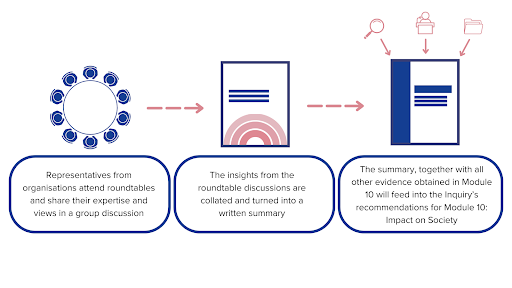
ਚਿੱਤਰ 1. ਹਰੇਕ ਗੋਲਮੇਜ਼ M10 ਵਿੱਚ ਕਿਵੇਂ ਫੀਡ ਹੁੰਦਾ ਹੈ