Executive Summary
This report does not represent the views of the Inquiry. The information reflects a summary of the experiences that were shared with us by attendees at our Roundtables in 2025. The range of experiences shared with us has helped us to develop themes that we explore below. You can find a list of the organisations who attended the roundtable in the annex of this report.
In May 2025, the UK Covid-19 Inquiry conducted a roundtable focused on the impact of the pandemic on the retail, hospitality, travel and tourism sectors. The roundtable was held across two breakout group discussions, one with retail organisations and the other with hospitality, travel and tourism organisations.
Representatives agreed that the government guidance at the start of the pandemic was not sufficiently detailed or tailored to their sectors. This meant there was variation in the Covid-19 measures implemented in different businesses, leading to confusion and inconsistency. There was also different guidance in the devolved nations. This meant businesses operating across different parts of the UK were uncertain about the rules they needed to follow.
Collaboration between businesses and trade associations played a crucial role in improving how government guidance was interpreted and implemented. There were also examples of different sectors working with the government to develop and communicate more tailored guidance, particularly as the pandemic went on. For example, representatives from Scotland said regular contact between government and trade associations about the guidance improved the consistency and effectiveness of pandemic measures.
Government guidance was communicated regularly, keeping trade associations and their members up to date with latest developments. However, guidance changed frequently, leading to operational and financial strains for businesses who had to keep adapting. Representatives gave different examples of the problems caused by restrictions, including the abrupt closure of ‘non-essential’ shops in the first lockdown and the introduction of the traffic light system for international travel, both of which halted business operations and reduced revenue.1
There was consensus that the classification of businesses and business activities as either essential or ‘non-essential’2 was unclear and led to feelings of unfairness and resentment among businesses that had to close. For ‘non-essential’ businesses, there were significant financial impacts and pressure on business owners and staff as a result.
In some cases, pandemic restrictions led to innovation. For example, retail businesses shifted to online sales or introduced ‘click and collect’ services. Restaurants offered takeaways or ingredients to make recipes at home. Tourism and hospitality venues moved to online ticket sales and bookings. Other businesses made use of outdoor spaces to accommodate customers. This innovation enabled some businesses to widen their customer base.
The travel industry was able to introduce credit notes to defer rather than refund purchases. However, strict international travel restrictions led to substantial revenue losses, particularly for those who were solely reliant on international travel bookings. As a result, the travel and tourism sector shifted to primarily selling travel within the UK. Post pandemic, representatives thought the pandemic had reshaped travel priorities, with an increase in people wanting to travel internationally since restrictions ended. However, this has been accompanied by a decline in domestic and business travel.
Pandemic restrictions had a significant financial impact on businesses across all sectors. Representatives thought the impact was felt most by businesses that did not have the financial reserves to adapt. The pandemic meant that some travel businesses, late-night venues and small businesses had to cease operating, leading to significant financial struggles. They pointed out that many of these businesses were already burdened by existing debt and faced ongoing operational costs. The lack of investment in adaptation further weakened their resilience. Financial support schemes, such as the furlough scheme3 and VAT reductions4, were described as a lifeline for some businesses, helping them to stay afloat and keep their staff employed.
During the pandemic, employees across various sectors experienced an increase in workloads. This was due to the need to perform additional tasks to comply with restrictions and to manage staff shortages caused by furloughs or employees leaving. Many businesses saw staff leave for reasons such as work pressures or wanting more stable employment. Representatives from the retail and hospitality sector said that hiring staff remains challenging, as increasing numbers of people want to work from home or seek more secure employment, leaving a skills gap.
As businesses prepared to reopen, they were required, at short notice, to ensure they had adequate staffing, implement appropriate workplace safety measures and manage supply chain issues. Representatives said there was not sufficient guidance on how to reopen businesses safely, which increased the fear of both staff and consumers contracting Covid-19.
The pandemic restrictions were said to have led to changes in consumer shopping habits. In particular, the pandemic increased the value that consumers placed on local businesses, as they allowed them to shop safely in person without travelling out of the local area. There was a perception that these local businesses supported communities and created a sense of belonging during the pandemic.
The economic impact of the pandemic on communities varied. There was discussion about how businesses in rural areas were able to better adapt to pandemic restrictions, as rural communities favoured local convenience. Conversely, businesses in city centres suffered, as fewer people commuted to work and business travel also declined. There was a perception among the public that cities were less Covid-19 safe, deterring visits, even as restrictions eased.
Representatives also described how they have observed fewer young people visiting late night venues. This was felt to be partly due to night time economy closures during the pandemic. The decline in customers since the pandemic has had a negative financial impact on these venues.
When considering the lessons to be learned in future pandemics, they emphasised the need to establish consistent dialogue between government, businesses and trade associations to ensure guidance is tailored and communicated effectively. They wanted better coordination between all four nations to make rules more consistent across the UK. They also wanted local communities to have a stronger voice in decision making to mitigate the negative impacts on people living in different communities.
Finally, they reflected on the need to improve how funding is designed and distributed.
Some issues raised during the roundtables were applicable across sectors, while others were sector specific. We have made sector specific points clear, by using colour-coded headings.
Sectors
Hospitality
Retail
Travel and Tourism
- Traffic light system: The traffic light system for international travel was a framework used to categorise countries based on their Covid-19 risk levels, dictating the restrictions and requirements for travellers returning to the UK. It divided countries into green, amber and red categories, each with specific testing and quarantine rules.
- Essential and ‘non-essential’: During the pandemic the government mandated the closure of ‘non-essential’ businesses on 21 March 2020. Essential businesses were able to remain open with restrictions, essential businesses were typically those considered critical to maintaining public health and safety, as well as societal functioning.
- Furlough scheme: A furlough scheme is an initiative where a government financially supports employers to keep their employees on the payroll during a business downturn, rather than laying them off. The furlough scheme was used by some businesses during the pandemic.
- VAT reduction: Reduced rate VAT is a VAT cut to goods and services in the UK. It’s set at a lower rate than the standard rate of VAT.
Key Themes
1. Impact of implementing government rules and guidance
The government guidance was described by representatives as not sufficiently detailed or tailored to specific sectors. This resulted in difficulties interpreting and implementing guidelines and led to inconsistent application by businesses across sectors. There was acknowledgment that the scale and diversity of their sectors made it challenging to create guidance specific to every business’ needs. However, the lack of specificity resulted in uncertainty for businesses who struggled to interpret more general guidance and feared that their businesses were not compliant.
| " | Government guidance was general and not tailored to the specific needs of diverse hospitality subsectors, thus making it challenging to apply effectively across different types of businesses. The sector struggled with translating broad guidelines into practical, actionable steps for the wide variety of hospitality settings, like restaurants, hotels, and children’s play centres.”
- UKHospitality |
Across the sectors, representatives described how organisations had to respond to frequent changes to guidance, often given through verbal updates. They welcomed these verbal updates which they said changed the way they worked and allowed them to receive important information more quickly. However, the frequent changes to guidance meant that organisations had little time to respond appropriately and increased pressure on staff to interpret and implement guidance at pace. Hospitality Ulster stated that they learned of rules that came into effect from midnight on the same day.
| " | There was a tendency for the smaller iterations [of guidance] to be finished by end of day Friday, which made it difficult for head offices [implementing] knock-on processes. This meant staff would have to translate the guidance to make it easier to understand.”
- The Federation of Small Businesses |
Guidance often differed across the devolved nations and this led to confusion, especially for businesses operating throughout the UK. For example, VisitBritain discussed the impact on UK coach operators running cross-border coach tours. They said it was hard to clarify the rules in place when visiting attractions in different devolved nations, which led to concerns that businesses were not following the appropriate rules.
| " | In Northern Ireland, devolved government guidance was next to nothing. We had late implementation of laws and no idea how it worked. We ended up writing our own guidance. [The] police force didn’t know what to do.”
– Hospitality Ulster |
Focus on: the retail sector
In the retail sector the British Retail Consortium noted that businesses were required to keep their staff updated on the latest guidance which changed frequently. However, limited communication between the government and the sector led to errors and misunderstandings about the specific rules businesses and staff needed to follow in each nation.
Representatives for the retail sector also highlighted that the lack of clear guidance meant that industry bodies played an essential role, supporting businesses to interpret and implement pandemic measures. Collaborative relationships between industry bodies that developed during the pandemic were crucial to improving the clarity of guidance for organisations to follow. There was a view that industry body networks supported the government to improve later guidance. For example, the British Retail Consortium said that businesses worked with unions such as USDAW to create workplace safety guidance for warehouses and shops. This guidance was then adopted by the government, improving clarity and consistency across the retail sector as the pandemic continued.
Focus on: the hospitality sector
In the hospitality sector the initial government guidance was described as general and difficult to translate into practical action for the many diverse types of business within hospitality. UKHospitality noted that the introduction of tiered restrictions – with different towns facing different restrictions – added further complexity as the guidance around the tiered system was difficult to understand.
There was limited guidance for businesses like pubs and event venues that had to close immediately. They were concerned about how long restrictions would last and could not prepare for any future reopening, thereby creating uncertainty about the future of their businesses and their financial resilience.
In the hospitality sector there was widespread reliance on trade bodies for interpreting and disseminating guidance which representatives said significantly improved the effectiveness of pandemic measures. For example, UKHospitality Scotland noted that by actively engaging with trade bodies, the Scottish government fostered a collaborative relationship that resulted in relevant and effective restrictions, enhancing the sector’s resilience during the pandemic.
| " | The [Scottish] government lent heavily on trade associations and looked to us to get the information and guidance out not just to our members but more widely as well…I would say in terms of the flow of communication and dialogue, certainly in the early phases it was pretty good. There was a lot of opportunity for us to feed into guidance and help shape what the Scottish government was thinking, at least initially, which was great.”
- UKHospitality Scotland |
Focus on: the travel and tourism sector
There was a strongly held view that the lack of tailored guidance led to uncertainty for travel and tourism businesses. For instance, ABTA – The Travel Association noted that when pandemic restrictions were updated for winter 2021/22, travel was initially excluded, meaning they had no guidance during a usually busy time of year for their members. Without adequate guidance businesses did not know how their sector would be affected and could not answer questions from consumers trying to plan travel.
Advantage Travel Partnership emphasised that the communication of government rules was usually last minute and often came via social media without sufficient detail. The rapid changes to travel and tourism guidance meant that travel plans sometimes had to change overnight, which caused worry for travellers and was costly for businesses. There was a consistent view that the ‘traffic light system’, introduced to categorise countries based on their Covid-19 risk, was particularly damaging for the travel and tourism sector, as travel to and from certain countries could be restricted at short notice. As a result, consumers became reluctant to plan travel in advance because they were concerned about categories changing at the last minute. This had a negative impact on the income and resilience of international travel organisations.
| " | For us, particularly the traffic light system, the 5pm updates we got every week, that is completely unworkable from both a business and consumer perspective. You just can’t plan to travel and you can’t sell travel. That kind of regularity of change just cannot be replicated. It obliterated the industry. It obliterated travel.”
- ABTA – The Travel Association |
The introduction of tiered restrictions added to the operational complexity for travel and tourism businesses and was stressful for them to manage. ABTA – The Travel Association explained how someone living in Tier 4 restrictions in England was meant to stay at home, but they were still allowed to go on an overseas holiday and were able to travel to an airport. They said travel companies engaged with the government for weeks to gain clarity about this and it contributed to uncertainty for consumers and travel companies.
| " | The tier system came in October-time 2020. I think what was a quite easy to understand, practical, common-sense approach to enforcement guidance started to fall apart a bit. You had different levels of restriction for different areas from one town to the other. That’s when it started to break down.”
- UKHospitality |
Essential and non-essential businesses
The pandemic restrictions meant businesses were classified as either essential, which meant they were able to stay open, or ‘non-essential’, which required them to close at short notice. ‘Non-essential’ businesses found their trade, consumers and staff were immediately impacted and their long-term financial resilience affected.
Representatives felt there was no consistent definition of essential or ‘non-essential’ businesses and that businesses were classified without a clear rationale. The absence of clear criteria led to perceptions of unfairness and frustration for businesses that had to close and lose their revenue stream. The Federation of Small Businesses explained how some businesses felt they were wrongly, or unfairly, categorised as ‘non-essential’, leading to resentment when other businesses providing similar goods or services were allowed to stay open.
| " | [As a business owner] when you’re told you’re non-essential, but your product is sold in essential [retailers] – that was hard to accept.”
- British Independent Retailers Association |
There was similar uncertainty for businesses in understanding which products they were able to sell as “essential items”. This caused concern for businesses that feared the repercussions of not being compliant with the rules.
| " | Some retailers were allowed to continue to operate but for non-essential retailers there was quite a big impact on their resilience. The issue for business survival for those non-essential ones was cash flow and so majorly financial.”
- Federation of Small Businesses |
2. Impact of the restrictions and closures
Adaptation and innovation
As the pandemic restrictions continued for longer than businesses anticipated, businesses innovated. They did so by rapidly accelerating their online capabilities, making use of outside spaces and adapting to changes in consumer behaviour, for example by allowing late notice cancellations without paying fees. These adaptations often helped them to reach more customers locally and across the country, helping them financially.
However, some businesses were unable to adapt due to limited finances, capacity or opportunity for investment. Those businesses who were unable to adapt found it hard to maintain their operations. They discussed how these businesses had to become leaner, managing costs carefully and reducing investment to try and secure their businesses long term. Advantage Travel Partnership said that, in particular, small and medium sized enterprises became especially careful to streamline their operations to be resilient and stay afloat, with owners often worried about their own livelihoods.
Focus on: the retail sector
In the retail sector, the pandemic restrictions encouraged shops to shift to using online platforms, social media and ‘click and collect’ to continue trading. According to the Association of Convenience Stores, 95% of food retailers saw a significant increase in their home delivery services, as consumers did not want to travel to buy food. Shops that offered online and ‘click and collect’ services were able to help keep people safer, particularly those who were vulnerable, as they did not have to risk contracting Covid-19 whilst shopping in person.
| " | The hit on non-essential retail meant a lot had to innovate; to introduce click and collect like they hadn’t before so it did reinforce [that] sometimes periods of crisis are the best for innovation. It enabled businesses to change and adapt, reach out to [a] new customer base.”
- Retail NI |
The British Chambers of Commerce reflected on the long-term impact on those businesses that were unable to adapt. For example, many small retail businesses lacked the financial resources needed to modify their business models, such as transitioning operations from in-person to online. As a result, they struggled to recover from the pandemic’s effects and many ultimately closed.
| " | The vast majority of business[es] saw decreased revenue; the initial impact was huge on almost all businesses. A lot of retail and hospitality firms are small businesses and they were not able to adapt processes because their business model was fixed [could not be adapted to restrictions]. The restrictions on that sector have had a lasting impact, and our data suggests they haven’t fully recovered 5 years on. It had a huge impact on those sectors.”
- British Chambers of Commerce |
Focus on: the hospitality sector
In the hospitality sector, businesses also changed how they operated to respond to pandemic circumstances. For example, representatives explained how changing pandemic restrictions meant that hospitality businesses had to adapt their booking policies to be more flexible on cancellation charges. This managed disruption and supported consumers during uncertainty, but also led to a permanent change in consumer expectations about cancellations.
UKHospitality Scotland noted that during the pandemic businesses invested in outdoor spaces or moved services online to continue trading safely. Many businesses started offering takeaways and meal ingredient kits. Others introduced online services like home cocktail tutorials or streaming music and theatre performances. Pubs and restaurants introduced QR codes for ordering and accelerated the adoption of contactless payments and mobile apps. These adaptations were seen as innovative ways of allowing businesses to keep trading, supporting the resilience of the sector.
| " | The unique thing of going to the pub is a pint. We had a company where you bought it online, they had a van with a keg and went down to your door and pulled you a pint.”
- Hospitality Ulster |
It was especially difficult for late-night venues like clubs and bars and smaller hospitality businesses to adapt; most were forced to close as ‘non-essential’ businesses and did not have the finances to implement necessary changes as the pandemic went on. UKHospitality emphasised that the pandemic worsened the pre-existing debt burdens on hospitality businesses.
Focus on: the travel and tourism sector
Travel and tourism representatives said the restrictions on travel meant it was difficult for businesses in their sector to adapt. One adaptation that ABTA – The Travel Association discussed was the introduction of the refund credit note. This was supported by the Civil Aviation Authority (CAA) and Department for Transport and gave customers assurance that they would receive their money back, while financially supporting the travel and tourism sector.
| " | Even though they would get their money back later than planned and the government would support it, it gave customers confidence not to chase their immediate refunds. That saved us.”
- ABTA – The Travel Association |
According to representatives, the most significant adaptation in the tourism sector was moving more ticket sales online. For example, VisitBritain described how many tourist attractions introduced online ticket sales with time slots to manage crowd control and social distancing.
Financial impact on businesses
There was discussion about many businesses losing revenue, accumulating debt, and having to deal with increased operational costs without additional income. Representatives reflected that the economic impact of the pandemic was significant, but the true level of this impact on businesses and communities will not be apparent for many years.
One challenge many businesses faced was reclaiming funds from consumer and business insurers. Representatives explained that some businesses made insurance claims due to forced business closures and unforeseen pandemic-related costs. However, when insurance policies had exclusion clauses, businesses often did not receive compensation, leading to financial problems and the closure of some businesses.
Where businesses accessed financial support, this had a positive impact and helped keep them afloat. For example, the British Independent Retailers Association told us that the introduction of VAT rates relief and the furlough scheme was particularly helpful for smaller businesses. Some representatives felt that financial support was timely and necessary when businesses were not able to operate. However, there was criticism that business owners often received minimal personal support, despite the substantial impacts on their personal finances and mental health.
Focus on: the retail sector
Many retail businesses faced significant financial impacts during the pandemic, particularly those that were forced to close during the restrictions. There was discussion about the impact of reduced revenue and how this meant some retail stores, particularly smaller ones, permanently closed. The British Independent Retailers Association noted that retailers have yet to see footfall in physical stores return to pre-pandemic levels, partly due to increased consumer preference for online shopping.
Despite the financial difficulties faced by businesses, the British Independent Retailers Association said that their members were committed to maintaining high ethical standards, supporting consumers and tried to keep price gouging6 to a minimum during the pandemic.
Focus on: the hospitality sector
UKHospitality explained that many hospitality businesses were already burdened with significant debt before the pandemic. This situation worsened during the pandemic due to increased costs and forced closures for ‘non-essential’ businesses. This led to many businesses operating month to month and unable to make improvements to continue to serve customers, impacting their revenues as the pandemic went on. Hospitality Ulster specifically highlighted the financial struggles faced by late-night venues that closed during the pandemic. The pandemic had led to an increase in customers socialising at home and reduced attendance at venues once they reopened, leading to many having to close permanently.
| " | Our industry, particularly in Northern Ireland, still feels the financial legacy of Covid… [it has] left them in debt and that has left them struggling the whole way through this. That limits investment, expansion.”
- Hospitality Ulster |
Focus on: the travel and tourism sector
The travel and tourism sector faced significant financial challenges during the pandemic, particularly due to the restrictions on international travel which lasted until March 2022. The introduction of the ‘traffic light system’ was also said to have contributed to a reduction of revenue of travel companies. For example, ABTA – The Travel Association explained that when travel to particular destinations was prohibited businesses either had to rebook or refund customers at a substantial financial cost to the business. Staff could not be furloughed as they had to process the refunds, creating additional financial pressures on businesses because they had no income but were still paying staff costs.
| " | I think it’s the real operational challenge that impacted inbound and outbound. All staff had to work to manage all changes required without any cash coming in. You make money when passengers depart. It was using its own cash to manage the changes required.”
- Advantage Travel Partnership |
They also noted that some parts of the travel sector have struggled to recover financially from the pandemic. For example, business travel has faced challenges in recovering due to shifts in working patterns and the rise of remote and hybrid work arrangements. They also observed a trend of last-minute travel bookings, attributed to the rapidly changing restrictions and ongoing uncertainties, with 50% of bookings now being made within 12 weeks of departure. This has made it harder for travel businesses to forecast demand accurately.
Impact on staff
Representatives discussed how staff across their sectors faced increased workloads during the pandemic because of staff shortages and changes to how they interacted with customers. This increased their responsibilities at work which contributed to work based stress. For example, in the retail sector staff had to enforce regulations like mask wearing which increased verbal and physical abuse from customers who did not want to comply. This had a negative impact on staff mental health and wellbeing.
Staff in the hospitality sector were also said to have had to deal with upset and angry customers, whilst taking on the extra role of managing customer expectations about the services they could offer.
| " | It was just incredibly stressful for businesses and people working in businesses trying to reopen – and managing the expectations of customers and guests was probably one of the biggest issues there as well.”
- UKHospitality Scotland |
According to representatives, staff across all sectors also faced high levels of job insecurity during the pandemic. For example, in the hospitality sector before the furlough scheme was introduced, businesses had immediately moved to make staff redundant. However, the furlough scheme meant they were able to pause this.
More broadly, they noted that the pandemic led to significant job losses, affecting the finances of workers who lost their jobs and causing capacity issues for businesses. This occurred despite the implementation of furlough schemes. UKHospitality Scotland said that people who were furloughed often found other jobs in different sectors. VisitBritain said that, between February 2020 and May 2021, 81% of job losses across the economy were in the accommodation or food services sector. The travel sector was particularly hit by staff losses and by the time international travel reopened in March 2022, they had lost nearly half of their staff. This significant reduction in workforce made it challenging for the sector to resume operations effectively and led to a skills gap.
| " | That whole bit about chefs going off and driving for Amazon because they could make as much money but not work as many hours. It did lead to a big drop off in terms of the talent we were able to hold onto, but also in terms of talent we were able to attract.”
- VisitBritain |
There was a reflection that the pandemic changed expectations around work more broadly, with many people now wanting hybrid or fully remote roles, away from high streets or city centres. This created problems with recruitment and building skills and capacity within the sectors. However, the Federation of Small Businesses noted a positive change during the pandemic as there was more of a focus on mental health at work. They said staff are now more open to discuss their emotions.
| " | I think everybody has just reevaluated their lives and habits. That’s not just from all of us personally, but business owners as well. We’ve lost an awful lot of experience from our industry [the accommodation and events sector]. They just didn’t need to be working the hours they did before. They thought actually, let’s semi-retire. The amount of experience we’ve lost is absolutely shocking.”
- BEAM |
Reopening of venues and services
Representatives described how the reopening of venues, services and shops presented unique challenges, noting it required more strategic planning than the closures. They pointed out the challenge of implementing Covid-19 guidelines like social distancing and face mask mandates, while simultaneously working to stabilise their operations and boost their financial recovery. The impact of the furlough scheme and loss of staff during the pandemic also meant businesses faced staff capacity issues, which limited their ability to reopen within a short timeframe.
| " | It’s one thing saying ‘You can open,’ but when you have fewer staff and key services have been on hold, your ability to restart a business overnight is hampered.”
- Advantage Travel Partnership |
Focus on: the retail sector
In the retail sector, representatives felt that there was a lack of clear guidance about how to reopen retail spaces safely. The British Retail Consortium explained that this caused logistical and operational issues for retail businesses, who were unsure on how to proceed with staff recruitment and implementing social distancing and workplace safety measures.
| " | A general theme which has occurred throughout, the misunderstanding of government and communications of the operational detail. In the context of reopening, the idea you could tell the country we’re opening on Monday and expect staff to be in place, things to be sorted. Closing down was much easier than opening.”
– British Retail Consortium |
The British Independent Retailers Association was more positive about how retail spaces reopened. They felt that the government had learned from their experience of closing down the sector and understood that they needed to work collaboratively to develop better guidance. They thought this led to guidance that was easier to communicate and follow, making reopening more straightforward for businesses and their staff.
Focus on: the hospitality sector
Hospitality sector representatives explained how significant changes to venues had to be made for businesses to reopen safely. For instance, UKHospitality said that venues are usually designed for socialising in close proximity, and it took considerable time and effort to make spaces Covid-19 safe with adequate space for social distancing.
As hospitality spaces began to reopen, representatives acknowledged the difficulties in sourcing and managing supplies as supply chains had been disrupted during the pandemic. They described examples of beer not being available for pubs, which increased anxiety for businesses trying to meet customer expectations. They also gave examples of hospitality businesses sourcing supplies only for the rules to change in a way that meant they could not be used. For example, some businesses ordered food in preparation for reopening only for the guidance to change. As a result of this, they had to donate supplies to food banks in order to prevent waste.
| " | There were issues around getting in supplies, particularly perishables and a lot of businesses struggled to get food in…It was just incredibly stressful for businesses and people working in businesses, trying to reopen, and managing the expectations of customers and guests”
- UKHospitality Scotland |
Focus on: the travel and tourism sector
The travel and tourism sector faced a more staggered and longer recovery according to representatives. For instance, due to prolonged travel restrictions, international travel resumed in March 2022, which was much later than domestic travel. There was acknowledgement that the limitations on international travel led to businesses focusing more on domestic tourism. VisitBritain said that this shift prompted them to change the focus of their marketing to domestic travel. This was a change in their business model, which had previously focused on attracting visitors from outside the UK.
Impact on communities
Consumer behaviour
There was consensus amongst representatives that the pandemic had led to a deeper appreciation from consumers for their local community. They said local businesses became spaces for connection, improving community relationships, increasing a sense of belonging and reducing loneliness.
| " | It really changed shopping habits to be more local. Retailers were able to sustain a more locally tailored model. There was some recognition about how important it was to have retail services close to where you live and I think that changed consumer behaviours.”
- Association of Convenience Stores |
Across sectors, consumers of all ages adapted to digital payments, and this led to a substantial decline in cash usage. The Association of Convenience Stores said the decline in physical cash impacted some businesses that rely on it to trade, particularly in the hospitality and retail sector. It also reduced the number of cash machines in convenience stores.
As venues and services began to reopen, older and clinically vulnerable people remained concerned about contracting Covid-19. This meant they were reluctant to engage in hospitality, retail and travel and tourism. In comparison, they said that younger people generally felt less worried about the health risks associated with Covid-19 and were more eager to return, providing a significant boost to businesses.
| " | As we reopened the more vulnerable people stayed away. Younger people came back because I think they thought they were invincible. We still have a legacy where more vulnerable people still don’t feel safe to come back.”
– Hospitality Ulster |
Focus on: the retail sector
In the retail sector, consumer behaviour shifted towards panic and bulk buying at the start of the pandemic. This meant that businesses across the country had to quickly modify their supply chains to avoid running out of essential items, increasing the strain on organisations and their staff.
There was consensus on the importance of local shops and venues for those working from home and older or clinically vulnerable people.
| " | There were some positives [to the pandemic], it did reinforce the need for independent food retailers, older people, those with mobility issues, those stores were a lifeline.”
– Retail NI |
Representatives discussed the substantial rise in people buying things online to avoid travelling or because shops and venues were closed. Furthermore, due to the ease of online shopping, consumers began to shop with intent rather than browsing or window shopping. The British Independent Retailers Association said that the shift to online shopping led to a trend of consumers buying multiple items online but returning most of them. This added to workload and cost for retailers that had to handle more returns.
Focus on: the hospitality sector
In the hospitality sector, consumers increasingly turned to digital platforms for reservations, orders and payments, minimising the need for physical contact and helping to prevent the spread of Covid-19. They said that QR codes and contactless payment methods have become standard in hospitality venues, which has led to a lasting shift in consumer behaviour.
The pandemic also significantly impacted young people’s engagement with hospitality venues. They felt the closure of late-night venues increased the trend of home socialising and that even after these venues reopened, there remained a reluctance among young people to return, subsequently affecting the demand for and financial stability of these venues.
| " | The impact of the pandemic [has meant] that the socialising at home culture has remained. I think younger people because they missed out on [late night venues], their habits are now different. Late night venues [now] struggle.”
– Hospitality Ulster |
Focus on: the travel and tourism sector
Representatives pointed out that some travel agents experienced a boost in their business during and after the pandemic. People transitioned from a pre pandemic trend of booking holidays themselves, online, to seeking expert guidance in order to book travel. This was due to the uncertainty caused by pandemic travel restrictions,
Longer term, the restrictions on international travel during the pandemic were thought to have led to an increased appreciation for leisure travel. There was a view that people now place greater value on travel, particularly in light of travel restrictions and forced cancellations during the pandemic. However, the rise in travel has not been felt evenly, as older and more vulnerable people return to travel more slowly due to continued concerns about contracting Covid-19. Advantage Travel Partnership explained that some consumers made bookings but were too anxious to travel and lost money due to a lack of compensation schemes.
| " | As travel restrictions started to open, those that felt they were vulnerable, they may have had bookings but they didn’t want to travel. There is no insurance, no regulation, nothing that would compensate consumers who chose not to travel. It became a really difficult challenge for members and their staff on the ground to manage conversations with a client who didn’t want to travel”
– Advantage Travel Partnership |
Impact on rural and urban areas
Businesses in city centres were hit hardest because fewer people were commuting to them for work. The reduction in business travel also had an impact on cities that catered for business visitors before the pandemic. Businesses in suburban and rural areas were thought to adapt more successfully and bounced back more quickly, as they had local populations to serve. Similarly, the British Chambers of Commerce reflected that the closure of universities had a negative financial impact on local businesses reliant on student trade and the surrounding community.
There was consensus that many businesses in urban areas had reduced their opening hours to adapt to lower customer numbers during the pandemic. The British Independent Retailers Association explained that these revised opening times were introduced to align with changed consumer behaviour. The Association of Convenience Stores reflected that the change in consumer shopping patterns meant that some shops began to shut for an afternoon a week, which they said had not been common for many years.
| " | Most retailers reported cutting opening hours… this was contrary to what we thought was the direction of travel towards 24/7 opening. The pandemic was one of the reasons for that.”
– Association of Convenience Stores |
In the travel and tourism sector representatives agreed that concerns about Covid-19 meant many domestic tourists also avoided cities in favour of coastal and rural areas as it was deemed safer. VisitBritain explained how they introduced an emblem for city businesses to demonstrate compliance with Covid-19 guidelines, in an attempt to increase confidence amongst visitors. While this was popular, VisitBritain said that many city centre businesses still became insolvent, because lower footfall continued as restrictions eased.
There was a perception that the surge in rural tourism sparked a backlash from some local communities. VisitBritain explained that these areas were not prepared for increased visitor numbers, leading to overwhelming demand and, at times, temporary closures of landmarks and popular sites to ensure safety. In some instances communities in places like the Lake District and Cornwall, actively rejected tourists and had protested the rise in visitors.
| " | All of a sudden, you had huge numbers travelling [to rural communities] at a time when the local authorities had closed all public toilets and cafes and these areas often didn’t open car parks. Tourism was seen as a real nuisance.”
– VisitBritain |
- Refund credit note: This is a document to acknowledge that a customer is owed a refund, but they are not automatically refunded.
- Price gouging: is the practice of raising prices for essential goods or services to an unreasonable or unfair level, often during emergencies or disasters when demand is high and supply is limited.
Lessons for future pandemics
Consistent, joined-up communication between the government and industry bodies
Representatives wanted the government to collaborate with businesses and trade associations when preparing for and responding to future pandemics. They felt that this would ensure operational expertise is considered, so that pandemic measures are tailored and effective. They emphasised the need to understand the potential impact of restrictions, both within and across sectors, before they are implemented. They noted that the huge diversity in types and sizes of businesses in their sectors means there is a need for clear, tailored guidance to ensure adequate preparedness for a pandemic. Risk management and comprehensive impact assessments were suggested as ways to achieve this.
Fair and proportionate financial support
Representatives wanted financial support to be linked to the specific restrictions imposed and proportionate to the expected impact on businesses. They suggested a gap analysis to understand where financial support was not available during Covid-19. This learning was seen as helpful for ensuring financial support prioritises those who need it most.
Consistent guidance for businesses across UK nations
Representatives suggested that there should be a coordinated approach to decision making across the UK. They said consistent rules in different parts of the country would support businesses to implement the guidance when operating across different regions. They also emphasised the need for collaboration between devolved administrations to ensure consistency in the rules introduced.
More input from local communities when developing guidance
Representatives emphasised the importance of input from local communities before implementing restrictions on local retail and hospitality venues. They felt that local community engagement would mitigate any negative impacts on people living in different communities.
Developing a clear framework to respond to future pandemics
There was a need for a clear framework for future pandemic responses, to enable businesses to prepare. They also said that plans should be in place to ensure that supplies of goods are maintained in the event of panic buying or when businesses are reopening.
Reforming business and consumer insurance
Representatives said that businesses need more clarity about insurance cover during pandemics and wanted exclusion clauses to be reformed.
Annex
Roundtable structure
In May 2025, the UK Covid-19 Inquiry held a roundtable to discuss the impact of the pandemic on the hospitality, retail, travel and tourism sector. This roundtable included two breakout group discussions one focused on the retail and the second on the hospitality, travel and tourism sector.
This roundtable is one of a series being carried out for Module 10 of the UK Covid-19 Inquiry, which is investigating the impact of the pandemic on the UK population. The module also aims to identify areas where societal strengths, resilience, and or innovation reduced any adverse impact of the pandemic. The roundtable was facilitated by Ipsos UK and held at the UK Covid-19 Inquiry Hearing Centre.
A diverse range of organisations were invited to the roundtable; the list of attendees includes only those who attended the discussion on the day. Attendees at the two-breakout group discussion were representatives for:
Retail sector:
- British Chambers of Commerce
- British Independent Retailers Association
- British Retail Consortium
- Retail NI
- Association of Convenience Stores
- The Federation of Small Businesses
Hospitality, travel and tourism sector:
- ABTA -The Travel Association
- UKHospitality
- ਯੂਕੇ Hospitality Scotland
- ਮੁਲਾਕਾਤ Britain
- Advantage Travel Partnership
- BEAM
- Hospitality Ulster
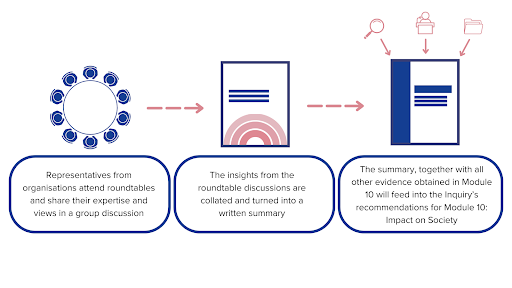
Figure 1. How each roundtable feeds into M10: