ایگزیکٹو خلاصہ
یہ رپورٹ انکوائری کے خیالات کی نمائندگی نہیں کرتی ہے۔ معلومات ان تجربات کے خلاصے کی عکاسی کرتی ہے جو 2025 میں ہماری راؤنڈ ٹیبل کے شرکاء کے ذریعے ہمارے ساتھ شیئر کیے گئے تھے۔ ہمارے ساتھ اشتراک کیے گئے تجربات کی حد نے ہمیں ان موضوعات کو تیار کرنے میں مدد کی ہے جنہیں ہم ذیل میں دریافت کرتے ہیں۔ آپ ان تنظیموں کی فہرست دیکھ سکتے ہیں جنہوں نے گول میز کانفرنس میں شرکت کی اس رپورٹ کے ضمیمہ میں۔
اس رپورٹ میں گھریلو بدسلوکی اور ذہنی صحت کے اثرات کی تفصیل شامل ہے۔ یہ کچھ لوگوں کے لیے پریشان کن ہو سکتے ہیں۔ قارئین کی حوصلہ افزائی کی جاتی ہے کہ اگر ضرورت ہو تو تعاون حاصل کریں۔ UK Covid-19 انکوائری ویب سائٹ پر معاون خدمات کی فہرست فراہم کی گئی ہے۔
اپریل 2025 میں، UK CoVID-19 انکوائری نے 2020-2022 کے دوران سوگوار ہونے والوں پر وبائی امراض کے اثرات پر بات کرنے کے لیے ایک گول میز تقریب کا انعقاد کیا۔ یہ رپورٹ ان اہم موضوعات کا خلاصہ کرتی ہے جو ہم نے کووِڈ-19 کے سوگوار خاندانی مہم گروپوں اور سوگوار امدادی تنظیموں کے نمائندوں کے ساتھ کی ہیں۔
خلاصہ یہ کہ وبائی مرض کے دوران سوگ 'عام اوقات' میں سوگ کی طرح نہیں تھا۔ پابندیوں کا مطلب یہ تھا کہ لوگ موت سے پہلے اپنے پیاروں کے ساتھ وقت نہیں گزار سکتے اور اس کی وجہ سے گہرے اور طویل مدتی احساس جرم اور ندامت پیدا ہوتی ہے۔ سوگوار خاندانی مہم گروپوں کے کچھ ممبران نے سوال کیا کہ کیا انہوں نے گائیڈ لائنز اور پابندیوں پر عمل کرنے کا صحیح فیصلہ کیا ہے اس اثرات کو دیکھتے ہوئے جو الوداع کہنے کے قابل نہ ہونے سے ان پر پڑا ہے۔ سماجی دوری اور لاک ڈاؤن کی پابندیوں کی وجہ سے سوگوار لوگوں میں تنہائی اور تنہائی میں اضافہ ہوا، جس نے غم کو مزید پیچیدہ اور مشکل بنا دیا۔
سوگوار لوگ جگہ جگہ پابندیوں کی وجہ سے اپنے پیاروں کی خواہشات کے مطابق جنازے نہیں اٹھا سکے۔ انہوں نے اس بات پر خود مختاری کھو دی کہ جنازہ کیسے ادا کیا گیا اور کتنے لوگ شرکت کر سکتے ہیں۔ پیاروں کو ان کے یا ان کے خاندان کے پسندیدہ کپڑوں یا پسندیدہ اشیاء کے ساتھ دفن نہیں کیا جاسکتا تھا، اور نہ ہی سوگواروں کو وہ پھول مل سکتے تھے جو وہ چاہتے تھے۔ انہوں نے آخری رسومات کے انتظامات کرنے کے عمل کو محسوس کیا اور خود سروس کو اکثر حساسیت، دیکھ بھال اور توجہ کی صحیح سطح کے بغیر جلدی محسوس کیا گیا۔
جنازوں کے قوانین اور پابندیوں میں پورے برطانیہ میں مستقل مزاجی کا فقدان تھا۔ قوانین کی خلاف ورزی کے الزامات اور واقعات نے سوگوار لوگوں کے لیے ناراضگی اور ندامت کے جذبات کو جنم دیا جنہوں نے قواعد کی پابندی کی اور اپنی مرضی کے مطابق جنازے منعقد کرنے یا معمول کے مطابق ماتم یا غم منانے کے قابل نہیں تھے۔
مذہبی اور نسلی اقلیتی گروہوں کے لیے سوگ کے طریقوں پر پابندیاں خاص طور پر مشکل تھیں، جہاں کسی عزیز کی موت کی یاد دلانے اور غم پر کارروائی کرنے کے لیے مخصوص طریقے اور رسومات اہم ہیں۔
بند کیے گئے قبرستانوں تک رسائی سے قاصر ہونے کی وجہ سے وبائی امراض کے دوران اور اس کے بعد سوگوار خاندانوں کے لیے غمگین عمل کو مشکل بنا دیا گیا کیونکہ وہ وہاں جانے سے قاصر تھے جہاں ان کے پیارے کو دفن کیا گیا تھا۔
نمائندوں نے وبائی امراض کے دوران سوگ کے مالی اثرات پر بھی تبادلہ خیال کیا۔ جن خاندانوں نے اپنی بنیادی آمدنی کمانے والے کو کھو دیا ہے ان کو اپنے گھر کھونے اور پیچیدہ قانونی نظاموں کو نیویگیٹ کرنے کے بارے میں پریشانیوں کا انتظام کرنا پڑا، یہ سب کچھ اپنے غم کو سنبھالنے کی کوشش کے دوران تھا۔ سوگوار خاندان کے افراد نے بینکوں اور یوٹیلیٹی کمپنیوں کے ساتھ اکاؤنٹس بند کرنے کے عمل کو عملی طور پر غیر ضروری طور پر چیلنج پایا، کیونکہ کسٹمر سروس اکثر بہت جلدی یا بدترین انتہائی غیر حساس محسوس کرتی ہے۔
وبائی پابندیوں کے جواب کے طور پر، سوگوار امدادی خدمات فوری طور پر آن لائن اور ٹیلی فون کے ذریعے سپورٹ فراہم کرنے کے لیے منتقل ہو گئیں۔ یہ ضروری ہو سکتا ہے لیکن اس تبدیلی نے ان لوگوں کے لیے مشکل بنا دیا جن کے پاس انٹرنیٹ تک رسائی یا ٹیکنالوجی پر اعتماد نہیں تھا کہ وہ اپنی ضرورت کی مدد حاصل کر سکیں۔ کچھ جو ورچوئل سپورٹ تک رسائی حاصل کرنے کے قابل تھے محسوس کیا کہ یہ اس وقت ان کی جذباتی ضروریات کو پورا نہیں کرتا تھا۔
سوگوار خاندانی مہم گروپوں کے ذریعہ فراہم کردہ ہم مرتبہ کی مدد کو بہت سے لوگوں کے لئے ضروری قرار دیا گیا تھا جنہوں نے وبائی امراض کے دوران اپنے پیاروں کو کھو دیا تھا ، لوگ اکثر نہیں جانتے تھے کہ اور کہاں جانا ہے۔ سوگوار خاندانی مہم کے گروپ کا حصہ بننے سے بہت سے لوگوں کو یہ سمجھنے میں مدد ملی کہ وبائی مرض کے دوران ان کے اور ان کے پیاروں کے ساتھ کیا ہوا ہے۔ گروپوں نے سوگوار خاندانوں کو اپنے اور اپنے پیاروں کے لیے انصاف کے لیے مہم چلانے کی اجازت دی اور ان کے نقصان پر مقصد اور توجہ کا احساس فراہم کیا۔
سوگوار امدادی تنظیموں نے رضاکاروں کی بھرتی اور برقرار رکھنے کے چیلنجوں پر غور کیا جو وبائی امراض کے دوران خراب ہوئے تھے۔ فنڈنگ کی طویل مدتی کمی کے ساتھ مل کر، خدمات کی طلب کو پورا کرنے والے سوگوار امداد فراہم کرنا تنظیموں کے لیے تیزی سے مشکل ہوتا جا رہا ہے۔
نمائندوں نے سیکھے جانے والے اہم اسباق پر غور کیا تاکہ مستقبل میں کسی بھی وبائی مرض کے لیے سوگوار، جنازے اور سوگوار امداد تک رسائی کے تجربے کو بہتر بنایا جا سکے۔ ان کا کہنا تھا کہ قوانین اور پابندیوں کو انسانی تعلق کو ترجیح دینے اور خاندانوں کو زندگی کے اختتام پر اپنے پیاروں کے ساتھ رہنے کی اجازت دینے کی ضرورت ہے۔ وہ چاہتے تھے کہ سوگوار مدد فراہم کرنے والی تنظیموں کو مزید مضبوط کیا جائے، مالیاتی اور مستقبل کی وبائی بیماری میں طلب کو پورا کرنے کی صلاحیت دونوں لحاظ سے۔
ان کا ماننا ہے کہ سوگوار لوگوں کے لیے کمیونٹی کی قیادت اور نچلی سطح پر حمایت کے کردار کو زیادہ اہمیت دی جانی چاہیے۔ بڑی سوگوار امدادی تنظیموں نے اس بارے میں بتایا کہ مختلف تنظیموں جیسے NHS، خیراتی اداروں اور رضاکارانہ خدمات اور کمیونٹی گروپس کے درمیان کس طرح بہتر سائن پوسٹنگ اور حوالہ جات لوگوں کو ان کی مقامی کمیونٹی میں مدد حاصل کرنے میں مدد ملے گی جو ان کے پس منظر یا ضروریات کے مطابق بہتر ہے۔ سوگوار خاندانی مہم کے گروپوں نے کہا کہ ان حوالوں کی عدم موجودگی میں، ان کی مقامی سوگوار مہم اور امدادی گروپ ہی سوگوار خاندانوں کے لیے دستیاب واحد مناسب آپشن تھے۔
مجموعی طور پر، سوگوار خاندانی مہم کے گروپوں نے خاص طور پر اس بات کی عکاسی کی کہ برطانیہ میں جہاں بھی کوئی سوگ ہوا، تجربات یکساں تھے، چاہے برطانیہ کے اقوام اور خطوں کے درمیان پابندیوں میں کوئی فرق ہو۔ اس گول میز میں شرکت کرکے وہ اپنے گروپ کے ارکان کی آواز کو سنانے کے خواہشمند تھے۔
کلیدی تھیمز
جنازوں اور تدفین پر اثرات
ثقافتی، مذہبی اور ذاتی زندگی کے آخری رسومات
Hospice UK کے نمائندے کے مطابق، وبائی مرض کے دوران رہنمائی اس بارے میں کہ ثقافتی رسومات، تدفین یا تدفین کس طرح کی جا سکتی ہے، بشمول میت کو کس طرح دھونا اور تیار کرنا، یا لوگوں کو جلدی دفن کرنے کے قابل ہونا، بہت غیر واضح تھا اور وقت کے ساتھ ساتھ تبدیل ہوتا گیا۔ سوگوار امدادی تنظیموں نے بیان کیا کہ کس طرح جنازے اور تدفین کے کارکنوں کو اپنے فیصلے خود کرنے پڑتے ہیں اور واضح رہنمائی کے لیے زور دیا جاتا ہے۔
کچھ سوگوار لوگ، خاص طور پر ایسے گھرانوں میں جہاں انگریزی کو بڑے پیمانے پر نہیں سمجھا جاتا تھا، وہ کچھ یا تمام وبائی پابندیوں اور رہنمائی کے بارے میں نہیں جانتے تھے۔ دماغ، جس نے وبائی امراض کے دوران سوگوار لوگوں کو ذہنی صحت کی مدد فراہم کی، نے ہریدی یہودی برادریوں اور کچھ ایشیائی برادریوں کی مثالوں پر روشنی ڈالی جن کے ساتھ وہ کام کرتے ہیں، جہاں لوگوں کو یہ سمجھ نہیں آئی کہ وہ اپنے معمول کے ثقافتی یا مذہبی طریقوں کے مطابق جنازے کیوں نہیں کروا سکتے۔
| " | کچھ کمیونٹیز کو یہ سمجھنے میں مشکل پیش آئی کہ وہ اپنے ثقافتی اصولوں کے مطابق جنازے کیوں نہیں چلا سکتے۔ اس بارے میں سوچنے اور سمجھنے کی کمی تھی کہ سوگ کے مختلف ثقافتی طریقوں پر کیا اثرات مرتب ہو رہے ہیں۔ اس نے کوویڈ 19 پابندیوں کے بارے میں ایک سفید، مغربی تفہیم کا باعث بنا۔
- دماغ |
جنازوں، تدفین اور ماتم کے طریقوں کے ارد گرد ثقافتی اور مذہبی طریقوں پر پابندیوں کے اثرات مختلف قوموں، ثقافتوں اور مذاہب میں مختلف ہوتے ہیں لیکن مشترکہ موضوع پریشانی کی پابندیاں تھیں۔ شمالی آئرلینڈ اور اسکاٹ لینڈ کے غمزدہ خاندانی مہم کے گروپوں نے جنازے سے پہلے رات کو جاگنے یا نماز ادا کرنے کے قابل نہ ہونے کی وجہ سے ان کے اراکین کو درپیش تکلیف پر تبادلہ خیال کیا۔
| " | ہمارے پاس عام طور پر اپنی ثقافت کے حصے کے طور پر جاگتے ہیں، لوگوں کے لیے سوچنے، یادیں بانٹنے، آپ کی زندگی میں مثبت چیزیں لانے کا ایک ایسا وقت ہوتا ہے جب یہ اداس ہو۔ یہ مکمل طور پر کمی اور کمی تھی۔
– CoVID-19 سوگوار خاندان برائے انصاف شمالی آئرلینڈ |
سکاٹش کوویڈ بیریوڈ کے نمائندے نے جنازے کے بعد ایک اجتماع میں کنبہ اور دوستوں کو اسٹیک پائی ڈنر فراہم کرنے کے قابل نہ ہونے کے بارے میں بات کی ، کیوں کہ کسی بھی اجتماع کی اجازت نہیں تھی ، اور یہ خاندانی روایت اس کے شوہر کے لئے کتنی اہم ہوتی۔
Covid-19 Beareved Families for Justice UK نے افریقی اور کیریبین کمیونٹیز کے لوگوں پر جاگنے اور جنازے میں شرکت کے ارد گرد ہونے والے نقصان دہ اثرات کی پابندیوں پر روشنی ڈالی، جہاں ایک ساتھ آنے اور اپنے پیارے کو یاد کرنے کا عمل غمگین عمل کا ایک اہم حصہ ہے۔
| " | کووڈ سے ہونے والی موت کوئی عام موت نہیں ہے، آپ اہم کام نہیں کر سکتے۔ افریقی کیریبین خاندانوں کے لیے، ایک ساتھ آنا، جاگنا بہت اہم ہے… لوگ وہاں نہیں ہو سکتے۔
- کوویڈ 19 سوگوار خاندان برائے جسٹس یو کے |
تمام سوگوار خاندانی مہم گروپوں نے کہا کہ جنازوں پر وبائی پابندیوں کے اثرات نے کنبہ اور دوستوں کو ایسا محسوس کیا جیسے ان کی بندش نہیں ہے۔ موت سے جڑی معمول کی رسومات اور طریقوں میں حصہ نہ لینے سے خاندان کے افراد کی ذہنی اور جذباتی صحت پر منفی اثرات مرتب ہوئے اور اس نے اپنے پیاروں کی موت کو قبول کرنا کافی مشکل بنا دیا۔
| " | کسی عزیز کے مرنے پر ہمارے پاس جو چیزیں ہوتی ہیں ان میں سے ایک وہ رسومات ہیں جو قبول کرنے میں مدد کرتی ہیں۔ ہمارے خاندان کے بہت سے افراد کے لیے، جو کچھ ہوا ہے اسے قبول کرنے کے قابل نہیں ہے۔ جب کوئی یہاں نہیں ہے تو یقین کرنا مشکل ہے۔ ایک رکن نے اپنے والدین دونوں کو کھو دیا، اور ایسا لگا جیسے وہ ابھی غائب ہو گئے ہیں۔
– CoVID-19 سوگوار خاندان برائے انصاف شمالی آئرلینڈ |
کچھ گروپوں نے مزید کہا کہ سیکھنے کی معذوری کے شکار لوگوں کے لیے یہ خاص طور پر مشکل تھا کہ وہ اپنے پیاروں کی موت کو سمجھیں اور وبائی مرض کے دوران زندگی کے اختتامی رسومات میں ہونے والی تبدیلیوں کو دیکھتے ہوئے زندگی کے اختتامی رسومات پر عائد پابندیوں کو سمجھیں۔
سوگوار خاندانی مہم کے گروپوں نے اس بات پر تبادلہ خیال کیا کہ وبائی پابندیوں کا اس پر کیا اثر پڑتا ہے کہ آیا وہ خاندان کے افراد کی طرف سے آخری رسومات کے انتظامات کے بارے میں مذہبی، ثقافتی اور ذاتی خواہشات کو پورا کر سکتے ہیں۔ مثال کے طور پر، سوگوار خاندان کے ارکان نے بتایا کہ وہ کس طرح ذاتی طور پر تابوت کا انتخاب کرنے کے قابل نہیں تھے اور اس کے بجائے اسے آن لائن خریدنا پڑا۔ یہ بہت غیر ذاتی محسوس ہوا اور فیصلے کی اہمیت کی عکاسی نہیں کرتا تھا۔ گروپوں نے اس بات پر بھی تبادلہ خیال کیا کہ کس طرح پابندیوں کا مطلب ہے کہ ان کے ممبران اپنے پیارے کو کسی منتخب لباس میں دفن کرنے یا خدمت میں پھول رکھنے کے قابل نہیں تھے۔
نمائندوں نے کچھ عزیزوں کا حوالہ دیا جنہوں نے اپنے جنازوں کے لیے کافی رقم پہلے سے ادا کی تھی۔ کچھ لوگوں کو ناانصافی کا احساس ہوا کیونکہ ان کے پیاروں کے پاس جنازہ نہیں تھا جس کی ادائیگی انہوں نے کی۔ بیریویڈ فیملیز فار جسٹس ناردرن آئرلینڈ نے کچھ لوگوں کے بارے میں بتایا کہ جنازہ اور تدفین کی خدمات ادا کی گئی رقم سے نمایاں طور پر مختلف ہونے کے باوجود رقم کی واپسی حاصل نہیں کر رہے ہیں، جس سے اداسی اور غصے کے جذبات میں اضافہ ہوا ہے۔
حاضری
غمزدہ خاندانی مہم کے گروپوں نے ہمیں بتایا کہ ان کے اراکین کو خود مختاری اور انتخاب کی کمی کا سامنا ہے کیونکہ قواعد اور پابندیاں ان لوگوں کی تعداد کو محدود کرتی ہیں جو آخری رسومات میں شرکت کر سکتے ہیں اور ان کا انعقاد کیسے کیا جاتا ہے۔ کچھ نمائندوں نے اس بارے میں بات کی کہ کس طرح یہ انتخاب کرنا ہے کہ جنازے میں کون شرکت کرے گا جس کی وجہ سے گروپ کے اراکین کے خاندانوں میں بحثیں اور اختلافات پیدا ہوئے۔ پابندیوں کے نفاذ نے کچھ سوگوار خاندان کے افراد کے درمیان تعلقات پر دیرپا اثر ڈالا ہے۔
| " | کچھ خاندان جنازے میں شرکت نہیں کر سکے یا کسی کو چننا پڑا [دوسروں پر، یہ] بہت مشکل تھا۔ اس سے خاندان میں دراڑیں پڑ گئیں۔"
- سکاٹش کوویڈ سوگوار |
کچھ نمائندوں نے سیکھنے کی معذوری یا اعصابی حالت کے حامل لوگوں کے بارے میں بات کی جب خاندان یہ فیصلہ کر رہے تھے کہ جنازوں میں کون شرکت کر سکتا ہے، کیونکہ وہ جگہ پر موجود پابندیوں کو سمجھنے یا ان کی پیروی کرنے کا طریقہ کم سمجھتے ہیں۔
| " | [اگر وہ] سیکھنے کی معذوری رکھتے ہیں تو وہ نہیں سمجھتے تھے کہ سوگ کی پیچیدگی کے ساتھ وسیع دنیا میں کیا ہو رہا ہے۔ ان لوگوں کو جنازوں کے لیے محدود تعداد سے باہر دھکیل دیا گیا۔
- کروز بیریومنٹ سپورٹ سکاٹ لینڈ |
نمائندوں نے جنازوں میں حاضری کے ارد گرد قوانین اور پابندیوں میں برطانیہ بھر میں مستقل مزاجی کی کمی کو بھی اجاگر کیا۔ اس بات پر منحصر ہے کہ آپ برطانیہ میں کہاں مقیم تھے جنازے میں شرکت کی اجازت دی گئی تعداد کے سلسلے میں نمایاں عدم مساوات تھی جس میں کچھ علاقوں میں 20 تک شرکت کی اجازت تھی جبکہ دوسروں کو اس سے کم تعداد کی اجازت تھی۔
| " | اعداد، یہ، وہ، دوسرے کے بارے میں کوئی مطابقت نہیں تھی۔ بیان بازی اور حقیقت کے لحاظ سے میرا یہی مطلب ہے۔ اصول یہ تھے، پابندی یہ تھی، اور زمین پر لوگ جو چاہیں کرتے تھے۔
- سکاٹش کوویڈ سوگوار |
مختلف 'لہروں' کے درمیان تبدیل ہونے والی پابندیاں ان لوگوں کے لیے پریشان اور مایوسی کا باعث بنتی ہیں جن کے کنبہ کے افراد وبائی مرض میں ابتدائی طور پر مر گئے تھے جب چھوٹی تعداد کو جنازوں اور تدفین میں شرکت کی اجازت تھی۔ سوگوار خاندانی مہم کے گروپوں نے یہ بھی بتایا کہ کس طرح یہ جانتے ہوئے کہ دوسروں نے جن میں کچھ اعلیٰ شخصیات بھی شامل ہیں، جنازے اور تدفین میں حاضری کے قوانین پر عمل نہیں کیا، یا اپنے اردگرد راستے تلاش کرنے کی کوشش کی، سوگوار خاندانوں کے جرم اور غم و غصے کے جذبات میں اضافہ ہوا۔ کچھ غصے میں رہ گئے تھے، بار بار یہ سوچتے ہوئے کہ آیا انہوں نے رہنما اصولوں پر عمل کرتے ہوئے اپنے پیاروں کو مایوس کیا ہے یا کسی جنازے کے لیے کافی زور نہیں دیا جو ان کی خواہشات کے مطابق تھا۔
| " | شمالی آئرلینڈ میں ایک ممتاز جنازہ ہوا جس نے تمام اصولوں کو توڑ دیا۔ اس نے لوگوں کو قواعد پر عمل کرنے کے بارے میں متاثر کیا۔ آپ ایک سال بعد ایک یادگار منعقد کر سکتے ہیں، لیکن یہ زندگی کے جشن جیسا نہیں ہے۔
- سوگوار فیملیز فار جسٹس ناردرن آئرلینڈ |
غم اور سوگ پر اثر
کنبہ کے افراد اور دوستوں کو اپنے پیاروں کے مرنے کے بارے میں غصے، ندامت اور جرم کے جذبات کے ساتھ چھوڑ دیا گیا تھا، اگر انہیں ذاتی طور پر چھونے یا دیکھنے کا موقع نہیں ملا۔ اس بارے میں خیالات کہ آیا انہیں مختلف طریقے سے کام کرنا چاہیے تھا اور قوانین پر عمل کرنے کے لیے وہ جس جرم کا تجربہ کرتے ہیں وہ بہت سوں کے ساتھ رہتا ہے۔ نمائندوں کے درمیان اتفاق رائے تھا کہ مستقبل میں وبائی بیماری کی صورت میں خاندانوں کے قواعد کی تعمیل کرنے کا امکان کم ہو گا – ان کے تجربات کی ہولناکی اور درد نے حکومتی اہلکاروں اور عوامی پالیسی پر ان کے اعتماد کو نمایاں طور پر ختم کر دیا ہے۔
| " | جب کوئی اور وبائی بیماری آتی ہے تو بہت سارے سوگوار خاندان ہوتے ہیں جو اتنے موافق نہیں ہوں گے۔ انہیں باوقار موت نہیں ملی۔"
– CoVID-19 سوگوار خاندان برائے انصاف شمالی آئرلینڈ |
میری کیوری اور ہاسپیس یوکے کے نمائندوں نے نگہداشت کے عملے کی خاندان اور دوستوں کے ساتھ دل دہلا دینے والی گفتگو کو بیان کیا کیونکہ ہسپتالوں میں آنے والی پابندیوں کا مطلب تھا کہ انہیں یہ فیصلہ کرنا تھا کہ خاندان کے کون سے افراد، اگر کوئی ہیں، اپنے پیارے کو الوداع کہہ سکتے ہیں۔ یہ خاندان، دوستوں اور دیکھ بھال کے عملے کے لئے بہت تکلیف کا باعث بنا.
سوگوار خاندانی مہم کے گروپوں نے اس بات پر بھی تبادلہ خیال کیا کہ ان کے پیاروں کو دفن کرنے یا آخری رسومات کے بعد ان کے ممبروں پر پابندیوں کا کیا اثر پڑتا ہے۔ مثال کے طور پر، نمائندوں نے بتایا کہ کس طرح کچھ خاندان قبرستانوں میں قبروں کو دیکھنے کے قابل نہیں تھے کیونکہ وہ بند تھے۔ ان کا کہنا تھا کہ اپنے پیاروں سے ملنے اور ان کی تعزیت کرنے کے قابل نہ ہونے کا غمگین عمل پر مزید نقصان دہ اثر پڑا۔
| " | آپ کو احساس جرم ہوتا ہے اور آپ کو ایسا لگتا ہے کہ آپ نے انہیں مرنے دیا اور آپ نہیں جانتے کہ ان کے آخری گھنٹے کیسے تھے… یہ [وبائی مرض کے دوران سوگ] عام سوگ نہیں ہے، یہ مختلف ہے۔
– CoVID-19 سوگوار خاندان برائے انصاف شمالی آئرلینڈ |
سوگوار امدادی تنظیموں نے کہا کہ یہ تجربات پیچیدہ غم کے واقعات میں اضافے کا باعث بنے ہیں، جہاں لوگ اپنے پیارے کی موت کے بعد طویل عرصے تک غم کی شدید، پائیدار علامات کا تجربہ کرتے رہتے ہیں۔ یہ اکثر نقصان کے بارے میں مسلسل اداسی اور افواہوں کے ساتھ ہوتا ہے۔ سوگوار خاندانی مہم کے گروپوں نے اس بارے میں بتایا کہ ان کے کتنے اراکین میں پوسٹ ٹرامیٹک اسٹریس ڈس آرڈر کی تشخیص ہوئی ہے۔1، وبائی بیماری کے سوگ اور اس سے وابستہ تنہائی کے بعد خودکشی کے خیالات کا سامنا کرنے کے ساتھ۔
سوگوار خاندانی مہم کے گروپوں نے اس بات پر اتفاق کیا کہ وہ وبائی امراض کے دوران اور اس کے بعد برطانیہ کی حکومتوں کی طرف سے نظر انداز کیے جانے کا احساس کرتے ہیں اور اس نے انہیں غیر اہم محسوس کر کے ان کی تنہائی کے احساس میں حصہ ڈالا ہے۔ CoVID-19 بیریوڈ فیملیز فار جسٹس سائمرو کے نمائندے نے ویلز میں کووڈ-19 کی سرکاری یادگار، منٹ کی خاموشی یا تقریب کی کمی کو اجاگر کیا۔ اس کا مطلب یہ تھا کہ اراکین نے محسوس کیا کہ ان کے پیاروں اور ان کے نقصان کے اثرات کو ان کی حکومت نے عوامی سانحہ کے طور پر تسلیم یا تسلیم نہیں کیا ہے۔ مہم کے لیڈز نے بتایا کہ آج تک ان کے کتنے ممبران جو کچھ ہوا ہے اسے قبول نہیں کر سکتے ہیں اور وبائی امراض کے دوران ان کی بندش کی کمی اور ملتوی یا ان کے غم کو دبانے کے پیش نظر اپنے جذبات پر کارروائی کر سکتے ہیں۔
کچھ اراکین نے اس بارے میں بات کی ہے کہ وہ کس طرح وبائی امراض، سوگ، ہسپتالوں یا نگہداشت کے گھروں سے متعلق چیزوں سے بہت جذباتی طور پر متاثر ہوتے رہتے ہیں۔ غمزدہ خاندانی مہم کے گروپوں نے کہا کہ ان کے بہت سے اراکین اس بات پر سخت ناراض ہیں کہ ان کی زندگی کے اختتام پر ان کے پیاروں کے ساتھ کیا ہوا۔ Covid-19 Beareved Families for Justice Cymru نے بتایا کہ کس طرح مردہ خانوں، ہسپتالوں اور کیئر ہومز کی شکایات کی خدمات کے جوابات اکثر نامکمل، متضاد اور غلط ہوتے ہیں، جس سے سوگوار خاندان کے افراد کی مایوسی میں اضافہ ہوتا ہے اور ان کے شدید غم اور غصے کے جذبات کو طول دیا جاتا ہے۔
| " | میں نے پچھلے ہفتے کسی سے بات کی [ہم نے تعاون کیا] جس نے کہا کہ جس طرح سے جنازہ وبائی مرض میں گیا تھا اور اس پر کارروائی کرنے میں انہیں جس دشواری کا سامنا کرنا پڑا تھا، اس کے بعد سے وہ جنازے میں نہیں جا سکے ہیں… غصے کا یہ احساس واقعی قابل دید ہے۔ کسی نے کہا، 'ہم نے سب کچھ ٹھیک کیا۔ میں نے اب بھی کسی کو کھو دیا ہے۔ میں نے اصولوں پر عمل کیا۔ میں ان کا ساتھ نہیں دے سکتا تھا اور انہیں موت میں وہ عزت نہیں دے سکتا تھا جو وہ چاہتے تھے''۔
- کروز بیریومنٹ سپورٹ |
کروز بیریومنٹ سپورٹ اسکاٹ لینڈ اور نیشنل بیریومنٹ الائنس کے نمائندوں نے کہا کہ انہوں نے وبائی امراض سے پہلے کے مقابلے میں ذہنی اور جسمانی صحت کے مسائل کی اطلاع دینے والے لوگوں میں اضافہ دیکھا ہے۔ انہوں نے تجویز کیا کہ بوڑھے افراد اور وہ لوگ جو اپنے طور پر زندگی گزار رہے ہیں ان کا زیادہ تر امکان ہے کہ وہ وبائی امراض کے سوگ کے طویل مدتی ذہنی صحت کے اثرات کے ساتھ جدوجہد کر رہے ہوں۔ انہوں نے یہ بھی تجویز کیا کہ تعلیمی قابلیت کے نچلے درجے اور/یا کم آمدنی والے افراد میں سوگوار مدد حاصل کرنے یا ذہنی صحت اور تندرستی کی حمایت کے لیے خدمات تک رسائی حاصل کرنے کے قابل اعتماد ہونے کا امکان کم ہے۔
سوگوار خاندانی مہم کے گروپوں نے بتایا کہ کس طرح غم کے تجربات انہوں نے اپنے ممبروں کے درمیان دیکھے اکثر اس بات پر منحصر ہوتے ہیں کہ ان کے پیارے کی موت وبائی بیماری کے کس مرحلے پر ہوئی اور اس وقت اس سے وابستہ پابندیاں۔ مثال کے طور پر، انہوں نے کہا کہ پہلی لہر (مارچ-جولائی 2020) کے دوران، اموات کے غیر متوقع ہونے کا زیادہ امکان تھا، اور اس بارے میں معلومات کی مکمل کمی کی وجہ سے مزید پیچیدہ ہو گئے تھے کہ آیا تیزی سے بدلتی ہوئی وبائی پابندیوں کے مطابق جنازے یا تدفین کا اہتمام کیا جا سکتا ہے۔
کچھ نمائندوں نے ہمیں بتایا کہ دوسری لہر (ستمبر-نومبر 2020) کے دوران، اپنے پیاروں سے طویل تنہائی کا مطلب یہ ہے کہ بہت سے لوگ اپنے پیارے کے مرنے سے پہلے متوقع غم کے مرحلے سے گزر رہے تھے۔ لیکن CoVID-19 کی اموات وبائی امراض کی تمام لہروں کے دوران بہت اچانک ہوسکتی ہیں۔ مختلف مقامات پر موجود خاندانوں نے اپنے پیارے کے مرنے کے بعد کیا کرنا ہے اس بارے میں رہنمائی کے لیے شدت سے تلاش کی اور اس بات پر اتفاق رائے پایا گیا کہ یہ معلومات کبھی بھی آسانی سے یا ایک جگہ پر دستیاب نہیں تھیں، جس سے وہ غم میں مبتلا ہونے والے تناؤ میں اضافہ کر رہے تھے۔
CoVID-19 بیریوڈ فیملیز فار جسٹس ناردرن آئرلینڈ نے یہ بھی بتایا کہ ان کے گروپ کے کتنے ممبران نے وبائی مرض کے دوران محسوس کیا کہ انہیں یہ جواز پیش کرنا پڑا کہ ان کے پیارے کی موت کیسے ہوئی۔ اس کی وجہ یہ تھی کہ ہر کوئی CoVID-19 کے بارے میں سن رہا تھا اور Covid-19 سے ہونے والی اموات کے بارے میں رائے بنا رہا تھا۔ انہوں نے بتایا کہ کس طرح لوگوں کو اپنے پیارے کی موت کے بارے میں جواب دینا ایک اضافی بوجھ بن گیا جس نے ان کی زندگیوں میں دوسروں سے الگ تھلگ اور بیگانگی کے جذبات کو تیز کیا۔ انہوں نے اس بات پر غور کیا کہ انہیں اپنے پیارے کی موت کے بارے میں کیسے سوالات موصول ہوئے، جیسے یہ پوچھنا کہ ان کی عمر کتنی ہے، یا کیا CoVID-19 حقیقی تھا، ان نقصانات کو کم کر دیا جو انہیں اور ان کے اراکین نے محسوس کیا تھا، جس سے وہ ناراض اور برخاست ہو گئے۔
سوگوار خاندانی مہم کے گروپوں نے ہمیں بتایا کہ پابندیاں ختم ہونے کے بعد ان کے اراکین معاشرے کے پیچھے رہ گئے ہیں، کیونکہ بات چیت وبائی مرض سے 'آگے بڑھنے' اور 'معمول پر واپس جانے' کے بارے میں بن گئی ہے، جس سے تنہائی کے احساسات کو طول دیا گیا ہے۔ مہم گروپ کی قیادت نے اس اذیت اور ناراضگی کو شیئر کیا جو ان کے اراکین نے دوسروں کو لاک ڈاؤن ختم ہونے کے بعد خاندان اور دوستوں سے ملنے کے بارے میں پرجوش گفتگو کرتے ہوئے سنا جب وہ غمزدہ تھے۔
سپورٹ تک رسائی پر اثر
سوگوار خاندانی مہم کے گروپوں نے اس بارے میں بتایا کہ کس طرح لاک ڈاؤن پابندیوں کا مطلب ہے کہ بہت سے سوگوار لوگ الگ تھلگ تھے اور ان جگہوں اور لوگوں سے سوگوار مدد تک رسائی حاصل کرنے سے قاصر تھے جہاں وہ عام طور پر مدد کے لیے جاتے تھے، جیسے کہ خاندان، دوست اور وسیع تر کمیونٹی۔
| " | جس چیز کی مجھے ضرورت تھی اور وہ حاصل نہیں کر سکا وہ میرا خاندان تھا… تنہائی اور تنہا ہونے کا احساس۔ ہم چند سالوں میں ذہنی صحت اور تندرستی پر وبائی مرض کی حقیقی قیمت دیکھیں گے۔
– CoVID-19 سوگوار خاندان برائے انصاف شمالی آئرلینڈ |
سوگوار خاندانی مہم کے گروپوں نے کہا کہ ان کے بہت سے ممبران کو سوگوار مدد نہیں مل سکی، جس میں نشانی پوسٹنگ کی کمی اور خدمات کے کھلے یا کم اوقات کے ساتھ کام نہ ہونے کی نشاندہی کی گئی کیونکہ وہ وبائی مرض کے مطابق ڈھل گئے تھے۔ نمائندوں نے یہ بھی بتایا کہ کچھ سوگوار لوگوں نے فرض کیا کہ خدمات ان کے تجربے کو نہیں سمجھیں گی یا دستیاب نہیں ہوں گی کیونکہ ایسا محسوس ہوتا ہے کہ معاشرے میں 'سب کچھ' بند ہو رہا ہے۔ بیریومنٹ سپورٹ آرگنائزیشنز نے وبائی چیلنج کے آغاز میں ریموٹ سپورٹ فراہم کرنے پر سوئچ کرتے ہوئے محسوس کیا لیکن محسوس کیا کہ وقت کے ساتھ ساتھ خدمات میں بہتری آئی ہے کیونکہ سپورٹ فراہم کرنے والوں کو سروس کی فراہمی کو بڑھانے کا موقع ملا ہے۔ اس نے انہیں مزید سوگوار لوگوں کی مدد کرنے اور ضرورت پڑنے پر سیشنز کی بڑھتی ہوئی تعداد فراہم کرنے کے قابل بنایا۔
جب لوگ سوگ میں مدد حاصل کرنے کے قابل ہوتے تھے، تو اکثر انتظار کی فہرست ہوتی تھی۔ پیش کردہ سیشنوں کی تعداد ان کے ساتھ جو کچھ ہوا اس کی پیچیدگی پر تبادلہ خیال کرنے کے لئے بہت کم محسوس کیا گیا، اور وبائی امراض کے دوران سوگ کے صدمے سے نمٹنے کے لئے درکار طویل مدتی مدد فراہم کی۔
نمائندوں نے کہا کہ دماغی صحت کی خدمات مغلوب ہو گئی ہیں، جی پی کے ذریعے سپورٹ تک رسائی اور معیار کو ملایا جا رہا ہے۔ سکاٹش Covid Bereaved کے ایک رکن نے نجی مشاورت کو ان کے خودکشی کے خیالات پر قابو پانے میں بہت مددگار پایا۔ تاہم، یہ رکن صرف اپنے کام کے پس منظر کی وجہ سے نجی مشاورت تک رسائی حاصل کرنے کا طریقہ جانتا تھا اور بہت سے اس کے متحمل نہیں تھے۔
دوسروں کو آن لائن سائن پوسٹنگ کے ذریعے سوگوار مدد ملی، مثال کے طور پر ایک رکن کو Covid-19 Bereaved Families for Justice Facebook گروپ کے ذریعے اپنے اور اس کی والدہ کے لیے سوگوار مدد کی خدمت ملی۔
| " | میرے خیال میں فیس بک کے ذریعے [مجھے حمایت ملی ہے]… میں جانتا تھا کہ اسے کسی سے بات کرنے کی ضرورت ہے۔ اچانک [اچانک موت کا سامنا کرنے والوں کی مدد کرنے والا خیراتی ادارہ] واقعی اچھا تھا، اسے دو ہفتوں میں اٹھا لیا گیا۔ انہوں نے اسے بالکل بجا طور پر ترجیح دی، اور میں فہرست میں مزید نیچے تھا۔
- کوویڈ 19 سوگوار خاندان برائے جسٹس یو کے |
کچھ سوگوار خاندان کے نمائندوں نے کہا کہ وہ دیگر خیراتی اداروں اور مقامی ہسپتالوں کے ذریعے امدادی خدمات تک رسائی حاصل کرنے کے قابل تھے، لیکن یہ پیشکش اکثر محدود تھی اور وبائی امراض کے سوگ کے لیے غیر موزوں محسوس ہوئی۔ متعدد سوگوار خاندانی مہم گروپوں نے بیان کیا کہ کس طرح وبائی مرض کے دوران کچھ سوگوار امدادی تنظیمیں خود ایک وبائی بیماری کے دوران سوگوار لوگوں کے تجربات سے سیکھ رہی تھیں۔
| " | میری بہن نے سوگ کے لیے ایک تنظیم سے رابطہ کیا۔ انہوں نے کہا کہ وہ شاید اس سے سیکھیں گے، کیونکہ ان کے پاس ایسا کچھ نہیں ہے۔ انہوں نے بعد میں یہ جاننے کے لیے ورکشاپس کیں کہ یہ [کوویڈ 19 کے سوگ کا اچانک تجربہ] کیسا تھا۔
- کوویڈ 19 سوگوار خاندان برائے جسٹس یو کے |
سوگوار خاندانی مہم کے گروپوں نے اس بات کی عکاسی کی کہ کس طرح سوگوار امدادی خدمات کی کمی اور معاونت تک رسائی اور معیار کے مسائل کی وجہ سے وہ اپنے گروپس تشکیل دے رہے ہیں جو ہم مرتبہ مدد کی پیشکش کرتے ہیں۔ ایک نمائندے نے اس بات پر تبادلہ خیال کیا کہ کس طرح دستیاب تعاون کی کمی کا مطلب یہ ہے کہ لوگوں کو بھی غیر رسمی طور پر دوستوں اور خاندان والوں کی طرف سے سوگوار خاندانی مہم گروپوں کو بھیجا جا رہا ہے، جیسا کہ انہوں نے میڈیا میں اپنے کام کے بارے میں سنا تھا۔ ان میں سے کچھ لوگ جنہوں نے سوگوار خاندانی مہم گروپوں سے رابطہ کیا وہ بحران کا شکار تھے، مثال کے طور پر خودکشی کے خیال میں مدد کی ضرورت تھی۔ اس نے سوگوار خاندانی مہم کے گروپ لیڈز پر بہت دباؤ ڈالا، تاکہ اراکین کی حفاظت اور جذباتی ضروریات کا انتظام کیا جا سکے، جب وہ خود غمگین تھے۔
| " | ہمارے پاس ایسے لوگوں کا حوالہ دیا جا رہا تھا جو خودکشی کر رہے تھے اور بحران میں تھے، اور ہمارے گروپ میں اس کا اضافہ بہت زیادہ تھا۔ سوگوار انگلی کے نشان کی طرح انفرادی ہے اور لوگوں کو جس چیز کی ضرورت ہے وہ مختلف ہے، اور ہم نے ہر فرد کے لیے اسے پورا کرنے کی کوشش کی۔
– CoVID-19 سوگوار خاندان برائے انصاف شمالی آئرلینڈ |
| " | اگر یہ ہمارے لیے نہ ہوتا تو کیا ہوتا؟
- سکاٹش کوویڈ سوگوار |
نمائندوں نے اس حقیقت کو بھی اجاگر کیا کہ ایسے لوگوں سے بات کرنا جو اسی طرح کے تجربے سے گزرے تھے، لیکن اپنی مخصوص صورتحال سے کچھ فاصلے پر تھے، اکثر ناقابل یقین حد تک تسلی بخش اور تسلی بخش ہوتے تھے۔ وہ ایک دوسرے کی مدد کرنے کے قابل تھے اور ایک ایسے وقت میں سمجھ گئے جب انہیں CoVID-19 اور Covid-19 سے ہونے والی اموات کے بارے میں متضاد خیالات کا سامنا تھا۔ غمزدہ خاندانی مہم کے گروپوں نے اپنے گروپوں میں کووِڈ 19 کے بارے میں مسلسل خبروں کو نیویگیٹ کرنے میں سکون اور سکون حاصل کرنے کے بارے میں بھی بات کی۔
| " | کچھ لوگ زیادہ آرام دہ محسوس کرتے ہیں کیونکہ آپ ایک دوسرے سے بات کر رہے ہیں۔ ہمیں صدمے کا تجربہ ہوا ہے۔ یہ لوگوں کے لیے سوچنے کی جگہ ہے، وہ یادیں بانٹ سکتے ہیں، یہ ہمارے گروپ میں آسان ہے۔ لوگ سمجھتے ہیں۔"
– CoVID-19 سوگوار خاندان برائے انصاف شمالی آئرلینڈ |
نمائندوں نے اس بات پر تبادلہ خیال کیا کہ کس طرح سوگوار خاندانی مہم کے گروپ وبائی امراض کے دوران اور اس کے بعد، اس مدت کے دوران سوگوار افراد کی ضرورت کے لیے وبائی امراض سے متعلق سوگوار امداد تلاش کرنے کے لیے واحد مستقل جگہ تھے۔ ان کا کہنا تھا کہ وبائی مرض کے بارے میں ابتدائی ردعمل کے بعد، کچھ خدمات وبائی امراض کے دوران سوگ کے بارے میں بات کرنے سے ہٹ گئیں اور دیگر قسم کے سوگ پر توجہ مرکوز کیں۔ سوگوار خاندانی مہم کے گروپوں نے کہا کہ ان کے ممبران نے محسوس کیا کہ اس نے وبائی امراض کے دوران سوگ کے مخصوص اور طویل اثرات کے بارے میں سمجھنے کی کمی کا مظاہرہ کیا۔
جیسے جیسے وقت گزرتا گیا، سوگوار خاندانی مہم کے گروپوں نے مہم چلانا شروع کی اور کوویڈ 19 کی اموات اور وبائی مرض کے دوران سوگوار ہونے کے اثرات کے بارے میں شعور بیدار کرنا شروع کیا تاکہ اس بات کو یقینی بنایا جا سکے کہ سبق سیکھا جائے اور دوسروں کو انہی تجربات سے گزرنے کی ضرورت نہ پڑے۔ لوگ میڈیا میں اپنا تجربہ شیئر کرنے اور قومی گفتگو میں اپنی آواز سنانے کے ساتھ ساتھ رہنماؤں سے ملاقات کرنے کے قابل تھے۔ گروپ ممبران نے معلومات شیئر کیں۔ اس میں قانون سازی کے بارے میں معلومات، پیاروں کے علاج کے بارے میں شکایات کو بڑھانے کے راستے اور وبائی امراض کے دوران مرنے والوں کی یاد منانے کے طریقے شامل تھے۔ اس تجربے نے اراکین کو سنا اور نمائندگی کا احساس دلایا، جسے انہوں نے بہت سے لوگوں کو تنہائی کا تجربہ کرنے کے بعد خاص طور پر بااختیار بنانے کے احساس کے طور پر بیان کیا۔
ایسے لوگوں کو اکٹھا کر کے جنہیں نقصان کے اسی طرح کے تجربات کا سامنا کرنا پڑا، نمائندوں نے کہا کہ ان کے گروپ لوگوں کو جواب تلاش کرنے اور ان کے تجربات کو سمجھنے میں مدد کر رہے ہیں۔
| " | [حال ہی میں ہم] تیاری کے ارد گرد مہم چلا رہے ہیں تاکہ خاندانوں کو اس سے گزرنے کی ضرورت نہ پڑے جس سے اراکین گزرے ہیں۔ میرے لیے یہ ایک مقصد پیدا کرتا ہے… مجھے مقصد اور اس سے نکلنے کے لیے کچھ چاہیے۔ یو کے جسٹس گروپ یہی کرتا ہے، ابتدائی اور غیر وقتی نقصان میں مبتلا لوگوں کی مدد کرتا ہے۔
- کوویڈ 19 سوگوار خاندان برائے جسٹس یو کے |
سوگوار خاندانی مہم گروپوں نے اس تبدیلی کے اثرات کا بھی تذکرہ کیا جو سپورٹ گروپس کے اراکین پر پڑے ہیں۔ انہوں نے محسوس کیا کہ کچھ ممبران ان کی حمایت سے ترقی اور پھلے پھولے ہیں۔ نمائندوں نے کہا کہ اس سے لوگوں کو اپنی زندگیوں میں آگے بڑھنے میں مدد ملی ہے۔
| " | ہمارے گروپ کے کچھ ممبران واقعی بڑے ہو چکے ہیں اور ترقی کر چکے ہیں، [ایک ممبر] نے اپنے پیارے کے نام سے ایک چیریٹی شروع کی ہے۔ ہمارے پاس ڈرائیو ہے کیونکہ ہم نہیں چاہتے کہ کوئی بھی اس سے دوبارہ گزرے۔ میں نے کہا کہ میں آگے نہیں بڑھوں گا، لیکن آگے بڑھوں گا۔
- کوویڈ 19 سوگوار خاندان برائے جسٹس یو کے |
| " | یہ ایک ایسا خاندان ہے جس کا ہم میں سے کوئی بھی حصہ نہیں بننا چاہتا تھا، لیکن ہم ہیں۔
- سکاٹش کوویڈ سوگوار |
سپورٹ کی فراہمی پر اثر
وبائی امراض کے دوران سوگوار امداد کی فراہمی تبدیل ہوگئی۔ لاک ڈاؤنز اور سماجی دوری کی پابندیوں کی وجہ سے، سوگوار امدادی تنظیمیں اب لوگوں سے ذاتی طور پر نہیں مل سکتیں اور انہوں نے آن لائن یا فون پر خدمات فراہم کرنے پر زور دیا۔ اس کے لیے تنظیموں کو عملے اور رضاکاروں کو تیز رفتاری سے تربیت دینے کی ضرورت ہے کہ آن لائن پلیٹ فارمز کو کس طرح استعمال کیا جائے اور دور دراز کے ماحول میں جذباتی مدد کیسے فراہم کی جائے۔
| " | کچھ حقیقی چیلنجز تھے، تیزی سے تبدیلی۔ کروز بنیادی طور پر رضاکارانہ طور پر ڈیلیور کیا جاتا ہے اور یہ بہت مقامی اور آمنے سامنے تھا، اور اس ٹیکنالوجی کا استعمال کرتے ہوئے ورچوئل میں منتقل ہوا جو ہمارے لیے نئی تھی۔ ہزاروں رضاکاروں کی تربیت کرنا … جو کہ بہترین وقت میں مشکل ہوسکتا ہے، اس لیے رفتار کے ساتھ، یہ مشکل ہے۔" - کروز بیریومنٹ سپورٹ |
سوگوار امدادی تنظیموں نے وبائی امراض کے ابتدائی مراحل میں حوالہ جات میں کمی دیکھی۔ انہوں نے اس کی کئی وجوہات تجویز کیں، جن میں لوگ یہ سمجھتے ہیں کہ خدمات دستیاب نہیں ہوں گی، جن لوگوں کے گھروں میں رازداری نہیں ہے اور کچھ لوگوں کے پاس سپورٹ تک رسائی کے لیے ٹیکنالوجی کے حوالے سے مہارت یا اعتماد نہیں ہے۔ دوسرے لوگوں کے پاس انٹرنیٹ یا آلات جیسے لیپ ٹاپ یا ٹیبلیٹ تک رسائی نہیں تھی۔
| " | متعدد سپورٹ سروسز میں اپریل، مئی اور جون [2020] میں حوالہ جات میں کمی دیکھی گئی، جزوی طور پر اس وجہ سے کہ لوگ سپورٹ تک رسائی سے گریزاں تھے یا یہ نہیں سوچتے تھے کہ سپورٹ تک رسائی ہو گی۔
- نیشنل بیریومنٹ الائنس |
تاہم، وبائی مرض کے دوران سوگوار مدد کی مانگ میں اضافہ ہوا اور اس کے بعد سے اس میں اضافہ ہوتا چلا گیا۔ وبائی مرض کے دوران، کچھ موجودہ رضاکاروں کو اپنے ذاتی حالات میں تبدیلی کی وجہ سے پیچھے ہٹنا پڑا اور وہ مدد فراہم کرنے سے قاصر تھے۔ مزید برآں، آن لائن اور ٹیلی فون سروسز میں منتقل ہونے کا مطلب یہ تھا کہ کچھ رضاکاروں کو اپنی ذاتی زندگیوں اور سوگوار لوگوں کے درمیان فرق برقرار رکھنا مشکل ہو گیا جن کی وہ حمایت کر رہے تھے، کیونکہ سپورٹ جو پہلے سپورٹ کے احاطے میں فراہم کی جاتی تھی اب گھر سے فراہم کی گئی تھی۔ اس سے صلاحیت کے مسائل پیدا ہوئے اور تنظیموں کے لیے وبائی امراض کے دوران درکار سوگوار لوگوں کو مدد فراہم کرنا مشکل بنا دیا۔ باقی رضاکاروں پر کیس کا بوجھ بڑھ گیا تھا اور وہ خود کو جلا اور تھکا ہوا محسوس کر رہے تھے۔ کہا جاتا ہے کہ اس کی وجہ سے وبائی امراض کے بعد مزید عملے اور رضاکاروں کو وہاں سے جانا پڑا۔
| " | ایک علاقے میں ہم نے اپنے آدھے سے زیادہ رضاکاروں کو کھو دیا۔ کچھ آن لائن رضاکارانہ کام نہیں کرنا چاہتے تھے، کچھ لاک ڈاؤن کے دوران ذاتی حالات کی وجہ سے رضاکارانہ کام نہیں کر سکے۔ یہ ایک ایسے وقت میں تھا جب زیادہ لوگ اس میں آ رہے تھے، اور ہمیں آنے والے ایکسٹرا کو کور کرنے کے لیے مزید رضاکاروں کی ضرورت تھی۔
- میری کیوری |
سوگوار امدادی تنظیموں کے نمائندوں نے اس بات پر روشنی ڈالی کہ محدود فنڈنگ اور وسیع تر معاشی دباؤ کے تناظر میں وبائی مرض کے دوران اور اس کے بعد سے ان کی خدمات کی بڑھتی ہوئی مانگ کو پورا کرنا کتنا مشکل تھا۔ انہوں نے وبائی مرض سے پہلے کے مقابلے میں سوگوار امدادی خدمات میں پیش کردہ مدد کے اوقات اور سوگوار معاون پیشہ ور افراد کی دستیابی کے لحاظ سے مجموعی طور پر کمی کو بیان کیا۔
| " | ہم نے وبائی امراض کے اختتام پر اور اس کے بعد جو کچھ دیکھا وہ آپ کے پاس ہے لیکن آپ کی اس کو پورا کرنے کی صلاحیت نہیں ہے۔ سوگوار خیراتی اداروں نے قدم بڑھایا لیکن پھر حکومتی فنڈنگ میں کمی اور زندگی گزارنے کے اخراجات کے بحران کا سامنا کرنا پڑا۔ خیراتی ادارے اب بھی وبائی امراض کے جاری اثرات سے نمٹ رہے ہیں لیکن مدد فراہم کرنا زیادہ مشکل ہے۔
- کروز بیریومنٹ سپورٹ |
اسپتالوں کی نمائندگی کرنے والی تنظیموں نے اس بات پر بھی تبادلہ خیال کیا کہ کس طرح کچھ اسپتالوں کو سوگوار امدادی خدمات کو بند کرنا پڑا یا انہیں روکنا پڑا کیونکہ وہ دیکھ بھال فراہم کرنے پر توجہ مرکوز کرتے تھے۔ انہوں نے اس بات پر تبادلہ خیال کیا کہ ان خاندانوں اور دوستوں کو عملی طور پر مدد کی پیشکش کرنا کتنا مشکل تھا جو ہسپتالوں کا دورہ کرنے کے قابل نہیں تھے، خاص طور پر جب عملہ جو عام طور پر یہ مدد پیش کرے گا، ہاسپیس کی ترتیبات پر پابندیوں کا جواب دینے کے لیے دوسرے کرداروں کے لیے دوبارہ مختص کر دیا گیا تھا۔ اس کا خاندان کے افراد اور پیاروں پر منفی اثر پڑا، کیونکہ عام طور پر ہولیسٹک سپورٹ ہاسپیسز کی پیشکش ہمیشہ دستیاب نہیں ہوتی تھی۔
Hospice UK نے کہا کہ وبائی امراض کے دوران مختلف ہسپتالوں کی طرف سے پیش کی جانے والی امداد کی سطح میں بہت فرق ہوتا ہے۔ مثال کے طور پر، کچھ ہسپتالوں نے خاندان کے وسیع تر اراکین اور دوستوں کے لیے سوگوار امداد کو وسیع کیا جبکہ دوسروں نے اپنی حمایت کو مکمل طور پر کم یا بند کر دیا۔ انہوں نے کہا کہ یہ مختلف نقطہ نظر ان فیصلوں کے ذریعہ کارفرما تھے کہ ہاسپیس نے وبائی مرض کا کیا جواب دیا اور انہوں نے وسائل کہاں مختص کئے۔ عام طور پر، جب ہسپتال دوبارہ سوگوار امداد کی پیشکش کرنے کے قابل ہوتے تھے تو یہ اکثر آن لائن یا ٹیلی فون کے ذریعے ہوتا تھا۔
مائنڈ نے وضاحت کی کہ کس طرح وبائی مرض نے اس مسئلے کو اجاگر کیا کہ سوگوار لوگ اپنی ثقافت سے متعلقہ مدد چاہتے ہیں اور انہیں سمجھنے والے لوگوں کی طرف سے فراہم کی جاتی ہے۔ اگر یہ دستیاب نہیں تھا، تو دماغ نے سوچا کہ اس نے وضاحت کی کہ لوگ سوگوار امدادی خدمات کو استعمال کرنے سے کیوں گریزاں تھے۔
| " | کچھ ثقافتی کمیونٹیز ایسی ہیں جو مرکزی دھارے کی پیشکش نہیں چاہتیں۔ وہ اپنی برادری سے اپنی برادری کے لیے پیشکش چاہتے ہیں۔‘‘
- دماغ |
نمائندوں نے اس بات پر تبادلہ خیال کیا کہ کس طرح اس وبائی مرض کا طویل مدتی اثر پڑا ہے کہ کس طرح سوگوار امداد، اور سوگ سے متعلق ذہنی صحت کی مدد تک رسائی حاصل کی جاتی ہے۔ آن لائن یا ٹیلی فون کے ذریعے دور دراز سے خدمات فراہم کرنے کی تبدیلی اب بھی باقی ہے، لیکن بہت سی خدمات نے آمنے سامنے خدمات کو واپس لایا ہے یا ہائبرڈ ماڈل پیش کیا ہے۔ نمائندوں نے تسلیم کیا کہ ریموٹ سروسز ہر کسی کے لیے کام نہیں کرتیں لیکن اس کے باوجود محسوس کیا کہ یہ تبدیلی کچھ طریقوں سے مثبت تھی۔ مثال کے طور پر، ٹیلی فون اور آن لائن سپورٹ میں منتقل ہونے سے ایک زیادہ لچکدار پیشکش کی اجازت دی گئی ہے جو لوگ اپنی زندگی میں دوسری چیزوں کے ساتھ فٹ ہو سکتے ہیں۔ تاہم، اس نے خدمات تک رسائی میں رکاوٹیں بھی متعارف کرائی ہیں، خاص طور پر بڑی عمر کے لوگوں کے لیے، کم ڈیجیٹل اعتماد رکھنے والے یا ٹیکنالوجی تک رسائی کے بغیر۔
مالی اثر
نیشنل بیریومنٹ الائنس نے بتایا کہ عام خوف اور معاشی عدم استحکام کے وقت لوگوں کے لیے غم کا سامنا کرنا کتنا مشکل تھا۔ ان کا خیال تھا کہ وبائی امراض کے دوران لوگوں کو جن مالی پریشانیوں کا سامنا کرنا پڑا ان سے لوگوں کے سوگ کے تجربات میں شدت آنے کا امکان ہے، اس وجہ سے کہ آمدنی میں کمی یا کم آمدنی پر ہونا غریب سوگوار نتائج کے خطرے کے عوامل ہیں۔
| " | اگر سوگ کے ساتھ شرائط پر آنے کا ایک حصہ مستقبل کے لئے امید تلاش کرنے کے بارے میں ہے، کوویڈ کے تناظر میں جو چیلنجنگ ہے۔
- نیشنل بیریومنٹ الائنس |
سوگوار خاندانی مہم کے گروپوں نے سوگ کے بعد جلدی سے کام پر واپس آنے کی ضرورت کے مسئلے پر روشنی ڈالی کیونکہ کچھ لوگوں کو اپنے روزگار کے حصے کے طور پر سوگوار یا ہمدردانہ چھٹی تک رسائی نہیں تھی۔ سوگوار لوگوں کے لیے سوگوار یا ہمدردانہ رخصت لینے کا کوئی قانونی حق نہیں ہے (ماسوائے والدین کے بچے کو کھونے کی صورت میں)، بلکہ یہ آجر کی صوابدید پر دیا جاتا ہے۔2 کچھ معاملات میں، سوگوار لوگ وبائی امراض کے دوران کسی عزیز کے مرنے کے اثرات کی وجہ سے کام پر واپس جانے سے قاصر تھے۔ کچھ نمائندوں نے آجروں کی طرف سے اس بارے میں سمجھ کی کمی کے بارے میں بات کی کہ وبائی مرض کے دوران سوگ کے اثرات کتنے تباہ کن اور طویل مدتی ہوسکتے ہیں۔
| " | ہمارے پاس ایک ممبر ہے جو کام پر واپس نہیں جا سکا کیونکہ وہ بہت متاثر ہوئی تھی۔ اس نے اپنے شوہر کو کھو دیا اور وہ دونوں کام کرتے تھے اور ان کا ایک جوان کنبہ تھا۔ وہ آخر کار اپنی ملازمت سے ہاتھ دھو بیٹھی۔ وہ ذہنی طور پر بھی بہت بری جگہ پر رہی ہے۔ اثر بہت بڑا ہے."
- سکاٹش کوویڈ سوگوار |
سوگوار امدادی تنظیموں نے کہا کہ سوگوار لوگ جو فارغ ہو گئے تھے یا اپنی ملازمت سے محروم ہو گئے تھے وہ بھی نیٹ ورکس، استحکام اور ڈھانچے تک رسائی کھو چکے ہیں جو کام فراہم کر سکتا ہے۔ اس نے ان کے سوگ کی تنہائی اور تنہائی کو بڑھا دیا، جس سے وہ غیر رسمی مدد حاصل کر سکتے تھے۔
نمائندوں نے اس وقت مالی اثرات پر بھی تبادلہ خیال کیا جب وبائی امراض کے دوران گھر کے اہم کمانے والے کی موت ہوگئی۔ کچھ لوگوں کو اپنے گھر بیچنے پڑے اور بینک اکاؤنٹس اور دیگر اثاثوں تک رسائی حاصل کرنے کے لیے عدالتوں کے چکر لگانا پڑے۔ یہ اس وقت ہوا جب عدالتی مراکز بند تھے اور وبائی پابندیوں کی وجہ سے بینکوں اور دیگر تنظیموں تک صرف ٹیلی فون یا آن لائن ہی پہنچ سکتے تھے۔
دوسروں نے ان مسائل پر تبادلہ خیال کیا جن کی وہ حمایت کر رہے تھے بینک اور یوٹیلیٹی اکاؤنٹس بند کرنے کے ساتھ اگر وہ اس شخص کے نام پر تھے جو مر گیا تھا، یہ سب وبائی امراض کے دوران اپنے غم کو سنبھالنے کی کوشش کرتے ہوئے تھا۔ مثال کے طور پر، ایک نمائندے نے اس بات پر تبادلہ خیال کیا کہ جب اس کی والدہ کا انتقال ہو گیا تو وہ یوٹیلیٹی کمپنی کے ساتھ اپنا اکاؤنٹ سیٹل نہیں کر سکی، کیونکہ کمپنی نے اسے غلط بتایا کہ اس کی والدہ نے ایک ناقابل یقین حد تک مشکل وقت میں اضافی پیچیدگیاں پیدا کرتے ہوئے سپلائرز کو تبدیل کرنے کی درخواست کی تھی۔ دوسرے نمائندوں نے اس بات کی بازگشت کی کہ سپورٹ بینکوں، انشورنس فراہم کرنے والے اور یوٹیلیٹی کمپنیاں ایسے لوگوں کے لیے موجود تھیں جنہوں نے وبائی مرض میں سوگ کا سامنا کیا تھا وہ حساس یا سیدھا نہیں تھا۔
| " | میں نے [انرجی کمپنی میں سوگوار ٹیم] سے پوچھا کہ ایک مردہ شخص کو سب سے پہلے بجلی کی فراہمی کی ضرورت کیوں ہے اور انہیں سپلائر کو تبدیل کرنے کی ضرورت کیوں ہے۔ یہ اس کی حقیقت ہے جس کے ساتھ ہم نمٹ رہے تھے… [وہاں] ہمدردی اور دیکھ بھال کی کمی تھی۔
- سکاٹش کوویڈ سوگوار |
سوگوار خاندانی مہم کے گروپوں نے اس بارے میں بتایا کہ کس طرح سٹیزن ایڈوائس بیورو کی بندش اور فوائد کے نظام کو نیویگیٹ کرنے کے لیے مالی مدد حاصل کرنے کے دیگر ذرائع نے اپنے پیاروں کی موت کے بعد مالی مدد تک رسائی کو مزید مشکل بنا دیا۔ اگرچہ بہت سے سٹیزن ایڈوائس بیورو نے ٹیلی فون کے ذریعے مدد فراہم کی، ذاتی طور پر مدد کی کمی نے بہت سے سوگوار لوگوں کے لیے تنہائی کے احساس میں مزید اضافہ کیا۔ انہوں نے ان لوگوں کے لیے مخصوص مالی امداد کی کمی کا حوالہ دیا جنہیں سوگ کے بعد رقم کی ضرورت تھی، اور کسی وسیع تر فلاح و بہبود یا مالی مدد تک رسائی کے بارے میں رہنمائی کی کمی کا حوالہ دیا۔ انہوں نے سوگوار لوگوں کے بارے میں بات کی جن کو مالی مدد کی ضرورت ہے الگ تھلگ اور ان کے اکثر فوری مالی مسائل کو حل کرنے میں مکمل طور پر قاصر ہیں۔
-
-
- پوسٹ ٹرومیٹک اسٹریس ڈس آرڈر (PTSD) ایک ذہنی صحت کی حالت ہے جو بہت دباؤ، خوفناک یا پریشان کن واقعات کی وجہ سے ہوتی ہے (https://www.nhs.uk/mental-health/conditions/post-traumatic-stress-disorder-ptsd/overview/)۔
- ACAS، سوگ کے لیے کام کا وقت، https://www.acas.org.uk/time-off-for-bereavement
-
مستقبل کی وبائی امراض کے لیے سبق
نمائندوں نے سوگوار خاندانی مہم کے گروپوں اور سوگوار امدادی تنظیموں کے تجربات سے شناخت کیے گئے اہم اسباق تجویز کیے تاکہ مستقبل کی وبائی امراض کے لیے بہتر تیاری اور ان کا جواب دیا جا سکے۔
- موت سے پہلے پیاروں کے ساتھ انسانی تعلق کو ترجیح دینا اور قانونی طور پر تحفظ دینا: نمائندے مستقبل کے وبائی امراض میں مرنے والے پیاروں کی عیادت، جنازوں میں شرکت، تدفین اور زندگی کے اختتامی رسومات پر عمل کرنے کے لیے ایک زیادہ ہمدرد اور لچکدار نقطہ نظر چاہتے تھے، جس نے صحیح طریقے سے الوداع کہنے کے قابل ہونے کی بڑی اہمیت کو تسلیم کیا۔ انہوں نے اس بات کو یقینی بنانے کے لیے قانون سازی کی تجویز پیش کی کہ کوئی بھی شخص تنہا نہ مرے، سوگوار خاندان کے افراد کو مرنے سے پہلے اپنے پیاروں سے ملنے کا حق دیا جائے۔
- سوگوار امداد کے لیے فنڈنگ: نمائندوں نے ماہر اور قومی سوگوار امدادی خدمات کے ایک اچھی طرح سے فنڈ اور تیار نیٹ ورک رکھنے کی اہمیت کو اجاگر کیا تاکہ مستقبل میں ہونے والی وبائی امراض کا جواب دینے کے لیے کافی صلاحیت موجود ہو۔ انہوں نے سیکٹر کے مضبوط اور پائیدار ہونے کو یقینی بنانے کے لیے مسلسل فنڈنگ کی ضرورت پر تبادلہ خیال کیا، ساتھ ہی ساتھ امداد کی اہم اضافی مانگ کا جواب دینے کے لیے وبائی امراض کے بعد اور درمیانی مدت کے بحالی کی مدت میں اضافی فنڈنگ فراہم کرنے پر بات کی۔
- سوگوار خاندانوں کو خدمت کے ڈیزائن میں شامل کرنا تاکہ مزید موزوں سوگوار مدد پیدا کی جا سکے۔ سوگوار خاندانی مہم گروپوں نے مشاورت کی اہمیت کو اجاگر کیا اور اس بات کو یقینی بنایا کہ سوگوار خاندان امدادی خدمات کے ڈیزائن میں شامل ہیں تاکہ وہ مناسب ہوں۔ ان کا کہنا تھا کہ اس میں آن لائن اور ذاتی وسائل اور خدمات کی ترقی شامل ہونی چاہیے تاکہ مختلف ضروریات کے لیے لچکدار پیشکش کو یقینی بنایا جا سکے۔ اپنے تجربات کے مطابق، ان کا ماننا ہے کہ سوگوار مدد اس شخص کے مرنے سے پہلے شروع ہو جانی چاہیے، جب کوئی عزیز اپنی زندگی کے اختتام کے قریب پہنچ رہا ہو تو تکلیف، توقع اور خوف کی عکاسی کرے۔ انہوں نے متنوع لوگوں سے مشورہ کرنے کا مشورہ دیا تاکہ امدادی خدمات لوگوں کے ثقافتی یا مذہبی پس منظر، یا ان کے حالات کے مطابق بنائی جائیں۔
- کمیونٹی اور ہم مرتبہ کی مدد کے کردار کی قدر کرنا: نمائندوں نے وبائی سیاق و سباق کے لیے مخصوص سوگوار مدد فراہم کرنے میں مقامی ہم مرتبہ کی حمایت، کمیونٹی اور مذہبی گروہوں کے اہم کردار پر زور دیا۔ وہ اس سپورٹ کی اہمیت کو تسلیم کرنا چاہتے تھے، بشمول اس بات کو یقینی بنانا کہ مستقبل کے وبائی امراض کے دوران ہم مرتبہ اور کمیونٹی کی مدد فراہم کرنے کے لیے ایک واضح، فنڈڈ کردار ہو۔
- وبائی امراض اور صدمے سے متعلق مخصوص سوگوار مدد کے لیے بہتر اشارے اور مزید حوالہ جات: نمائندوں نے اس میں بہتری کی تجویز پیش کی کہ کس طرح پیشہ ور افراد کو تربیت دی جاتی ہے اور ان لوگوں کو سائن پوسٹ کرنے کے لیے لیس کیا جاتا ہے جنہیں صحیح قسم کی مدد کے لیے مدد کی ضرورت ہوتی ہے۔ مثال کے طور پر، اس میں یہ تسلیم کرنا شامل ہوگا کہ جب کسی کو وبائی امراض کے دوران اپنے تکلیف دہ سوگ کے تجربے کی پیچیدگی کو دور کرنے کے لیے طویل مدتی مدد کی ضرورت ہو۔ اس کا مطلب یہ ہوگا کہ لوگ زیادہ تیزی سے مدد تک رسائی حاصل کر سکتے ہیں جو ان کے تجربے اور حالات کے لیے موزوں ہے۔
- عوامی اداروں اور نجی کمپنیوں کے لیے شکایات کا طریقہ کار زیادہ آسان اور ہمدرد ہونا چاہیے: سوگوار خاندانی مہم کے گروپوں نے ان تنظیموں کے لیے شکایات کے طریقہ کار کو آسان بنانے کی اہمیت پر زور دیا جن کے ساتھ سوگوار لوگوں نے اس وقت بات چیت کی تھی جب ان کے پیاروں کی موت ہوئی تھی، جیسے کہ صحت کی دیکھ بھال فراہم کرنے والے، کورونرز اور یوٹیلیٹی کمپنیاں، اور اس بات کو یقینی بناتے ہیں کہ اس درد اور غصے کو بڑھانے سے بچنے کے لیے جوابدہی ہو جو سوگوار لوگوں کا سامنا کر رہے تھے۔
ملحقہ
گول میز ڈھانچہ
اپریل 2025 میں، UK CoVID-19 انکوائری نے وبائی امراض کے اثرات اور سوگ، جنازوں اور تدفین کے دیگر طریقوں کے بارے میں اٹھائے گئے اقدامات پر تبادلہ خیال کرنے کے لیے ایک گول میز تقریب کا انعقاد کیا۔
دو بریک آؤٹ گروپ مباحثے ہوئے۔ ایک بیریویڈ فیملی مہم گروپس کے ساتھ اور دوسرا سوگوار امدادی تنظیموں کے ساتھ۔
گول میز ان سیریز میں سے ایک ہے جو UK CoVID-19 انکوائری کے ماڈیول 10 کے لیے چلائی جا رہی ہے، جو برطانیہ کی آبادی پر وبائی امراض کے اثرات کی تحقیقات کر رہی ہے۔ ماڈیول کا مقصد ان علاقوں کی نشاندہی کرنا ہے جہاں معاشرتی طاقت، لچک اور جدت نے وبائی امراض کے کسی بھی منفی اثرات کو کم کیا۔
گول میز کانفرنس کو Ipsos UK نے سہولت فراہم کی اور UK CoVID-19 انکوائری ہیئرنگ سنٹر میں منعقد کی گئی۔
کئی تنظیموں کو گول میز پر مدعو کیا گیا تھا، شرکاء کی فہرست میں وہ لوگ شامل ہیں جنہوں نے اس دن بحث میں شرکت کی۔ گول میز کے شرکاء کے نمائندے تھے:
سوگوار خاندانی مہم گروپس:
- Covid-19 سوگوار خاندان برائے انصاف یوکے
- سکاٹش کوویڈ سوگوار
- جسٹس سائمرو کے لیے کوویڈ 19 سوگوار خاندان
- CoVID-19 سوگوار خاندان برائے انصاف شمالی آئرلینڈ
سوگوار امدادی تنظیمیں:
- کروز بیریومنٹ سپورٹ
- کروز بیریومنٹ سپورٹ سکاٹ لینڈ
- میری کیوری
- دماغ
- ہاسپیس یوکے
- نیشنل بیریومنٹ الائنس
- گڈ گریف ٹرسٹ
ماڈیول 10 گول میز
جنازوں، تدفین اور سوگوار امداد پر گول میز کے علاوہ، UK CoVID-19 انکوائری نے درج ذیل موضوعات پر گول میز مباحثے منعقد کیے ہیں:
- مذہبی گروہوں اور عبادت گاہوں کی گول میز نے مذہبی گروہوں کی نمائندگی کرنے والے مذہبی رہنماؤں اور تنظیموں سے انوکھے دباؤ اور خطرات کے بارے میں سنا جو انہیں وبائی امراض کے دوران درپیش تھے۔
- گھریلو بدسلوکی کی حمایت اور تحفظ کی گول میز تنظیموں کے ساتھ مصروف عمل ہے جو گھریلو زیادتی کے متاثرین اور زندہ بچ جانے والوں کی مدد کرتی ہے تاکہ یہ سمجھ سکے کہ کس طرح لاک ڈاؤن کے اقدامات اور پابندیوں نے امدادی خدمات تک رسائی اور ان لوگوں کو مدد فراہم کرنے کی صلاحیت کو متاثر کیا جن کو اس کی سب سے زیادہ ضرورت ہے۔
- کلیدی کارکنوں کی گول میز نے مختلف شعبوں میں کلیدی کارکنوں کی نمائندگی کرنے والی تنظیموں سے انوکھے دباؤ اور خطرات کے بارے میں سنا جو انہیں وبائی امراض کے دوران درپیش تھے۔
- انصاف کے نظام کی گول میز نے جیلوں اور حراستی مراکز میں رہنے والوں اور عدالتوں کی بندش اور تاخیر سے متاثر ہونے والوں پر پڑنے والے اثرات پر توجہ دی۔
- مہمان نوازی، خوردہ، سفر، اور سیاحت کی صنعتوں کی گول میز نے کاروباری رہنماؤں کے ساتھ اس بات کا جائزہ لیا کہ بندشوں، پابندیوں اور دوبارہ کھولنے کے اقدامات نے ان اہم شعبوں کو کیسے متاثر کیا۔
- کمیونٹی کی سطح کے کھیل اور تفریحی گول میز نے کمیونٹی کی سطح کے کھیلوں، فٹنس اور تفریحی سرگرمیوں پر پابندیوں کے اثرات کی چھان بین کی۔
- ثقافتی اداروں کی گول میز نے عجائب گھروں، تھیٹروں اور دیگر ثقافتی اداروں کی بندش اور پابندیوں کے اثرات پر غور کیا۔
- ہاؤسنگ اور بے گھر ہونے کی گول میز نے اس بات کی کھوج کی کہ کس طرح وبائی امراض نے ہاؤسنگ کے عدم تحفظ، بے دخلی کے تحفظات اور بے گھر افراد کی معاونت کی خدمات کو متاثر کیا۔
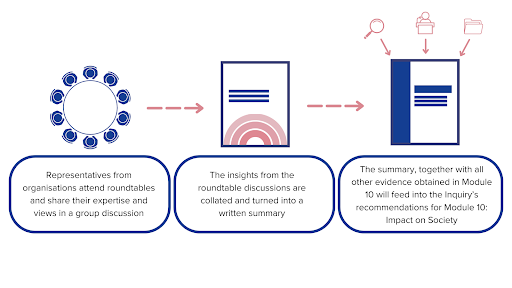
تصویر 1۔ ہر گول میز M10 میں کیسے فیڈ کرتی ہے۔